Introduction
Shipping medical equipment in 2025 requires far more than just deciding logistics. Global healthcare demand has grown, and with it, the need for safe, compliant, and zero-risk shipping processes. From maintaining the integrity of fragile diagnostic devices to guiding international regulations, the complete shipment of medical equipment depends on a thorough understanding of the approval system, HS code categorization, customs requirements, and the entire shipping process. As cross-border shipment of medical technologies increases, organizations must develop their processes to avoid delays, penalties, or supply chain disruptions. This makes knowledge of import duties and tariffs, harmonized tariff schedule explanation, and proper import export documentation more necessary than ever.
Key Components of a Zero-Risk Shipment
A zero-risk shipment focuses on regulatory accuracy, physical product safety, and simplified global trade. Every medical device must be packed according to material sensitivity, environmental control requirements, and route conditions. Temperature-controlled equipment demands precise monitoring from dispatch to last-mile delivery services to confirm that no variation occurs. Equally important is the clarity around Delivered Duty Paid service or DAP-based arrangements, because these define who is responsible at each stage of the journey. Importer of Record responsibilities and the Exporter of Record definition must be fully understood to avoid compliance gaps. With the healthcare sector depending heavily on timely supplies, real-time shipment tracking is no longer optional but a foundation of supply chain optimization in 2025.

Requirements for Medical Device Shipping
Medical devices fall under strict global healthcare regulations, and any cross-border shipment must work with safety and accuracy standards. Using the correct HS code confirms proper categorization, allowing customs officials to verify the device category under the harmonized tariff schedule. Many countries also require permits for sensitive equipment such as imaging systems and diagnostic tools. The generalized system of preferences (GSP) may reduce import duties and tariffs for some trades, but correct categorization is necessary before shipping to a given location. Import-export documentation must clearly show device specifications, equipment, regulatory approval, and country-of-origin details. Even small issues can begin delays in customs clearance, making pre-validation of documentation increasingly critical in 2025.
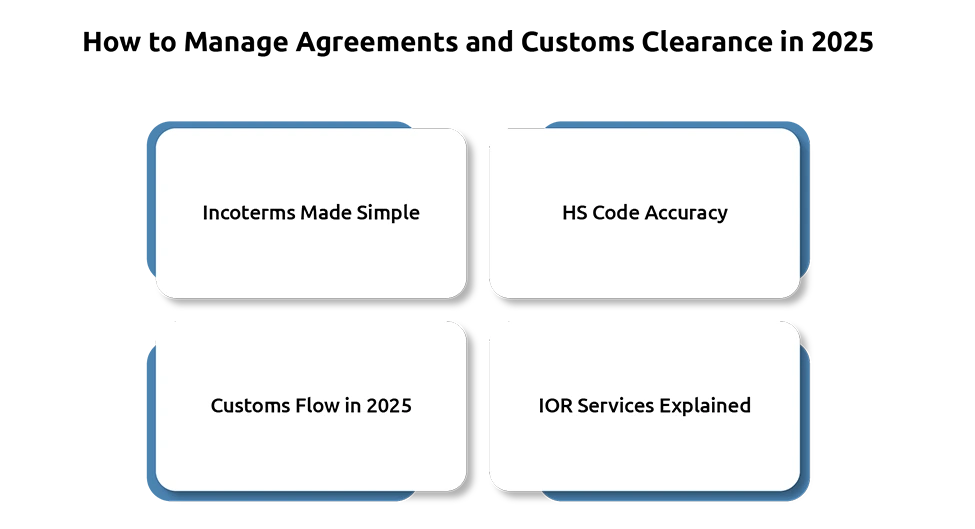
How to Manage Agreements and Customs Clearance in 2025
The customs service for medical device movement is developing, and companies must enter 2025 with a proactive and structured agreement strategy. Every shipment begins with the right Incoterms agreement, whether the trade terms are systematic under DAP, Delivered Duty Paid service, or other methods that define cost and responsibility distribution. Effective customs clearance depends on the accuracy of HS code usage, proper harmonized tariff schedule mapping, and full approval of product details with international freight services documentation. Organizations increasingly depend on IOR services when shipping into countries where they lack legal presence. These services confirm that all Importer of Record responsibilities tax payments, filing, and agreement checks, are fulfilled without interruption. Smooth clearance also depends on predictive systems that evaluate import duties and tariffs before the shipment even departs, reducing unexpected border challenges.
What to Look for in Selecting a Partner for Medical Device Shipping
Selecting the correct partner can determine whether your shipment reaches its destination safely and without regulatory issues. A competent partner should provide real-time shipment tracking, advanced international freight services, and good knowledge of Incoterms, customs procedures, and the harmonized tariff schedule explanation. Their ability to handle Importer of Record responsibilities and Exporter of Record processes is vital, specifically when shipping to difficult regions. Experienced organizations also manage last-mile delivery services with accuracy, confirming that sensitive medical equipment reaches hospitals or clinics without compromising safety. In 2025, shippers increasingly expect supply chain optimization as a standard quality from their logistics partners, combining visibility, documentation accuracy, and agreement expertise in one simplified approach.
Conclusion
Achieving zero-risk shipping for medical equipment in 2025 requires mastering agreements, understanding HS code classification, and working with customs clearance with absolute precision. With global health systems depending on quick and dependable equipment movement, organizations must combine strong regulatory knowledge with trusted partners who can manage Incoterms, DAP-based systems, IOR services, and end-to-end visibility. As the world advances technologically, medical device shipping must remain coordinated with these changes, confirming safe, compliant, and smooth international delivery for every critical healthcare shipment.
DID YOU KNOW?
The worldwide medical technology (medtech) market revenue is expected to be around $600-700 billion in 2024, up from around $450-500 billion in 2016, and is projected to grow to over $800 billion by 2030.
FAQs:
- What makes medical equipment shipping “zero-risk” in 2025?
Zero-risk shipping means ensuring full regulatory compliance, accurate HS code classification, temperature-controlled handling when needed, and end-to-end visibility with no damage or customs delays.
- Why are HS codes important for medical device shipping?
HS codes categorize each device under global trade regulations. Using the correct code avoids misclassification penalties, incorrect duties, and customs clearance delays.
- What is the role of an Importer of Record (IOR) in medical shipments?
The IOR ensures all taxes, duties, permits, and regulatory filings are completed legally for the destination country, especially vital when the shipper has no local entity.
- Which Incoterms work best for medical device shipping?
DAP and DDP are commonly used because they clearly define responsibility for customs, duties, and delivery. Choosing the right Incoterm reduces financial and compliance risks.
- How can companies avoid customs delays in 2025?
They must submit accurate import/export documentation, validate HS codes, ensure product certifications are complete, use predictive duty tools, and work with experienced logistics partners.