Overview
Turkey is preparing to implement huge customs valuation and clearance reforms effective February 2026, aimed at improving control over imports and the working processes with a global trade approval approach. These changes are expected to directly affect Asian exporters supplying goods across sectors such as IT hardware, aviation parts, medical devices, and automotive parts. Organizations required in international freight services, customs clearance, and supply chain optimization are facing the new guidelines change toward stronger documentation, revised valuation methods, and the end of easy processing for low-value shipments. As Turkey remains a major partner of Europe and Asia, exporters must know how these customs updates will change pricing, logistics planning, and agreement systems under the new Incoterms.
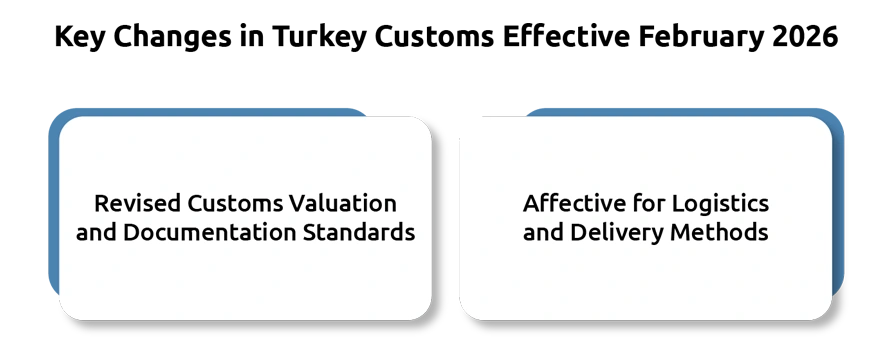
Key Changes in Turkey Customs Effective February 2026
Revised Customs Valuation and Documentation Standards
Turkey’s new customs policy places importance on accurate customs valuation, supported by detailed trade invoices, HS code categorizations, and good origin inspection. Importers will be required to give values with more clarity with the HTS Harmonized Tariff Schedule, reducing issues of under-invoicing and unknown goods.
For Asian suppliers shipping IT, aircraft parts, or medical equipment, even small inconsistencies in declared value or HS code usage may result in inspections, delays, or reevaluations by customs officials.
End of Simplified Clearance for Low-Value Imports
One of the most impactful changes is the closing of simplified customs clearance for low-value imports. Previously, smaller goods frequently benefited from quick processing and reduced other processes. From February 2026, these shipments will be subject to systematic customs processes, including full declaration, possible duties, and close inspection.
Affective for Logistics and Delivery Methods
This change directly affects premium delivery service providers, cross-border exporters, and organizations managing large size of spare parts. Businesses depending on quick processes will be required to adjust inventory and order management systems and reassess shipping routes to meet the delivery schedule.
Impact on Asian Exporters After Customs Changes
Higher Compliance Responsibility
Asian exporters will see more responsibility in providing accurate trade documentation. Whether working under DAP or other Incoterms, exporters must confirm that invoices, packing lists, and product categorizations align with Turkey’s revised valuation approach.
The role of exporter of record services will become more necessary, specifically for small and mid-sized suppliers unfamiliar with Turkey’s developing customs environment. Errors in documentation could change unexpected dependabilities to trading partners and disrupt long-standing distribution relationships.
Cost and Pricing Adjustments
Stricter valuation rules may affect the way duties and taxes are assessed, changing landed costs. Companies supplying automotive assemblies or specialized IT components may need to renegotiate trade terms, improve supply chain systems, and reassess DAPs to have competitive pricing.
For some exporters, having an experienced customs broker or importer of record service provider will be necessary to manage categorization reviews, valuation queries, and post-entry approval problems.

Why Turkey Is Ending Simplified Customs Clearance for Low-Value Imports
Strengthening Revenue Protection and Trade Control
Turkey’s decision is driven by the need to close valuation gaps, improve tax collection, and stop misuse of low-value shipment channels. With rising goods volumes and difficult global sourcing, authorities aim to create a more transparent import system that shows actual transaction values.
Working with Global Trade Standards
The reform also shows Turkey’s intention to align customs enforcement with broader global methods, including structured use of the HS code system and improved risk management. As global trade agreements and systems such as the Generalized System of Preferences, Turkey is situating itself to manage favorable claims more carefully.
Long-Term Impact on Supply Chains
In the long term, these changes could encourage a better approval system, greater use of professional customs clearance services, and more resilient international shipping terms across the Asia–Turkey trade.
Conclusion
Turkey’s customs valuation reforms, effective February 2026, mark a change for Asian exporters operating in high-value and urgent industries. The end of simplified clearance for low-value imports, combined with strong valuation and documentation standards, will change how organizations approach pricing, logistics, and agreements. Organizations in IT, aviation, medical, and automotive sectors will depend on early preparation, new documentation processes, Incoterms plans, working with customs brokers, and investing in smarter supply chain optimization tools.
DID YOU KNOW?
With the production of over 14.7 lakh vehicles, Turkey is the fourth largest producer in Europe. The Ministry of Trade expects export figures to exceed $41 billion this year.
FAQs:
1. What customs changes is Turkey implementing in February 2026?
Turkey will introduce stricter customs valuation standards, enhanced documentation requirements, and end simplified clearance for low-value imports. All shipments will be subject to more structured declaration and inspection processes.
2. How will Turkey’s customs reforms affect Asian exporters?
Asian exporters will face higher compliance responsibilities, including more accurate invoices, HS code classifications, and proof of origin. Errors may result in delays, reassessments, or higher landed costs.
3. Why is Turkey ending simplified customs clearance for low-value imports?
The decision aims to prevent under-invoicing, improve tax collection, and strengthen trade controls by ensuring declared values reflect actual transaction prices.
4. Will Turkey’s new customs rules increase import costs?
Potentially yes. Stricter valuation methods may change duty and tax calculations, affecting pricing strategies, Incoterms planning, and supply chain cost structures.
5. How can exporters prepare for Turkey’s 2026 customs valuation reforms?
Exporters should review documentation processes, confirm correct HS codes, work with experienced customs brokers or importer of record services, and update logistics and compliance systems.