Overview
Indonesia has grown into a major player in global trade, particularly as a supplier of raw materials essential to the IT, aviation, medical, and automotive industries. Also, the officials have raised Indonesia’s export taxes on raw materials to increase local trade and improve its production. Import-export businesses, this change affects customs clearance, pricing methods, and long-term supply chain optimization. As exporters and importers accept, knowing how these guidelines work with the HS code, HTS Harmonized Tariff Schedule, and International shipping terms becomes increasingly important in global trade.
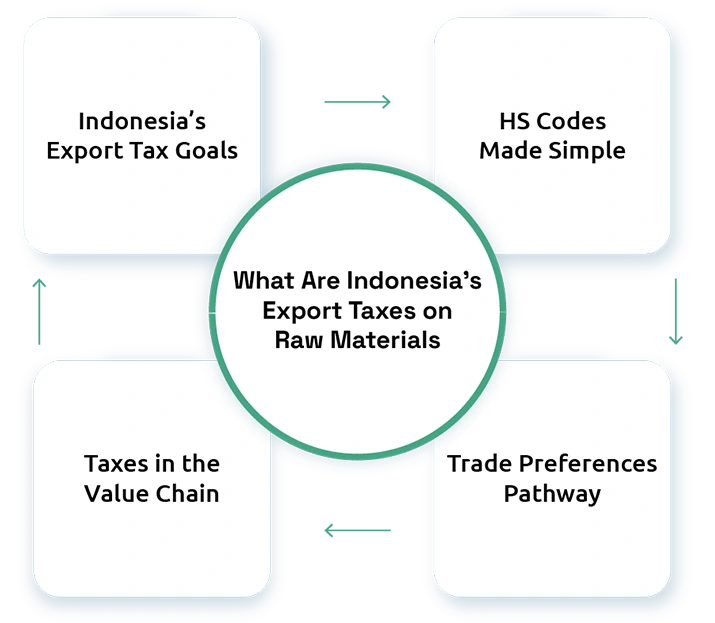
What Are Indonesia’s Export Taxes on Raw Materials
Understanding the Policy Guidelines
Indonesia’s export taxes are duties imposed on selected raw materials used in IT devices. These taxes are related to reducing the export of low-value raw inputs and encouraging local refining, smelting, and manufacturing.
Exporters must categorize goods correctly under the HS code, which works with the HTS Harmonized Tariff Schedule used by many importing countries. Accurate categorizations support easy customs clearance and help determine whether shipments qualify for trade preferences such as the generalized system of preferences (GSP).
Role of Trade and Shipping Structures
Export taxes also increase agreement systems and Incoterms, affecting who supports cost and risk at each stage of logistics. Whether goods ship under DAP or other international shipping terms, exporters must factor taxes into pricing, documentation, and cargo valuation. This directly impacts the exporter of record services, the importer of record services, and the planning of complete cross-border trade.
How Indonesia’s Export Taxes Reshape Global Manufacturing
Changing Production Closer to the Source
Indonesia’s strategy encourages multinational manufacturers to invest locally instead of depending completely on raw material exports. For the automotive and aviation industries, this means greater availability of semi-finished components. In IT and medical manufacturing, it supports regional processing hubs for materials and specialty inputs.
Impact on Trade Operations and Services
These changes affect international freight services and inventory and order management systems. Organizations securing from Indonesia increasingly depend on a combined approval approach, customs brokers, and digital trade platforms to manage export taxes, documentation, and valuation.
New Demand for Value-Added Services
With more intermediate and finished products moving instead of raw materials, demand is rising for premium delivery service, multi-country distribution strategies, and specialized handling, mainly for aviation parts, medical equipment, and high-value IT components.

Benefits and Challenges of Indonesia’s Export Taxes on the Global Supply Chain
Key Benefits for Global Manufacturing
Indonesia’s export taxes can create long-term advantages for the global supply chain:
- Greater availability of processed materials improves dependability for automotive and aerospace manufacturers.
- Local processing reduces exposure to raw goods price changes.
- Regional manufacturing hubs improve lead times and support flexible supply chain optimization strategies.
- Import-export businesses, these changes open new opportunities in agreement management, bonded warehouse, and value-added trade services.
Operational and Cost Challenges
- Export taxes raise short-term costs and require precise documentation.
- Misclassification under the HS code or errors in valuation can delay customs clearance and disrupt production schedules.
- Smaller exporters may have issues with regulatory changes, creating greater dependence on customs broker networks and professional exporter of record services.
- Manufacturers must improve trade agreements, logistics, and warehousing storage to remain strong.
Industries Impacts
- IT and electronics: Higher component costs but stronger regional ecosystems.
- Aviation: Improved access to semi-processed materials, with stronger approval requirements.
- Medical: More stable sourcing of refined inputs, balanced by regulatory problems.
- Automotive: Local supply chains supporting faster production cycles.
Conclusion
Indonesia’s export taxes on raw materials represent more than an economic policy; they are a major tool changing global manufacturing trade. By guiding resources toward local processing, Indonesia is changing how organizations design factories, manage logistics, and structure international trade. For import-export businesses working across IT, aviation, medical, and automotive industries, success now depends on combining tax awareness into international freight services and approval systems. Those that invest in strong documentation systems, adaptive logistics methods, and professional trade services will be best positioned to guide this developing landscape and to benefit from Indonesia’s expanding role in the future of global manufacturing.
DID YOU KNOW?
The government is preparing for 18 downstream projects to be undertaken by Danantara Company, with an investment cost of 18 billion dollars or approximately 618 trillion rupees.
FAQs:
1: What are Indonesia’s export taxes on raw materials?
Indonesia’s export taxes are duties placed on selected raw materials to limit low-value exports and encourage local processing, refining, and manufacturing before goods enter global markets.
2: Why has Indonesia introduced export taxes?
The policy is designed to strengthen local industries, attract manufacturing investment, improve value-added production, and reduce dependence on raw material exports.
3: How do Indonesia’s export taxes affect importers and exporters?
They change product categorizations, customs documentation, pricing models, and supply chain planning, making accurate HS codes and trade agreements more important than ever.
4: Which industries are most impacted by Indonesia’s export taxes?
IT, aviation, medical, and automotive sectors are highly affected because they depend on consistent access to processed materials and intermediate components.
5: How can companies adapt to Indonesia’s export tax policies?
Businesses can adapt by improving customs approval, investing in trade management systems, working with customs brokers, and exploring local sourcing or processing partnerships.