Understanding the US To Double the Tariff on Indian Export
The United States has shared its plan to double tariffs on raw goods, a move that could hugely affect Indian exports. India is a major supplier of raw materials used in manufacturing, IT hardware, medical equipment, aviation components, and automotive parts. This sudden increase in tariff rates will impact industries that massively depend on India’s import and export business. Also, systems such as the generalized system of preferences (GSP) have supported Indian exporters by providing lower duties, but such tariff increases may decline competitiveness.
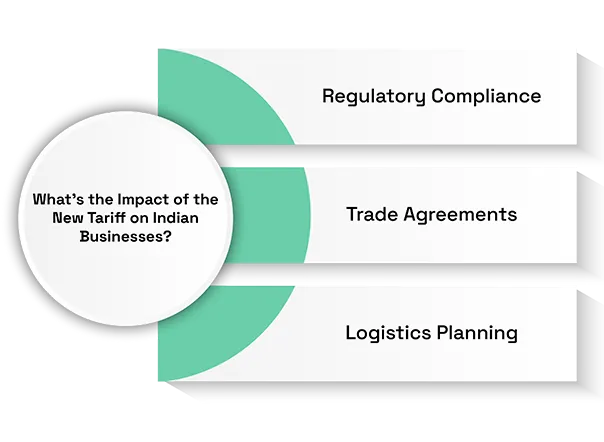
What’s the Impact of the New Tariff on Indian Businesses?
For Indian organizations, higher tariffs mean increased costs when exporting raw materials to the US. To remain competitive, exporters will require stronger logistics planning, better agreement with international export regulations, and major use of HS codes and the HTS harmonized tariff system to avoid penalties or misclassification. Many businesses depend on freight forwarding services, export customs brokerage, and comprehensive import-export support to manage these difficulties. With tariff rates doubling, exporters may be required to adjust their export register entries and rethink trade agreements under Incoterms such as DAP (Delivered at Place) or DDP shipping methods.
How Will This Affect Indian Exporters?
Indian exporters dealing with IT devices, aviation parts, and medical equipment may face immediate challenges. Rising costs could lower demand from US buyers. To reduce risks, exporters might look for an Exporter of Record service or an Importer of Record service in the US to confirm agreement. Organizations that manage Delivered Duty Paid (DDP) logistics or delivery duty paid service can help to simplify cross-border trade by managing customs clearance support and duties on behalf of Indian suppliers. Such services allow exporters to focus on scaling their global supply chain services instead of being burdened by tariff complications.
The Impact on Small Businesses in the USA and India
Small businesses on both sides are likely to feel the pressure. In India, SMEs may lack the resources for special export customs brokerage or advanced freight forwarding services, making it harder to stay competitive. U.S. organizations that depend on low-cost raw materials will see the higher fees, directly affecting their production. This can lead to fee increases for customers and supply chain obstruction, highlighting the importance of global trade facilitation efforts to ease the Challenge.
Economic Impact of Tariffs on India
The broader economic effect of higher tariffs reduced trade sizes in export-based industries. For India, which depends on industries such as IT, aviation, medical devices, and automotive parts, the new schemes could create unwanted issues in long-term trade partnerships. Also, organizations with import export registration, strong logistics plans, and partnerships with dependable global supply chain services may still find ways to adapt. Proactive measures such as various trades, using comprehensive import-export support, and adopting better international export regulations and agreements can help reduce losses.
Conclusions
The US decision to double tariffs on raw materials will undoubtedly challenge Indian exporters and US small businesses alike. While policies like the generalized system of preferences once provided relief, the new tariff wave demands smarter trade strategies. By leveraging tools such as exporter of record services, DDP shipping models, and effective customs clearance support, businesses can navigate this evolving landscape. In the long run, only those prepared with strong global trade facilitation practices and adaptive import export business strategies will be able to withstand the economic impact.
DID YOU KNOW?
At a 50 percent tariff rate, an Indian-made shirt that once sold for 10 USD would cost American buyers 16.40 USD, far more expensive than 14.20 USD in China, 13.20 USD in Bangladesh, or 12 USD in Vietnam.
FAQs:
Q1. Why is the US doubling tariffs on Indian exports?
The US aims to protect its domestic industries and reduce reliance on low-cost imported raw materials, which directly impacts India’s export competitiveness.
Q2. Which Indian industries will be most affected by the new tariffs?
Industries like IT hardware, aviation components, medical equipment, and automotive parts that depend heavily on exports to the US will face the greatest challenges.
Q3. How will higher tariffs affect Indian exporters?
Exporters will face increased costs, reduced demand from US buyers, and compliance challenges with HS codes and Incoterms, making freight forwarding and customs brokerage more critical.
Q4. What strategies can Indian businesses use to handle tariff increases?
Businesses can use Exporter of Record (EOR) and Importer of Record (IOR) services, DDP shipping, smart logistics planning, and diversify export markets to mitigate risks.
Q5. How will small businesses in India and the US be impacted?
Indian SMEs may struggle with added compliance and logistics costs, while US small businesses relying on affordable raw materials could see higher expenses and supply chain disruptions.