
Understanding Impact on Global Supply Chains after China’s New Export Regulations
China is frequently known as the “world’s factory” because of its major role in global manufacturing and exports. From IT hardware and aviation to automotive parts and medical equipment, the industries depend on Chinese supplies. The government proposes new export regulations, and global organizations are preparing for changes in logistics, customs clearance, and complete trade. These updates will not only affect exporters and importers but also change how freight forwarding service suppliers, global supply chain services, and customs brokerage organizations work. Companies that depend massively on Chinese imports will be required to evaluate new plans, such as using Importer of Record Services and Delivery Duty Paid logistics, to reduce problems.
What Are China’s Proposed Export Restrictions?
The proposed regulations emphasize strong tracking of outbound goods, mostly high-tech goods and sensitive industrial equipment. Exporters will be required to follow additional documentation and reporting under international export regulations. This means businesses must confirm proper import-export registration, correct HS code classification, and work with HTS harmonized tariff standards. For organizations that lack exporter of record services, export customs brokerage will be necessary to stay compliant. These changes highlight China’s attempt to secure its major resources while maintaining strong control over trade.
What does this mean for international trade in 2026?
China’s proposed export regulations may add more complexity to international trade in 2026, especially for businesses dependent on global sourcing networks. Companies may focus more on regional supply chains, risk management, and alternative suppliers to reduce dependence on any single market. Importers and manufacturers could also increase inventory planning, diversify production locations, and strengthen long-term supplier partnerships to avoid disruptions.
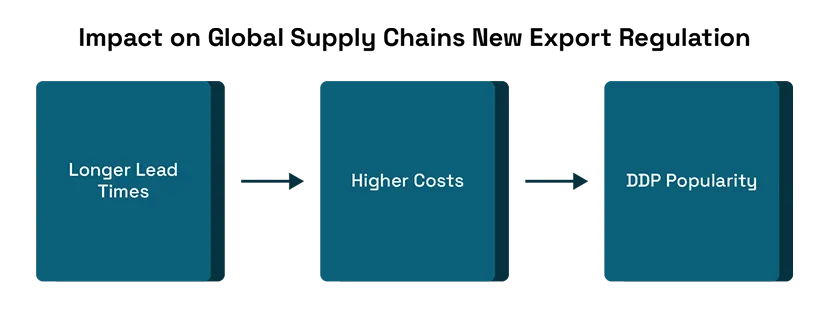
Impact on Global Supply Chains: New Export Regulation
Global supply chains are expected to experience longer lead times, higher working costs, and increased dependency on special logistics providers. Delivered Duty Paid logistics and DDP shipping services will likely become more popular because they allow importers to transfer risks and responsibilities to service providers. Also, Incoterms such as DAP and DDP will play a major role in defining responsibilities between buyers and sellers. For industries that depend on on-time supply, even small delays in customs clearance support can disrupt production. Organizations will be required to accept comprehensive import-export support systems and strengthen their ties with freight forwarding service providers to maintain smooth trade work.
How China’s Export Restrictions Will Affect Industry Supplies
The electronics and semiconductor industries from China may face strong restrictions, forcing companies to change supply chains. Aircraft components and special goods may see longer clearance times, requiring closer collaboration with global supply chain services. Export controls on equipment and devices could delay shipments, making DDP service providers necessary for an unwanted supply. China, being a major supplier of parts and raw goods, has strong export rules that may affect production timelines globally. In all these sectors, complete solutions such as importer of record services, freight forwarding services, and export customs brokerage will help businesses reduce risks. Also, nations that take advantage of the generalized system of preferences (GSP) must impose new forms of taxes and approval requirements to remain competitive in the global industries.
Keeping International Trade Moving Under New Export Regulations
New export rules can make international trading more difficult, but effective planning allows businesses to keep shipments moving. Delays can be reduced by using required paperwork, following to customs laws, and preparing goods before delivery. Products reach at their destination on time because of efficient customs clearance & reliable freight services. Strong global shipping partners also help companies in changing to changing trade rules, reducing risks, and keeping supply chains running efficiently and smoothly
What is the New Export Policy of China, and How Does It Impact Global Supply Chains?
China’s new export policy is planned to protect its technological advancements and ensure national security. Export registers and growing agreement requirements make global trade more difficult. For businesses, this means extra costs in documentation, customs clearance support, and Incoterms negotiations. Also, organizations that have started global trade facilitation methods and partnerships with logistics experts will have an advantage. DDP logistics, DAPs, and exporter of record services will continue to grow in importance, giving organizations confidence that their shipments follow global trade rules. While large corporations may use quick, small and medium-sized businesses could face higher risks due to limited access to global supply chain services.
Conclusions
China’s proposed export regulations are a changing point in global trade. By introducing strong international export regulations, the country is developing how logistics, customs, and delivery are managed. Businesses will need to depend more on DDP shipping, freight forwarding services, and comprehensive import-export support to guide this environment. Accurate HS code usage, HTS harmonized tariff schedule, and strong customs clearance support will become critical to avoiding penalties and delays. Also, organizations that embrace exporter of record services, importer of record services, and global trade facilitation will be better positioned to adapt. While the new rules may create issues, they also give an opportunity for organizations to strengthen supply chain dependence and long-term plans for strong growth in the global import-export industries.
DID YOU KNOW?
China’s exports surged 27% year-on-year to a record $412.39 billion in June 2026, driven by AI-related goods, with the global AI infrastructure rush creating a historic semiconductor shortage and soaring prices.
FAQs:
What are China’s new export regulations?
China’s proposed regulations focus on stricter monitoring of outbound goods, especially high-tech and sensitive equipment. Exporters will need additional documentation, HS code accuracy, and compliance with international export rules.
How will these regulations affect global supply chains?
They may lead to longer lead times, higher logistics costs, and increased reliance on specialized freight forwarding and DDP shipping services. Industries dependent on just-in-time supply could face disruptions.
Which industries are most affected by China’s export restrictions?
Electronics, semiconductors, aviation, medical equipment, and automotive industries will face significant challenges due to delayed shipments and tighter customs clearance.
What role do Incoterms like DDP and DAP play under the new regulations?
Incoterms define responsibilities between buyers and sellers. Under stricter export rules, DDP and DAP shipping will help businesses shift risks and compliance duties to logistics providers.
How can businesses adapt to China’s new export policy?
Companies can reduce risks by using Importer of Record (IOR) and Exporter of Record (EOR) services, ensuring correct HS code classification, and working with experienced customs brokers and freight forwarding companies.