Introduction
Trade funding supports global commerce by helping importers fund buy, exporters secure payment & banks handle transaction risks. Traditionally, tools such as letters of credit, guarantees & working-capital facilities have supported global trade.
As global trade becomes faster & more data-driven, traditional paper-based processes are increasingly being changed by digital trade finance. Electronic documents, APIs, automation, AI, digital identity or blockchain are helping businesses enhanced speed, clarity or compliance.
The goal is not simply to remove paper but to connect banks, traders, logistics providers & customs authorities through secure, trusted data. This shift is making trade finance more efficient and better suited to modern global supply chains.
Why Digitalization Has Become More Important
As supply chains expand & businesses enter new markets, faster or more reliable trade finance is becoming essential. The Asian Development Bank expected the global trade finance gap at US$2.5 trillion, highlighting the need for more accessible financing.
Digital transition can help banks assess transactions using reliable company, shipment or trade data, minimizing manual processing or improving efficiency. For SMEs, digital platforms can also simplify onboarding, documentation, compliance checks & access to financing.
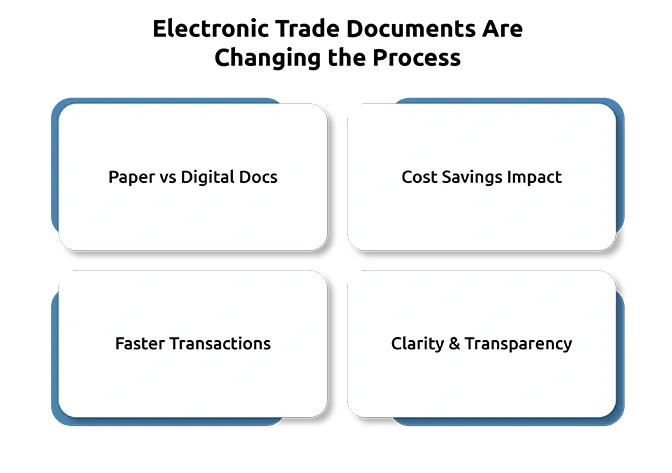
Electronic Trade Documents Are Changing the Process
Electronic trade documents are minimizing the reliance on paper-based processes in global trade. The electronic bill of lading (eBL) is a key example, allowing documents to be moved and identify digitally.
The ICC reports that global eBL adoption reached 12.8%, up from 5% in 2024, with potential documentation savings of around US$6.5 billion. Faster document exchange can support quicker financing, fewer delays or better transaction clarity.
However, widespread adoption rely on legal approvals & compatibility across countries or trade platforms.
Artificial Intelligence and Automated Risk Assessment
AI is shifting trade finance by helping financial institutions process large volumes of transaction or compliance data faster. It can identify unusual patterns, compare documents, detect errors or support customer due care, fraud detection or risk assessment.
In 2026, AI-based risk controls are becoming more relevant for cross-border dealings. However, human oversight remains important for sanctions screening, regulatory decisions or complex trade finance risks.
Blockchain or Distributed Trade Finance Systems
Blockchain has been examined in trade finance for several years because global trade includes multiple parties that need to trust shared information.
A shared data record can allow authorised members to work with a shared record rather than depending on separate databases. This can potentially improve document verification, transaction clarity & the tracking of ownership or status.
In January 2026, the ICC reported that blockchain or digital goods technologies were gaining momentum in trade finance, particularly in the digitisation of trade documents & payment processes.
Digital Identity and Better Compliance
Know Your Customer and anti-money-laundering requirements are essential to trade finance, but they can also create repeated administrative work.
A company may need to provide similar information to several financial institutions, logistics partners or platforms. Digital corporate identity systems could reduce duplication by allowing trusted business information to be verified and reused where legally permitted.
The Bank for International Settlements has identified digital corporate identity, digitised trade documents and alternative credit data as promising tools for addressing information asymmetry and improving access to trade finance.
This could be particularly valuable for SMEs and businesses entering new markets. Better digital identity and data verification can help financial institutions understand who is involved in a transaction before providing financing.

Legal Recognition Will Determine the Speed of Adoption
Technology alone cannot complete the transformation of trade finance. Legal frameworks are equally important.
Electronic transferable records need to receive appropriate legal recognition before they can fully replace their paper equivalents. Countries are therefore working on legislation, standards and international frameworks that support digital trade.
The ICC Digital Standards Initiative notes that legal recognition of electronic records and harmonised standards remain important to achieving a more digital global trading environment.
Progress is becoming visible. The ICC reported in 2026 on developments such as new legal frameworks for electronic records and changes supporting digital trade documents in different jurisdictions.
As more jurisdictions recognise electronic transferable records, businesses will have greater confidence that digital trade documents can perform the same commercial functions as paper documents.
Challenges That Still Need to Be Solved
While rapid progress, digital trade finance still faces important challenges. Different countries have different legal frameworks, banks use different technology systems and businesses vary greatly in their digital maturity.
Compatibility remains one of the biggest obstacles. A company may have an advanced digital system, but its benefits are limited if a bank, customs authority or logistics offering still requires incompatible formats.
Cybersecurity is another major concern. As more financial and commercial information moves through interconnected systems, the consequences of data breaches, fraudulent credentials or manipulated documents can become more serious.
There is also a risk of creating a new digital divide. Large multinational companies may have the resources to adopt advanced technology, while smaller businesses may struggle with integration costs and technical requirements. Digital trade finance must therefore remain accessible rather than becoming another barrier to international trade.
Conclusion
Trade finance is growing more digital, connected or data-based. Electronic documents, APIs, AI, blockchain, digital identity or real-time data are enhancing financing, compliance or shipping clarity.
As legal frameworks or compatibility enhanced , digital trade finance will become a standard part of global commerce. Businesses that improve their data, documentation, compliance or digital systems will be better prepared for the future of global trade.
Did You Know?
£100 billion+: UK digital trade exports now represent more than half of total UK exports, with digital trade exports growing three times faster than other exports, according to the UK Government
Frequently Asked Questions
What is digital trade finance?
Digital trade finance uses digital tools, electronic documents or data to simplify global trade financing or improve transaction speed.
How is AI changing trade finance?
AI helps analyse trade activities, detect risks, compare documents or support compliance checks while minimizing manual work.
What are the benefits of electronic trade documents?
They minimize paperwork, speed up document exchange, improve visibility & can support faster financing and payments.
What challenges does digital trade finance face?
Key challenges involves legal differences, compatibility, cybersecurity, data protection or technology adoption.
What is the future of digital trade finance?
Trade finance is shifting toward connected digital systems with automated workflows, real-time data or stronger compliance