The New Face of International Trade
The Blockchain is changing the way customs are documented in international logistics. The old systems rely on manual files and numerous middle processes, as well as lengthy approval processes. Blockchain substitutes this with automatic verification, in which all the entries are safe, traceable, and transparent. All transactions are conducted in real time, providing customs and freight operators with a clear picture of the goods before they arrive at ports.
Air freight networks already use blockchain platforms to simplify clearance. Global hubs connect flight manifests and customs data under one ledger, improving how sensitive equipment clears through customs. The outcome is faster, safer, and more reliable trade movement across borders.
Reinventing Trade Compliance and Documentation
Customs operations run on data from trade agreements and tariff classifications. A small mistake in tariff value or HS code leads to inspection delays and unexpected penalties. Blockchain maintains all customs duty management and hts code data within an unchangeable ledger. This ensures accurate tariff application and improves coordination under international freight forwarding systems.
By linking import export registration, Incoterms records, and export documentation electronically, blockchain cuts manual processing. Data moves instantly between customs, airlines, and warehouse logistics teams without the need for repeated checks. With every ledger update verified across the chain, officials gain clear visibility of goods from departure to arrival.

Enhancing Real‑Time Visibility in Air Freight
Airports now use blockchain to validate ECCN, hts harmonized tariff, and DDP shipping records before cargo takes off. Time‑critical shipments benefit the most because authorities can authenticate customs details instantly. This saves hours at arrival ports, reducing demurrage and manual audits.
For DAP shipping meaning or DDP shipping terms, blockchain automates tax and delivery calculations. The digital system records when duties are paid and confirms customs status without human intervention. Each port update triggers immediate access to transaction logs. That level of transparency improves traceability for every piece of equipment moved through air forwarding or ocean freight networks.
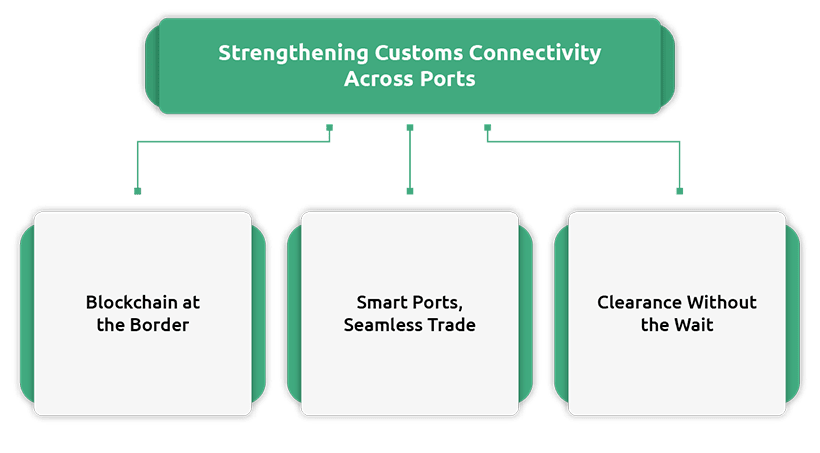
Strengthening Customs Connectivity Across Ports
Airports and seaports act as nodes within global logistics. Blockchain connects each of them through smart data synchronization. When goods enter bonded warehouse zones, trade details move instantly to customs officials for clearance review.
Research published in early 2025 by the European Customs Authority shows that blockchain usage has reduced clearance time by 27%. Less waiting reduces holding costs and avoids unnecessary storage fees. The system helps freight forwarder, custom broker, and port officers manage handovers without gaps in documentation.
The result—a more dependable port‑to‑port shipping structure with consistent compliance reporting and real‑time updates at every stage.
Digital Transformation in Import and Export Activities
Each Importer of Record and Exporter of Record operation relies heavily on trusted data. Blockchain automatically connects DGFT IEC codes from importer and exporter registration databases, verifying their authenticity before customs submission. The same ledger confirms exporter of record validity, ensuring goods qualify for entry or exit under required trade agreements.
Automated smart contracts also handle incoterms like DDP, DDU, or DAP with accuracy. Each entry, packed with correct tariff and destination data, becomes visible to regulatory authorities and warehouse management systems at once. Every change gets tracked, removing confusion from multi-country shipping operations.
This automation has made import tax management smoother, providing faster customs approval and preventing repetitive documentation submissions for ongoing trade projects.
Linking Blockchain with Warehousing and Supply Chains
Modern warehouse management systems (WMS) interface directly with blockchain to maintain audit trails. As goods move through warehouse logistics networks & customs checks, each scan adds a time-stamped record on the blockchain.
This structure minimizes misplacement and maintains integrity for sensitive cargo. Equipment data, from packing timestamp to export declaration status, stays updated in one secure location. SCM logistics systems analyze these blockchain records to predict arrival dates and plan inland distribution accurately.
Countries using blockchain with supply chain management report fine improvements. Government transport data from 2025 shows freight corridors saw a 21% increase in handling capacity and faster clearance through automated customs verification models.
Optimizing Trade Agreements and Tariff Automation
Blockchain ensures every tariff and incoterm is captured correctly before goods reach customs. When data from the hts code or tariff list is uploaded to the ledger, it applies automatically throughout the process. Customs duty management becomes predictable, and every payment is traced accurately under DDP or DAP incoterm.
Delivery with duty included transactions gain transparency as customs officers confirm pre-paid taxes digitally. Blockchain also limits re-entry errors by producing verified transaction hashes accessible only to authorized regulators. Accuracy at this level raises global trade facilitation performance while maintaining strong compliance under international export regulations.
Transforming Freight Flow Through Smart Customs Systems
Blockchain in trade logistics and compliance supports synchronized control between customs zones. It enables airports, freight forward service agents, and bonded warehouse authorities to share a single version of shipment truth. This alignment ensures that freight transport by road or flight maintains consistency down to the last pallet record.
Customs clearance support no longer depends on manual form collection. Instead, blockchain‑driven ledgers process export declaration service data instantly. High-value shipments that once needed multiple signatures now upload a single verified passcode that completes automatically when the shipment clears.
Faster system speed also helps avoid revalidation issues during delivery handover, cutting lead time sharply in global freight cycles.
Conclusion
Blockchain is turning customs documentation from a manual process into a secure, data-driven operation. Every customs record—from declaration to duty payment—becomes verifiable, shareable, and efficient. The technology reduces confusion, enhances transparency, and strengthens trade compliance for specialized shipments across the world.
At One Union Solutions, we integrate smart digital processes that align with blockchain systems, enabling smoother, more accurate customs management and reliable global transit. We believe automation with accountability will continue transforming how international trade operates across air, land, and port networks.
Did You Know?
According to industry forecasts, the global blockchain market is expected to exceed $94 billion by 2027.
FAQ’s
How does blockchain simplify customs documentation?
It converts export and import files into digital entries stored securely on a ledger. This makes data verification faster, consistent, and tamper‑resistant.
Can blockchain manage custom tariffs?
Yes. Blockchain automatically applies hts harmonized tariff data, reducing calculation errors and making customs duty management transparent across ports.
Does blockchain technology support DDP shipping terms?
Yes. Smart contracts verify delivery duty paid automatically, and update shipment customs paid records in real time.
How does it improve import export registration?
It cross‑checks DGFT IEC codes and ensures genuine importer of record and exporter of record authentication during customs submission.
Is blockchain used in European customs clearance?
Major EU port authorities have started integrating blockchain for cross‑border logistics, cutting average inspection time by 25% according to 2025 customs performance updates.