Introduction
The world economy is entering a new era of trade transformation. As global trades grow, international export regulations and global supply chain services are used to balance economic growth with sustainability and a digital combination of trade. Trade policies are no longer just about tariffs and allocation; they are about innovation, technology, and services. For organizations working in import and export business, knowing the upcoming changes in policy systems will be necessary for maintaining agreements and competitiveness by 2030.
What Is the Future of Global Trade Policy?
The future of global trade policy depends on adjustment, digitalization, and inclusive trade growth. Policymakers across trades are focusing on confirming that trade benefits both developed and developing economies. Future policies will likely increase Comprehensive import-export support systems, improve Customs clearance support, and encourage transparent trade methods through technology-driven tracking and shipping. Concepts such as Incoterms, HS Code, and HTS Harmonized Tariff Schedule will continue to play a vital role in categorizing and managing global trade works. Businesses that depend on Importer of Record (IOR) services and Export customs brokerage will increasingly need to adapt their methods to new trade digitalization standards.

The Fundamentals of Global Trade Policy Till 2030
Over the next decade, the fundamentals of global trade policy will increase resilience, digital documentation, and sustainability. Governments are expected to simplify import export registration and export registration procedures, allowing faster and more effective cross-border movement of goods. Sustainable logistics methods, carbon-neutral shipping, and DDP shipping arrangements will redefine international trade agreements. Organizations using IOR services or working as importers and exporters will benefit from simplified documentation and an improved Customs clearance support system, helping them maintain approval under developing global trade standards. Also, the Generalized System of Preferences will continue to provide tariff benefits for developing countries, inclusive global trade growth till 2030.
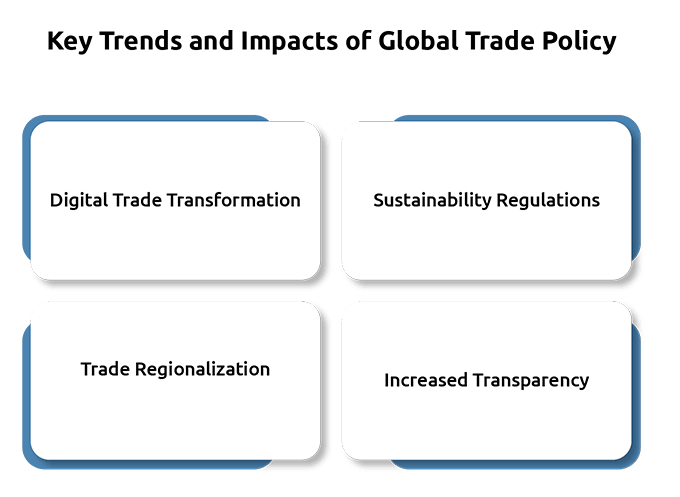
Key Trends and Impacts of Global Trade Policy
- Digital Trade Transformation – The rise of blockchain and AI will automate documentation, customs checks, and tariff calculations using standardized tools like HS codes.
- Sustainability Regulations – Guidelines will push organizations toward eco-friendly logistics and green global supply chain services.
- Trade Regionalization – With changing geopolitical union, new trade corridors and agreements will appear, favoring regions with effective import and export systems.
- Increased Transparency – Governments will demand higher visibility into importer-exporter transactions through digital customs sources.
- Inclusive Development – Trade policies will support SMEs by simplifying import export registration and giving fair entry to global trade.
Future of Global Trade Policy: Challenges and Opportunities
Till 2030, the main challenge will be having policy stability sees growing pressure between countries and trade issues. Also, this change brings opportunities: businesses that use digital International export regulations and approval systems will grow in 2030. The combination of logistics automation and live tracking will make import and export more effective. Organizations depending on Importer of Record services or Export customs brokerage can expect greater efficiency and reduced delays. Also, DDP shipping will continue to be a preferred Incoterm for smooth last-mile delivery and simplified taxation compliance. For authorities, balancing trade liberalization with environmental goals will be a major challenge. For businesses, developing HTS Harmonized Tariff Schedule categorizations and tariff systems will be necessary for a competitive advantage.
Conclusion
The future of global trade policy by 2030 will be changed by technology, sustainability, and integration. Governments and organizations must work together to develop a clear global trading system that improves every participant in the value chain. With IOR services, effective Customs clearance support, and Comprehensive import-export support, the next decade will mark a changing stage for the global trade ecosystem, growing innovation, agreement, and economic flexibility.
DID YOU KNOW?
While it is still too early to tell in most official sources, our Maritime Trade Index, a daily gauge of global shipping, shows that trade sizes are down more than 2% compared to last year. In the United States, maritime imports are down about 8%.
FAQs:
What will be the main drivers of global trade policy by 2030?
The key drivers will be digitalization, sustainability, and trade inclusivity. Technologies like AI and blockchain will simplify customs clearance, while environmental and fair-trade standards will shape policy frameworks.
How will digital transformation affect import and export processes?
Digital transformation will automate trade documentation, tariff calculations, and customs verification through electronic systems and standardized HS codes, improving efficiency and reducing delays.
What role will Importer of Record (IOR) services play in future trade?
IOR services will become essential for cross-border compliance, managing complex customs regulations, and ensuring fast delivery under evolving international export regulations and DDP shipping terms.
How will sustainability influence future trade policies?
By 2030, carbon-neutral logistics, eco-friendly packaging, and green shipping will become mandatory under new trade regulations promoting environmental responsibility and sustainable global supply chain services.
What opportunities will arise for businesses under the new global trade policy?
Businesses adopting digital customs systems, transparent trade tracking, and compliant tariff management through HTS Harmonized Tariff Schedules will gain a strong competitive advantage and faster market access.