
Introduction
In today’s highly competitive aviation industry, operational efficiency and on-time performance are no longer optional; they are critical performance indicators. Airlines work within a difficult global chain that depends on correct work between aircraft, airports, and supply chain partners. Real-time tracking has evolved into a transformative solution that enables airlines to continuously monitor assets, movements, and processes. By combining real-time tracking into airline technology systems, carriers can improve visibility, simplify operations, and hugely reduce ground delays that contribute to customer dissatisfaction and financial losses.
How Real-Time Tracking Improves Operations
This system increases airline work by providing continuous tracking of aircraft location, ground equipment status, cargo shipment, and support services. With real-time shipment tracking and data dashboards, airlines can make their decisions instantly rather than respond after issues arise during shipping. This level of clarity supports better work between the transportation and warehousing systems, maintenance crews, and airport officials. When working with supply chain management systems, real-time tracking allows airlines to work with flight schedules with warehousing solutions for import and export goods, international freight services, and customs clearance processes, confirming smooth shipping flow.
How It Reduces Ground Delays
Ground delays often result from misaligned schedules, unavailable parts, or inefficient documentation processes. Real-time tracking minimizes these issues by confirming that aircraft rotables, spare parts, and consumables arrive exactly when needed for customers. Through supply chain optimization, airlines can track shipments under Delivered Duty Paid service terms, monitor import duties and tariffs, and verify import export documentation before the aircraft even lands. This reduces waiting time during customs clearance and stops aircraft-on-ground scenarios caused by missing components. Improving tracking across complete delivery services confirms the on-time shipping of necessary goods and supplies to the shipment.

Major Technologies & Benefits of Real-Time Tracking
Modern airline work depends on a combination of IoT sensors, GPS systems, RFID tags, and cloud sources to allow real-time tracking. These technologies allow airlines to track cargo situations, track high-value parts across international freight services, and confirm approval with HS code and HTS Harmonized Tariff Schedule requirements during cross-border shipment. When working with IOR services, airlines can manage regulatory responsibilities effectively without operational disruption. The benefits extend beyond speed, as real-time data also improves accuracy, reduces manual issues, and strengthens work between logistics partners, the warehousing system, and the airport ground staff.
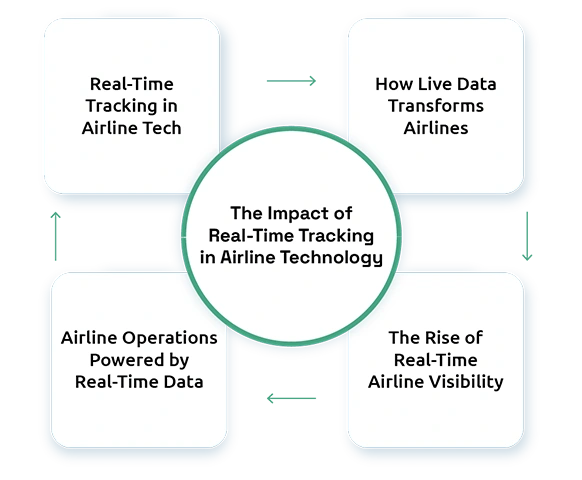
The Impact of Real-Time Tracking in Airline Technology
The effect of real-time tracking on airline technology is profound. Airlines now work with interconnected systems that combine logistics, warehousing, and transportation systems into a single working view. This integration allows airlines to forecast delays, redirect resources, and proactively manage issues. Real-time insights also support approval of Incoterms and international trade regulations, allowing smooth import-export work. By integrating real-time tracking into airline technology systems, logistics providers gain a major advantage through faster turnaround times, improved asset utilization, and increased customer trust.
How Real-Time Tracking Became the Support of Modern Airline Technology
The evolution of airline technology has tracked the increasing difficulty of global aviation supply chains. As airlines increased routes and depended more heavily on global suppliers, conventional tracking methods became not. Real-time tracking has grown as a foundational support system, allowing smooth work between supply chain management, warehousing, and global logistics. Growth of real-time shipment tracking, airlines can now streamline work with customs clearance officials, monitor the transportation and warehousing system, and confirm that Delivered Duty Paid service requirements are met continuously. This change has made real-time tracking an important part of the new airline’s work.
Conclusion
Real-time tracking has mainly changed how airlines manage work and reduce ground delays. Providing continuous visibility across logistics, warehousing, and international freight services, it allows airlines to work in advance rather than respond. From managing import duties and tariffs to confirming smooth customs clearance and last-mile delivery services, real-time tracking strengthens every part of airline work. As airline technology continues to develop, real-time tracking will remain a necessary allows of efficiency, dependability, and working high performance in an increasingly interconnected aviation ecosystem.
DID YOU KNOW?
In 2024, the FAA will invest over $1 billion in modernizing the U.S. airspace systems, a significant portion of which will be spent on real-time tracking capabilities for improved coordination and safety.
FAQs:
- What is real-time tracking in airline operations?
Real-time tracking refers to the continuous monitoring of aircraft, cargo, ground equipment, and supply chain processes using technologies like GPS, IoT sensors, RFID, and cloud-based systems.
- How does real-time tracking reduce ground delays?
It ensures the timely arrival of spare parts, improves coordination between teams, streamlines customs clearance, and prevents aircraft-on-ground situations caused by missing components.
- Which technologies are used for real-time tracking in aviation?
Airlines use GPS, IoT sensors, RFID tags, cloud platforms, and data dashboards to monitor aircraft movements, cargo shipments, and ground operations in real time.
- How does real-time tracking improve airline supply chain management?
It enhances visibility across logistics, warehousing, and transportation systems, allowing airlines to align flight schedules with shipment deliveries and regulatory requirements.
- Why is real-time tracking important for modern airline technology?
Real-time tracking enables proactive decision-making, improves operational efficiency, reduces delays, ensures regulatory compliance, and enhances overall customer satisfaction.