Introduction
In the aviation industry, the continuous availability of aircraft rotables and consumables is critical to having working efficiency and safety. Aircraft rotables, repairable parts such as avionics, landing gear parts, and engine accessories, along with consumables such as seals and fasteners, must be available at the correct place and time to avoid costly Aircraft on Ground service. This is where special third-party logistics suppliers play an important role. Combining modern aerospace logistics experience with international freight services, transportation and warehousing systems, and real-time shipment tracking, 3PLs help airlines and MROs to have smooth work across global supply chains.
What is 3PL in Aerospace Logistics?
A third-party logistics provider in aerospace logistics manages the end-to-end shipment, storage, and agreement of aircraft parts on behalf of airlines, OEMs, and maintenance organizations. Unlike general logistics suppliers, aerospace 3PLs work under a strong regulatory system and understand the difficulty of import export documentation, HS code categorization, and the HTS Harmonized Tariff Schedule. They also provide value-added services such as IOR services, customs clearance, and Delivered Duty Paid service to simplify cross-border shipments. By handling Incoterms such as DAP and DDP effectively, 3PLs reduce administrative burden while confirming approval with global trade regulations.
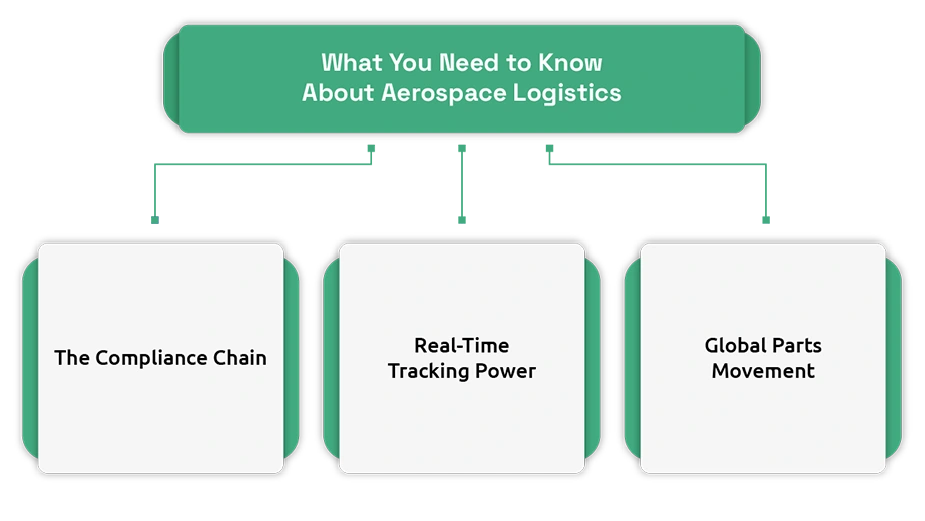
What You Need to Know About Aerospace Logistics
Aerospace logistics is highly time-sensitive and requires agreement. All aircraft components must be tracked, documented, and managed related to aviation officials’ guidelines. Parts such as import duties and tariffs, customs clearance requirements, and country regulations can directly affect the delivery schedule. Advanced supply chain management plans to help reduce these risks by combining warehousing solutions for import and export goods with predictive demand planning. In global work, the use of real-time shipment tracking and digital documentation confirms visibility, traceability, and quick decision-making, mainly during critical AOG service.
Optimize Aircraft Spares Inventory through Float Management
One of the most effective strategies used by aerospace 3PLs is float management, which involves maintaining a shared pool of rotables across multiple locations. Instead of holding excess inventory at every station, airlines depend on optimized supply chain methods to position parts mainly. This approach reduces capital lock-in while improving availability. Through advanced warehousing solutions and intelligent supply chain management, 3PLs confirm that consumables and rotables are refilled effectively. Exact categorization using the correct HS code and approval to Incoterms further simplifies the import and export process, reducing delays and unexpected costs related to duties and tariffs.
How Are Aircraft Parts Transported by 3PLs?
Aircraft parts are transported using a combination of air, road, and multimodal solutions depending on urgency and cost aspects. For important shipments, international freight services with priority handling are used to confirm quick delivery. Special packaging, shock-proof containers, and temperature-controlled environments protect sensitive components during shipping. All shipments, with real-time shipment tracking, allow customers to track shipments and respond proactively to disarrangement. Upon arrival, last-mile delivery services confirm parts reach the maintenance system or hangars without delay. Effective work between transportation and warehousing services allows smooth and quick shipping times.
How to Choose the Right Advanced Aerospace 3PL
Selecting the right aerospace 3PL requires analyzing more than basic logistics capabilities. A dependable provider should show expertise in customs clearance, import export documentation, and regulatory approval across multiple regions. The ability to provide Delivered Duty Paid service or manage DAP shipments effectively is a strong indicator of operational maturity. Also, strong warehousing solutions for import and export goods, combined IT systems for tracking, and proven IOR services are necessary to ship parts. An advanced 3PL service provider should also support long-term supply chain optimization by streamlining logistics plans with the airline’s working schedule.
Conclusion
The logistics of aircraft rotables and consumables is a difficult, valuable work that directly impacts airline dependability and profitability. By using specialized aerospace logistics expertise, 3PLs confirm quick availability of critical parts through improved supply chain management, complete customs processes, and effective transportation and warehousing services. From managing Incoterms and import duties to providing real-time shipment tracking and last-mile delivery services, advanced aerospace 3PLs work as major partners rather than simple service providers. In an industry where every minute matters, their role is indispensable in keeping aircraft flying safely and on schedule.
DID YOU KNOW?
Valued at $71.08 billion in 2023, this market is projected to grow to $73.41 billion in 2024 and is expected to reach $95.0 billion by 2032. This growth is consistent with a compound annual growth rate (CAGR) of 3.27% during the period from 2025 to 2032, reflecting the sustained demand across this sector.
FAQs:
What are aircraft rotables and consumables?
Aircraft rotables are repairable components such as avionics, landing gear parts, and engine accessories, while consumables include non-repairable items like seals, fasteners, and filters used during maintenance.
Why are 3PL providers important in aerospace logistics?
Aerospace 3PLs manage time-critical transportation, customs clearance, warehousing, and regulatory compliance to ensure aircraft parts are available without delays or AOG situations.
How do aerospace 3PLs handle Aircraft on Ground (AOG) situations?
They use priority international freight services, real-time shipment tracking, and last-mile delivery solutions to move critical parts quickly and minimize aircraft downtime.
What is float management in aircraft spare parts logistics?
Float management is a strategy where rotables are shared across multiple locations, reducing inventory costs while ensuring high availability through optimized supply chain planning.
What should airlines consider when choosing an aerospace 3PL?
Airlines should look for expertise in customs clearance, import-export documentation, Incoterms handling (DAP/DDP), real-time tracking systems, and global regulatory compliance.