
Introduction
Global logistics is undergoing a transformation driven by rapid innovations, and autonomous vehicles are at the forefront of this change. As supply chains become more difficult and customer trust continues to grow, logistics providers are exploring automation to improve delivery time, accuracy, and affordability. Autonomous vehicles are no longer a way to plan; they are growing as an effective approach that is changing transportation and warehousing systems. Real-time shipment tracking to customs clearance and last-mile delivery services is showing how goods move across borders.
The Growth of Autonomous Logistics
It has improved progress in AI, machine learning, and sensors. Autonomous trucks, loaders, and delivery robots are mostly tested and deployed across the logistics chain. These technologies support supply chain optimization by reducing dependency on manual work and reducing human issues. In large warehousing solutions for importing and exporting goods, autonomous systems enhance inventory accuracy while verifying compliance with import/export documentation requirements. As international freight services grow in volume, automation helps logistics providers manage complex regulations such as HS code classification, HTS Harmonized Tariff Schedule compliance, and Incoterms more efficiently.

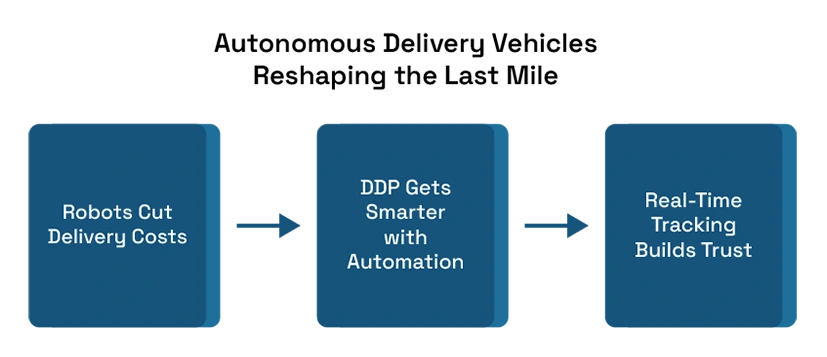
Autonomous Delivery Vehicles: Reshaping the Last Mile
Its most important effects of autonomous vehicles can be seen in last-mile delivery services. The last-mile delivery is frequently the most expensive and time-consuming part of logistics work, specifically in local processes. Autonomous delivery vehicles and drones provide quick and more affordable delivery options. These systems can work continuously, improving delivery on time while supporting Delivered Duty Paid service methods for cross-border shipments. Using autonomous shipment with real-time delivery tracking, logistics suppliers can increase customer clarity and dependability, mainly in e-commerce supply chains.
The effect of Autonomous Vehicles on Logistics
It is growing shipments to work constantly and minimizing delays. Self-driving trucks allow uninterrupted extended transportation, reducing shipping times for international freight services. Automation also increases agreement in customs clearance by confirming accurate data capture related to import duties and tariffs. With correct data handling, logistics suppliers can manage Importer of Record services and reduce issues related to documentation processing. Also, automation in logistics is used in transportation and warehousing systems, which allows businesses to make changes.
How Autonomous Vehicles Can Benefit Logistics
The use of autonomous vehicles provides some benefits across logistics work. Reduced fuel usage, improved routing, and improved safety to achieve cost savings and responsible growth goals. Autonomous systems also support supply chain management by improving dependability and reducing issues created by labor issues. A warehouse used for automated vehicles simplifies goods management and improves storage capacity, making warehousing solutions more flexible for the service. Global Trade simplifies import-export documentation processes and confirms that regulatory approval is necessary for managing customs clearance and shipment delays.
How Vehicle Automation Increases Logistics Efficiency
It increases logistics work by using intelligent systems across the supply chain. Automated trucks and warehouse vehicles collect and share information in real-time, allowing for correct demand projection and better supply chain improvement. These systems help logistics providers manage warehousing work more effectively while having transparency. Autonomous vehicles also support smoother work between ports, warehouses, and fulfillment hubs to reduce issues. When combined with real-time shipment tracking, automation confirms better tracking of shipments, improving customer trust.
Conclusion
Autonomous vehicles are showing increased efficiency, correctness, and flexibility in logistics. As global trade grows, automation will play a vital role in managing difficult logistics requirements from customs clearance and import taxes to complete delivery services. By combining autonomous technologies into supply chain management, businesses can achieve greater dependability and working excellence. While challenges remain, the long-term benefits of autonomous logistics improved safety, reduced costs, and increased supply chain performance, make it a changing force in the development of modern logistics.
DID YOU KNOW?
A total of 235 responses were collected from across Europe through an online stated preference survey, which were then analyzed using binary logistic regression.
FAQs:
- What are autonomous vehicles in logistics?
Autonomous vehicles in logistics are self-driving trucks, warehouse robots, and delivery vehicles that use AI, sensors, and machine learning to transport goods with minimal human involvement.
- How do autonomous vehicles improve supply chain efficiency?
They improve efficiency by reducing delivery times, optimizing routes, minimizing human error, enabling real-time shipment tracking, and improving inventory accuracy in warehouses.
- What role do autonomous vehicles play in last-mile delivery?
Autonomous delivery vehicles help reduce last-mile costs, ensure faster deliveries, operate continuously, and improve service reliability, especially in e-commerce logistics.
- How do autonomous systems support customs clearance and compliance?
Automation improves data accuracy for import-export documentation, HS code classification, and tariff calculations, reducing delays and compliance issues in customs clearance.
- Are autonomous vehicles safe for logistics operations?
Yes, when properly implemented, autonomous vehicles enhance safety by reducing human-related errors, improving navigation accuracy, and maintaining consistent driving behavior.