Overview
The global aviation industry is going into a complete-+ technological development defined by next-generation aircraft engines designed to deliver higher fuel efficiency, lower emissions, and extended operating life in the supply chain optimization. However, beyond engineering innovation, a less visible factor is changing the growth of progress through tariffs. In 2025, growing trade tensions and common duties across major aerospace markets have introduced new economic pressures on manufacturers and airlines with the Generalized System of Preferences (GSP). While tariffs frequently work as policy tools to protect local industries, their indirect problems are mainly affecting engine development schedules, aircraft manufacturing units, and long-term fleet economics. Industry groups have warned that new duties on aircraft engines and components may unintentionally stop supply stability and increase working risk across the global aviation chain.
Key Hidden Costs of Tariffs on Next-Generation Aircraft Engines Based on 2025–2026 Reports
Rising Development and Manufacturing Expenses
Next-generation engines depend on advanced goods such as ceramic matrix composites and high-temperature alloys sourced globally. Tariffs imposed on imported components grow manufacturing costs at multiple stages rather than only at final assembly, with the best trade compliance software for import export rules. A 2025 aerospace engineering analysis estimated that new tariffs could increase industry input costs by up to $5 billion annually, forcing manufacturers to absorb expenses or pass them on to airlines.
Delays in Aircraft Programs
Tariffs also amplify supply disruptions already affecting engine availability. In February 2026, Airbus reduced its manufacturer expectations after engine delivery issues with Pratt & Whitney, showing how cost pressures and supply constraints work on each other in the supply chain. Even small delays in engine certification or component sourcing can postpone aircraft deliveries by months or years, creating cascading financial impacts across airlines and leasing organizations working with the exporter of record service and the Importer of record Service solution.
Increased Maintenance and Lifecycle Costs
Tariffs not only affect new engines; they also raise the price of replacement modules and upgrades. Airlines working with modern engines get higher maintenance bills, which ultimately impact profitability with International freight services.
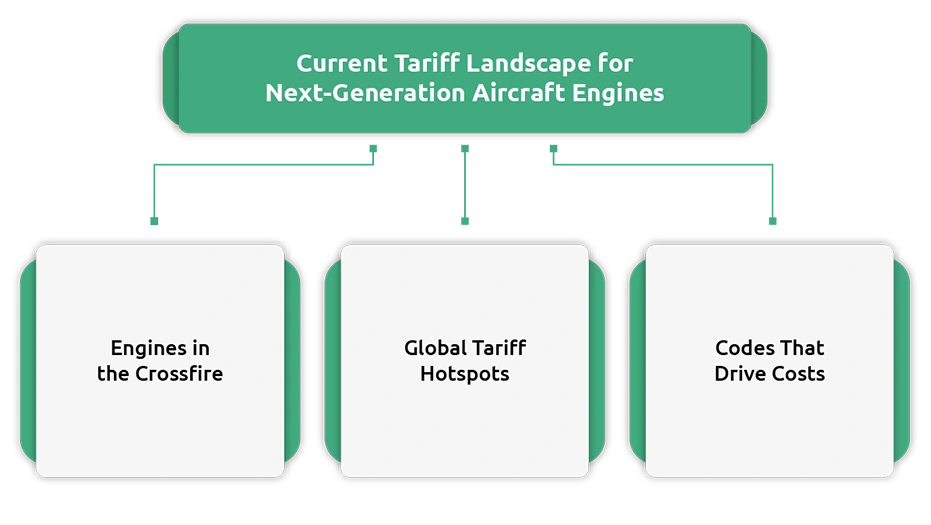
Current Tariff Landscape for Next-Generation Aircraft Engines
Global Policy Changes in 2025–2026
Trade policy changes have increased since 2025, with many economies introducing reciprocal tariffs affecting aerospace goods. In some cases, duties around 10% or more have already applied to imported aircraft and engine components, with the possibility of further increases under national security investigations. Recent trade negotiations show how quickly conditions change with the HS code and the HTS Harmonized Tariff Schedule. For example, new agreements in early 2026 adjusted tariff levels across multiple countries, with some rates reduced to around 15–18% depending on origin markets.
Major Industry Responses
Engine manufacturers are using a restructured sourcing chain. Companies such as Rolls‑Royce Holdings have expanded partnerships in growing aerospace hubs, including India, to reduce exposure to tariff uncertainty and varied production capacity with Inventory and order management.
The Uneven Impacts of Hidden Tariffs on Next-Generation Aircraft Engines Manufacturing
Large Manufacturers vs. Smaller Suppliers
Major engine builders frequently possess a global manufacturing presence that helps reduce sudden tariff shocks. Smaller suppliers, however, face strong margins and some relocation options, making them more vulnerable to cost changes. Can a customs broker handle both import and export documentation during shipments.
Innovation Slowdown Risks
Next-generation momentum programs require decades of investment with DAP and DDP. When tariffs expand material and certification fees, organizations may delay experimental technologies or growing research spending, slowing industry-wide innovation. Tariffs are also changing geographically with customs clearance. Asia-Pacific suppliers, specifically in India, are gaining importance as aerospace organizations change sourcing due to global trade tensions. Analysts project the global aerospace supply chain market could reach $250 billion annually by 2033, with new manufacturing regions capturing a growing share in the supply chain optimizations.

Conclusion
The hidden cost of tariffs on next-generation aircraft engines extends far beyond import duties. They change engineering decisions, manufacturing schedules, maintenance economics, and even the geographic system of aerospace manufacturing. While governments introduce tariffs to improve local industries, the aerospace sector works through a deeply connected global chain that cannot easily be changed in incoterms. The result is a difficult trade-off: short-term policy protection versus long-term efficiency in the new tariff. As airlines move toward aviation and manufacturers grow to deliver cleaner propulsion systems, managing tariff uncertainty may become important for advancing engine technology.
DID YOU KNOW?
As of December 14, 2025, the US has collected more than $133.5 billion in revenue from the tax hike announced by President Trump since he took office in January 2025, significantly higher than some estimates today.
FAQs:
1. How do tariffs affect aircraft engine manufacturing?
Tariffs increase the cost of imported raw goods and specialized components, growing overall production expenses and forcing manufacturers to adjust pricing or sourcing plans.
2. Why are next-generation aircraft engines sensitive to trade policies?
These engines depend on globally sourced advanced materials and precision components, making them highly vulnerable to duties, supply disruptions, and regulatory changes.
3. Do tariffs delay aircraft deliveries?
Yes. Higher costs and sourcing difficulties can slow engine production, certification timelines, and final aircraft assembly, leading to delivery delays for airlines.
4. How do tariffs impact airline operating costs?
Tariffs raise prices for engines, spare parts, and maintenance modules, increasing lifecycle and maintenance expenses that affect airline profitability.
5. Which regions benefit from aerospace tariff shifts?
Growing manufacturing hubs, mainly in Asia-Pacific regions, benefit as aerospace companies diversify sourcing and relocate production to reduce tariff exposure.