Overview
Global trade depends heavily on how effectively goods are shipped across borders. Yet many importers are learn that import rules differ mainly at airports and seaports. These differences affect customs clearance, documentation, inspection processes, and even the delivery schedule. Components such as international shipping terms, cargo size, security risks, and regulatory issues all change how officials manage imports. These differences help businesses plan better, reduce delays, and improve supply chain optimization. If you are working with international freight services, freight forwarding companies near me, or managing your own logistics, knowing why the rules change is necessary.
Why do Import Rules Differ at Airports for Goods
Fast, Secure, and High-Value Cargo
Airports mainly manage valuable, urgent, and perishable goods. Also, import rules at airports focus strongly on security screening, quick documentation review, and strong approval checks. Air cargo often benefits from premium delivery service options, but in return, authorities impose stricter verification.
Documentation and Classification
Importance of HS Code and HTS Harmonized Tariff Schedule
At airports, customs officials depend massively on the HS code and the HTS harmonized tariff schedule to categorize goods quickly and correctly. A small miscategorization can delay customs clearance or result in penalties. Because air shipments move fast, errors are detected immediately.
Trade Programs and Responsibilities
Air imports may also involve trade preferences such as the generalized system of preferences (GSP), which can reduce or eliminate duties on eligible products. In addition, clearly defining responsibilities under Incoterms, for example, DAP, is critical. When using DAPs, importers must confirm all airport-related import formalities are completed before cargo release.
Why do Import Rules Change Frequently at Seaports for Goods
High Volume and Various Cargo Types
Seaports manage a huge amount of containerized, bulk, and cargo. Also, regulations change frequently to respond to the crowd, new security risks, and environmental or trade guidelines. These changes directly affect inventory and order management, especially for organizations that depend on steady seaport shipments.
Developing Approval and Risk Controls
Impact on Customs Clearance and Freight Work
At seaports, officials regularly update inspection guidelines, scanning processes, and documentation requirements. These updates change how international shipping terms are applied and how freight forwarding companies near me work with port operators. Seaports are also more likely to impose random or intensive inspections, which can alter lead times.
Role of Importer and Exporter Services
Seaport imports frequently involve complex, multi-party logistics; many businesses depend on an importer of record service or an exporter of record service. These services confirm that regulatory responsibilities are met, duties are paid correctly, and agreement accept quickly to new port regulations.
What is the Difference Between Import Rules at the airport and the seaport?
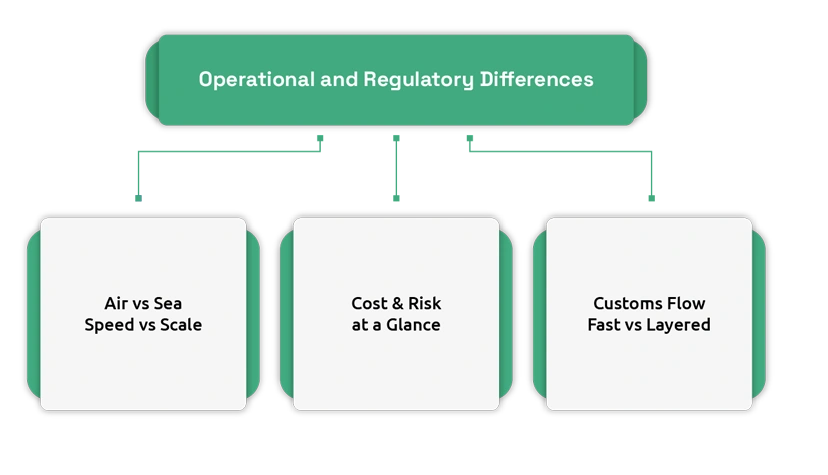
Operational and Regulatory Differences
Speed vs. Scale
The core difference depends on speed versus scale. Airports prioritize quick shipment, strong schedules, and high security, making their import rules more simplified but stronger per shipment. Seaports, on the other hand, handle huge sizes, varied cargo, and longer dwell times, resulting in layered regulations that change more frequently.
Cost, Risk, and Compliance
Air imports usually involve higher freight costs but faster customs clearance. Sea imports are more economical for bulk goods, but they see more frequent regulatory changes. Both environments depend on correct HS code usage, correct Incoterms, and work with the HTS harmonized tariff schedule to avoid disruption.
How One Union Solutions Helps You in Changing Import Rules
Integrated Trade and Compliance Support
One Union Solutions supports businesses by aligning regulatory agreements with trade operations. Through international freight services, tailored importer of record service, and exporter of record services, organizations can guide both airport and seaport requirements with confidence.
Optimizing the complete Supply Chain
From Freight to Final Delivery
We help importers respond quickly to regulatory updates. Whether managing air cargo under timely schedules or coordinating sea freight under changing port rules, their approach reduces risk and improves operational continuity.
Conclusion
Import rules differ at airports and seaports because each environment serves a clear purpose in global trade. Airports demand speed, security, and accuracy, while seaports focus on size management, developing risk guidelines, and flexible approval systems. These differences and working with expert partners, businesses can simplify customs clearance, reduce delays, and improve their global trade.
DID YOU KNOW?
Before importing from India, every business must first obtain an electronic Import-Export Code from the DGFT, which is a 10-digit number.
FAQs:
1. Why are import rules stricter at airports?
Because airports handle high-value, urgent, and sensitive cargo, customs authorities emphasize fast clearance, tighter security screening, and accurate documentation.
2. Why do seaport import regulations change more frequently?
Seaports manage massive cargo volumes and diverse goods, so regulations are frequently updated to address congestion, import rules, security risks, and trade compliance.
3. How do HS codes affect airport and seaport imports?
Correct HS code classification is critical in both, but air cargo depends heavily on quick, error-free classification to prevent immediate delays and penalties.
4. Which has faster customs clearance: airports or seaports?
Airports generally offer faster clearance due to lower cargo volumes and priority handling, while seaports may involve longer inspections and dwell times.
5. How can businesses manage changing import rules effectively?
By working with experienced international freight services and importer/exporter of record service providers, businesses can stay compliant and reduce shipment disruptions.