Overview
In global trade, it’s not unexpected for goods to manually reach on port or airport before the complete set of shipping documents arrives. This situation frequently shocks new importers, but for expert traders, it’s a familiar issue. Today’s fast transportation methods and increasingly difficult approval requirements mean that documents can lag behind cargo. When documents are delayed, shipments may sit inactive awaiting customs clearance, affecting inventory and order management and creating avoidable costs. Understanding why this happens and how modern solutions reduce the risk is necessary for smoother international freight services.
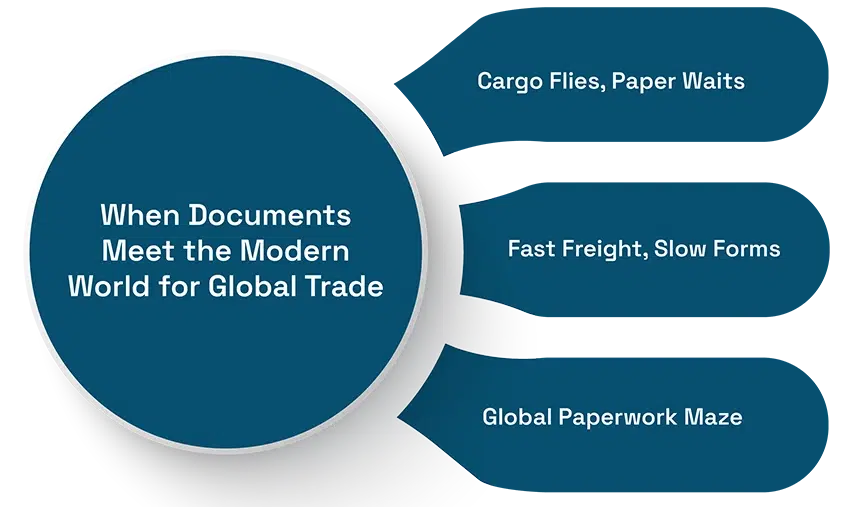
When Documents Meet the Modern World for Global Trade
Speed of Transport vs. Speed of Paperwork
Aircraft, express ships, and premium delivery service options have technically reduced logistics time. A shipment can move across regions in a matter of days or even hours. Also, documentation still depends on various providers such as exporters, freight forwarding companies near me, customs brokers, and authorities.
Even in an era of digitalization, original or verified documents may require manual checks or regulatory approvals. Any mismatch, such as an incorrect HS code, HTS Harmonized Tariff Schedule categorizations, or a missing license, can hold documents back while the cargo continues shipments.
Approval and Regulatory Stages
Every country has its customs clearance processes and international shipping terms. Incoterms define trade responsibilities; they don’t reduce the requirements for invoices, packing, and shipping documents. Changes in trade regulations, inspection, or Exporter of Record services can further slow documentation, increasing the chances that goods arrive ontime.
What If Documents Could Track Themselves During Shipments?
The Changes Toward Smart Documentation
Imagine documents that move at the same pace as cargo, visible, verifiable, and accessible in real time. This idea is no longer futuristic. Digital platforms now allow shipping data to be uploaded, shared, and monitored as the goods travel.
Smart documentation systems connect customers across the supply chain, from international freight services providers to importer of record services. Instead of waiting for couriered papers, importers can access document sets instantly, reducing delays at ports and airports.
Visibility Reduces Costly Surprises
When documents “track themselves,” businesses gain early alerts about missing information, duty issues, or data mismatches. This visibility supports supply chain optimization by allowing corrective action before cargo lands, rather than after storage and demurrage charges begin.
How Smart Documents Actually Work for Goods Shipments
Data Integration Across the Supply Chain
Smart documents pull data directly from booking systems, trade invoices, and customs platforms. Freight forwarding companies near me, carriers, and approval partners all work from the same digital source. This reduces duplication and reduces the risk of inconsistent information.
Automation and Agreement Checks
Advanced platforms run automatic checks against tariff databases, licensing rules, and country-specific requirements. This helps confirm correct HS code usage and stops documentation errors that frequently delay release. Instead of discovering problems after arrival, corrections can be made while goods are still in logistics.
Faster Customs Interaction
Digital document readiness allows customs authorities to review files in advance. When paperwork is pre-cleared or nearly complete, the window between arrival and release is reduced, even under difficult international shipping terms.
How One Union Solutions Helps You in This Situation
Completing the Gap Between Cargo and Documents
One Union Solutions supports businesses when goods arrive before documents by providing systematic Importer of Record services, coordinated international freight services, and document management support. Their approach focuses on aligning shipment movement with the readiness of paperwork.
End-to-End Trade Support
From pre-shipment review to customs clearance coordination, we help confirm documents are accurate, compliant, and available on time. This reduces dependency on last-minute fixes and supports smooth premium delivery service expectations.
Conclusion
Goods arriving before documents is a common reality of modern global trade. Faster transportation, layered approval rules, and manual processes all contribute to this mismatch. Additionally, the growth of smart documentation, combined platforms, and professional trade support services is transforming how businesses address this challenge. With visibility, automation, and expert support, organizations can confirm that paperwork keeps pace with cargo. The result is some delays, more predictable customs clearance, and a more flexible international supply chain.
DID YOU KNOW?
From January to November this year, Chongqing issued 18,377 ‘single-document’ multimodal transport bills of lading, a 38.2 percent increase compared to the previous year. Of these, 6,891 bills were in digital format, representing a 67.9 percent increase.
FAQs:
1. Why do goods sometimes arrive before shipping documents?
Because transportation is faster than document processing. Approvals, manual checks, regulatory requirements, and data errors can delay paperwork while cargo continues moving.
2. What problems occur when documents are not ready on arrival?
Shipments can be held at ports or airports, leading to storage charges, demurrage, delivery delays, and disrupted inventory planning.
3. What are smart documents in global trade?
Smart documents are digital, connected records that move in real time across the supply chain, giving stakeholders visibility and early warnings of missing or incorrect information.
4. How do smart documentation systems help customs clearance?
They allow pre-submission of paperwork, automated compliance checks, and faster corrections, reducing the time between cargo arrival and release.
5. Can smart documentation really reduce logistics costs?
Yes. By preventing document errors and enabling early action, businesses can avoid penalties, storage fees, and last-minute emergency fixes.