Overview
Aircraft parts frequently require traceability back to the production because aviation is one of the most highly regulated industries. All parts installed on an aircraft must be checked, documented, and connected to confirm safety and regulatory approval. Whether parts are moving through international shipping terms, customs clearance processes, or global maintenance networks, traceability protects operators from avonics parts, technical issues, and agreement violations. As global aviation expands, traceable aircraft parts have become a cornerstone of responsible trade, safe maintenance practices, and ethical work.
What Is Aircraft Parts Traceability?
Understanding Traceability in the Aviation Industry
Aircraft parts traceability refers to the ability to track a component’s complete history from the original manufacturer to every owner, repair station, and installation point. This includes records of production, testing, storage, shipment, maintenance, and overhaul. Traceability confirms that every aircraft part used in service is authentic, approved, and complete for operation.
How Traceability Works Across Global Shipments
As aircraft components cross borders through international freight services, importer of record service, and exporter of record services, traceability documentation travels with the part. This confirms that regulators, airlines, and maintenance organizations can verify the identity and status of parts even when supported by freight forwarding companies near specialized aviation transport partners.

Building Trust in Global Aviation Through Aircraft Parts Tracking
Aircraft parts tracking helps companies know where every part comes from & where it is used. This improves aviation safety by making sure only approved and tested parts are installed on aircraft. Good tracking also supports compliance with aviation rules & makes inspections easier. A strong supply chain helps parts ship safely between countries without unnecessary delays. It also helps companies quickly find and replace parts if needed. Clear records reduce mistakes and support faster maintenance. These steps build trust in global aviation, improve maintenance, and help keep aircraft safe and ready to go.
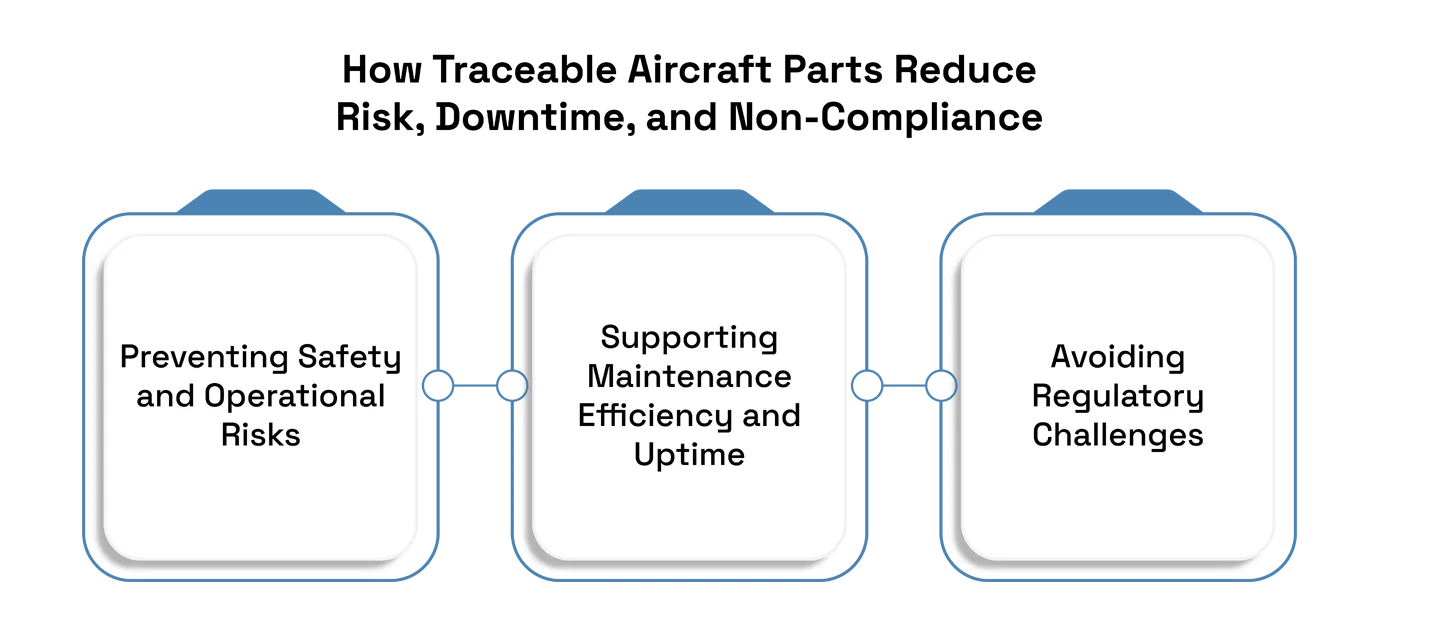
How Traceable Aircraft Parts Reduce Risk, Downtime, and Non-Compliance
Preventing Safety and Operational Risks
Untraceable aircraft parts increase the risk of mechanical issues, unapproved installations, and grounding of aircraft. When traceability is in place, operators can immediately verify manufacturer data, service history, and agreement records, helping maintenance teams avoid installing questionable parts.
Supporting Maintenance Efficiency and Uptime
Traceability improves inventory and order management by giving maintenance teams real-time visibility into available certified parts. This reduces delays during inspections, repairs, and AOG (Aircraft on Ground) situations, even when premium delivery service solutions or urgent international freight services are required.
Avoiding Regulatory Challenges
Need exact documentation, aircraft parts may be held during customs clearance, rejected by aviation officials, or removed from service. Traceable parts help organizations meet regulatory issues while supporting broader supply chain optimization across aviation maintenance and operations.
Required Documentation for Aircraft Parts Traceability
Core Traceability Records
Manufacturer and Production Documentation
These records link the part directly to its origin and confirm it was produced under approved manufacturing conditions. They form the support of aircraft parts traceability and are necessary when parts are transferred internationally.
Maintenance, Repair, and Overhaul Records
Repair station certificates, inspection reports, and service start the continued airworthiness of components. These documents must remain complete throughout the life of the part.
Commercial and Trade Documentation
Traceability documentation is often reviewed alongside shipping and import records managed through the importer of record service and the exporter of record service providers. Accurate paperwork supports customs clearance, protects ownership rights, and stops parts from being delayed or detained during international shipments.
Why Aircraft Parts Traceability is Needed for Safety and Approval
Protecting Goods and Aircraft Parts
Aircraft parts traceability directly affects aircraft safety. It allows operators to quickly identify affected parts during airworthiness regulation or safety investigations. This quick response capacity is only possible when parts are fully traceable back to the manufacturer.
Meeting Global Regulatory Expectations
Aviation authorities globally expect complete traceability for aircraft components, regardless of where they were sourced or repaired. Whether parts are transported through international freight services or sourced from global suppliers, traceability confirms regulatory work and audit arrangements.
Improving the Aviation Supply Chain
Traceable aircraft parts improve trust among manufacturers, airlines, MROs, and freight forwarding companies by creating clarity across the region. This tracking supports good decision-making, easy customs clearance, and improves supply chain optimization across aviation organizations.
Conclusion
Aircraft parts frequently need traceability back to the manufacturer because aviation safety depends on certainty, documentation, and responsibility. From production to installation, and across international shipping terms, maintenance cycles, and customs clearance checkpoints, traceability protects aircraft operators from working risk, regulatory violations, and safety issues. When supported by systematic inventory and order management, dependable international freight services, and a compliant importer of record service system, traceability becomes more than a regulatory requirement; it becomes a major advantage. In a global aviation market, traceable aircraft parts are necessary for safe operations, trusted trade, and long-term industry sustainability.
DID YOU KNOW?
In practice, most operators and MROs (Maintenance, Repair, and Overhaul) require dual certification, such as FAA Form 8130-3 or EASA Form 1, to ensure that materials can be easily transferred across borders.
FAQs:
Why is parts tracking important for international aviation?
It helps parts move smoothly between countries, supports customs checks, and makes sure aviation rules are followed during global shipments.
Can an aircraft part be used without proper records?
No. Aircraft parts should have complete records before they are installed to help meet safety and aviation rules.
What documents are required for aircraft parts traceability?
Common documents include manufacturer certificates, production and testing records, maintenance and overhaul reports, and commercial shipping and customs paperwork.
How does traceability support aviation safety?
Traceability allows operators to quickly identify affected parts during inspections, airworthiness directives, or safety investigations, enabling faster corrective action.
How does aircraft parts traceability affect international shipping?
Traceability documents travel with the part, supporting customs clearance, regulatory audits, and proof of origin when parts move across global supply chains.