Overview
Used medical equipment plays a critical role in healthcare, but once it comes to the end of its usable life, it can present serious health and regulatory issues. Many people suppose old devices can simply be resold, stored, or shipped. Also, used medical equipment may be treated as medical waste, depending on its condition, contamination level, and calculated management. This categorization affects customs clearance, international shipping terms, and even how freight forwarding companies near me manage such shipments. These variations are necessary for healthcare providers and businesses involved in international shipping.
What is Medical Waste?
Definition and Scope
Medical waste refers to any waste generated during healthcare work that may present a risk of infection, injury, or environmental issues. This includes biological goods, medical equipment, and certain types of used medical equipment.
Common Types of Medical Waste
- Infectious waste with blood or bodily fluids
- Sharps such as needles and surgical tools
- Pathological and biotechnology waste
- Discarded or damaged medical devices
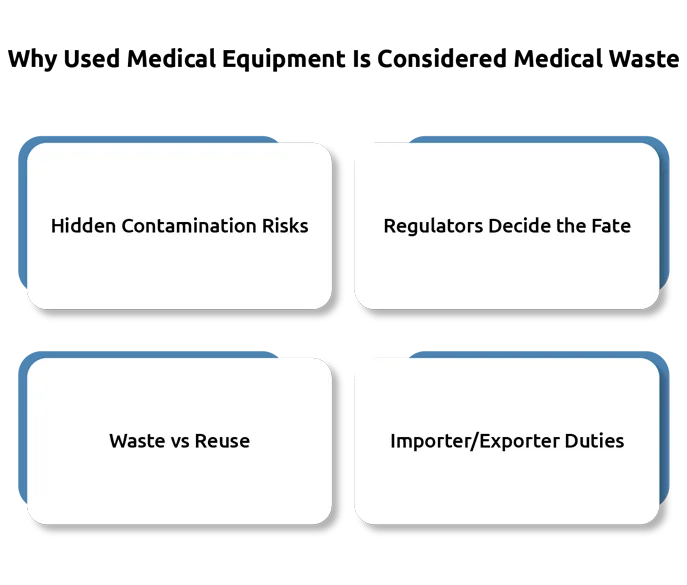
Used medical equipment that cannot be fully decontaminated, repaired, or safely reused is frequently placed under this category. Once categorized as medical waste, it is no longer treated like standard inventory and cannot move through normal logistics trade or routine international freight services.

How Should Used Medical Equipment Be Managed Before Disposal?
Before disposal, used medical equipment should be checked carefully to decide whether it can be reused or should be checked as medical device waste. Healthcare equipment facilities should separate equipment properly, label it correctly, & store it in a safe place until collection. These simple steps help minimize health risks, support regulatory compliance, & make the removal process safer. Proper managing also protects healthcare equipments workers and helps make sure used medical equipment is managed safely.
Why Used Medical Equipment Is Considered Medical Waste
Risk of Contamination and Infection
Used medical equipment frequently comes into direct contact with patients, blood, material, or devices. Even devices that appear clean may carry an invisible condition. Regulators may treat them as possible medical waste to stop cross-contamination, unsafe resale, or improper international shipping terms.
Regulatory and Approval Factors
Healthcare authorities and environmental agencies impose strict handling and transport rules. If equipment is damaged, outdated, or unfit for reuse, it may be legally categorized as medical waste. This affects how customs clearance is performed and whether specialized importer of record service or exporter of record services are required to manage approval responsibilities.
Medical Equipment Waste Categorization and Separation
Proper Classification
Not all used equipment becomes waste. Functional devices intended for legitimate resale or donation may move through controlled trade channels. Also, equipment that is broken, contaminated, or beyond repair is mainly categorized as medical waste.
Key Categories Include:
- Infectious equipment waste
- Electronic medical device waste
- Chemical-contaminated equipment
- Sharps-related devices
Correct categorization supports safe disposal and avoids regulatory violations that could disrupt inventory and order management or delay international movements.
Segregation and Safe Handling
Separation at the point of disposal is necessary. Mixing general waste with medical equipment waste increases risk and costs. Facilities frequently use labeled containers, sealed packaging, and tracking systems to confirm traceability. This systematic approach also supports supply chain optimization when coordinating certified waste handlers, storage providers, and approved freight forwarding companies near me.
Medical Waste Management After Throwing Away Used Equipment
Collection, Storage, and Treatment
After disposal of used medical equipment as waste must be authorized by operators. Short-term storage must stop leakage, vulnerability, or unauthorized usage. Treatment methods such as steam, decontamination, or sensitive devices, depending on the equipment.
Transportation and Cross-Border Handling
If medical waste or decontaminated equipment crosses borders, documentation becomes highly sensitive. Specialized international freight services may be needed, along with clearly defined international shipping terms. In many cases, businesses depend on exporter of record services and importer of record service providers to manage regulatory responsibilities, permits, and compliant customs clearance.
Some companies also integrate secure pickup, tracking, and even premium delivery service options to confirm waste reaches approved treatment facilities without disruption.
Role of Professional Service Providers
Professional partners help coordinate transport, storage, and reporting while maintaining safety and legal compliance. When worked exactly, these services improve risk control, reduce delays, and support complete logistics efficiency without compromising health or environmental systems.
Conclusion
Used medical equipment may be treated as medical waste when it causes contamination, safety, or environmental risks. Understanding these categorizations is necessary for healthcare organizations and businesses involved in disposal, resale, or international shipment. Proper categorization, segregation, and professional medical waste management protect public health and confirm regulatory agreement. Working with qualified service providers and systematic processes from safe disposal to complete international handling, organizations can manage used medical equipment responsibly while maintaining control over operations, documentation, and cross-border shipments.
DID YOU KNOW?
According to the World Health Organization (WHO), around 85% of healthcare waste is non-hazardous, while the remaining 15% is considered hazardous and may be infectious, chemical, or radioactive. Proper classification and handling of used medical equipment are essential to protect public health and the environment.
FAQs:
1. Is all used medical equipment considered medical waste?
No. Only equipment that is contaminated, damaged, expired, or unsuitable for safe reuse is categorized as medical waste. Functional and properly decontaminated devices may qualify for resale or donation under controlled regulations.
2. Why is used medical equipment often classified as medical waste?
Because it may carry infection risks, chemical residue, or biological contamination. Regulations aim to prevent cross-contamination, unsafe reuse, and environmental harm.
3. How does medical waste classification affect international shipping?
Once categorized as medical waste, equipment cannot move through normal logistics channels. It requires specialized international freight services, permits, and strict customs clearance procedures.
4. What happens if used medical equipment is incorrectly classified?
Incorrect classification can lead to regulatory violations, shipment delays, penalties, or seizure by customs authorities, along with serious health and environmental risks.
5. Who should handle the transportation and disposal of medical equipment waste?
Certified medical waste handlers, approved logistics providers, and professional importer of record or exporter of record services should manage transport, documentation, and regulatory responsibilities.