Overview
African aviation markets are seeing a growing working crisis as aircraft parts shortages and tariff sanctions change global aerospace supply chains. Airlines across the continent depend massively on imported aircraft, engines, and maintenance services, making them specifically caused by sanctions, manufacturing delays, and restricted access to spare components. According to recent industry estimates, the global aircraft order backlog has crossed 17,000 aircraft, creating delivery waiting periods that can extend up to 14 years. These delays are restricting fleet expansion and airlines globally, mainly in Africa, from continuing to work with aircraft for longer periods. Despite strong passenger demand recovery after the pandemic, African carriers are working on hugely reducing trade. Industry data shows airlines earned roughly $1 per passenger in 2024, far below the global average of $7.20, leaving a small economic problem with maintenance and spare parts supply.
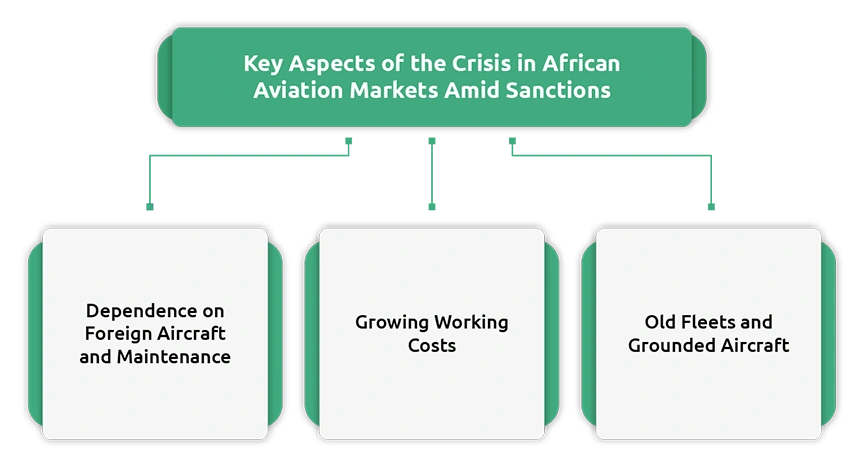
Key Aspects of the Crisis in African Aviation Markets Amid Sanctions
Dependence on Foreign Aircraft and Maintenance
African airlines work fleets largely manufactured outside the country, with most aircraft requiring servicing in Europe, the Middle East, or Asia. This dependency increases downtime when spare parts become insufficient or when sanctions stop the supply chain. Sanctions affecting global aviation networks, specifically those connected to geopolitical issues, have stronger access to approved components and maintenance support. Also, delivery times for repairs have improved hugely, reducing aircraft availability across multiple African shipments.
Growing Working Costs
Supply shortages are seeing higher leasing costs, extended maintenance cycles, and increased insurance expenses. Jet fuel prices in Africa remain about 17% higher than global averages, further squeezing airline profitability. Also, shortages of global currency in many African economies make it difficult for airlines to pay overseas suppliers, due to the effects of sanctions and delays in the buying of critical components.
Old Fleets and Grounded Aircraft
Global engine dependability issues and limited spare parts availability have led to record aircraft groundings. The average fleet globally has grown to nearly 15 years, compared with 13 years a decade earlier in the trade. Older aircraft require more frequent maintenance, creating a cycle where shortages of working inefficiencies, and reduced route dependability in the supply chain.
Aviation Industry Faces Delays Amid Spare Parts Shortage in African Aviation Markets
Maintenance Backlogs and Delivery Delays
Aircraft manufacturers remain behind schedule, with deliveries running about 26% below earlier projections despite increased production targets in the DAP and DAPs. For African airlines, delayed deliveries mean growth plans must be postponed while their fleets undergo long-term maintenance checks. Limited engine availability has also slowed the repair schedule, and aircraft have been parked longer than expected in the country.
Real-World Airline Impact
Kenya Airways experienced a $94 million loss early in 2025, mainly due to aircraft and a spare parts shortage. Airline numbers dropped by 14%, while revenues reduced by 19% due to reduced working capacity in the country. Across the country, similar challenges are growing as carriers attempt to restore schedules while managing increased maintenance costs and unpredictable parts delivery schedules.
Global Aircraft Parts Shortage Grounds African Airlines Amid Sanctions
Supply Chain Problems Continue in the global trade
Industry projections suggest global aviation supply restrictions could cost airlines more than $11 billion in 2025, seen by huge maintenance fees, delayed aircraft deliveries, and the need to have older fleets. Also, questions like can a customs broker handle both import and export documentation. More than 1,100 mainly new aircraft globally remain in storage due to engine issues and spare parts shortages, showing the growing problem affecting airline supply chain optimization.
Limited Regional System
Another structural problem is the need for large maintenance, repair, and overhaul (MRO) systems within Africa. Airlines frequently depend on overseas workshops, extending downtime whenever sanctions or logistical restrictions slow parts shipments with incoterms. Also, passenger demand in Africa continues to grow, projected at around 8% traffic growth in 2025, creating a mismatch between growing demand and limited working capacity.

Conclusion
African aviation markets stand at a critical crossroads as sanctions, global production delays, and spare-part shortages converge to change airline operations. While demand for air travel across the continent is slowly increasing, aging fleets, grounded aircraft, and growing maintenance costs are slowing the growth of shipments using services such as exporter of record service and importer of record service. The crisis highlights the urgent need for regional investment in maintenance systems, collaborative spare-parts supply through international freight services, and varied sourcing Inventory and order management.
DID YOU KNOW?
Airlines, airport operators, airport retailers, air navigation service providers and civil aircraft manufacturers directly contribute $12 billion, equivalent to 0.35 percent of Africa’s total gross domestic product (GDP).
FAQs:
1. Why are African airlines facing aircraft parts shortages?
African airlines depend heavily on imported aircraft components and overseas maintenance facilities. Sanctions, global supply chain disruptions, and manufacturing delays have limited access to spare parts.
2. How do sanctions affect African aviation markets?
Sanctions restrict access to approved suppliers, delay parts shipments, increase compliance requirements, and raise operational costs for airlines.
3. What impact do spare parts shortages have on airline operations?
Shortages lead to grounded aircraft, longer maintenance cycles, reduced flight schedules, and higher leasing and repair expenses.
4. Why are aircraft delivery times increasing globally?
Aircraft manufacturers face production bottlenecks, engine reliability issues, and large order backlogs, causing delivery wait times that can extend for years.
5. How can African aviation markets overcome supply chain challenges?
Investment in regional maintenance facilities, diversified sourcing, improved logistics partnerships, and stronger inventory management systems can reduce dependency on overseas suppliers.