Major Aircraft Loading Restrictions and Considerations in Temperature-Controlled Cargo
Shipping temperature-sensitive cargo by air requires strong planning because aircraft systems differ hugely from ground storage systems. Airlines must follow correct loading restrictions to maintain product integrity, mainly for medical tools and biologic devices.
One of the main limitations of cargo is temperature zones. Not every aircraft section maintains the same temperature range, and some areas may experience changes during ascent, descent, or ground handling. Temperature-controlled containers must be situated carefully to allow for aircraft cargo while allowing proper airflow around active or passive cooling storage. Right HS code categorizations and the HTS Harmonized Tariff Schedule help customs officers check cargo requirements, confirming and reducing delays during customs clearance. Proper packaging and insulation are also essential to prevent temperature fluctuation during transit. Airlines often use monitoring devices to track real-time temperature conditions throughout the journey. Maintaining the cold chain also depends on using proper insulated packaging and temperature-controlled containers. This helps protect sensitive goods from heat or temperature changes during transit.
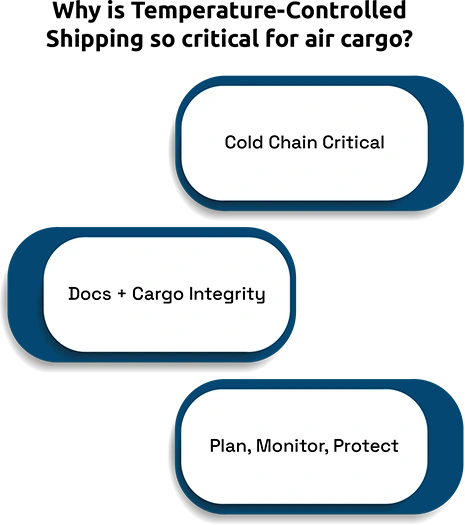
Why is Temperature-Controlled Shipping so critical for air cargo?
Cold chain shipping secures goods that become unsafe in storage. Medical, clinical trial devices, and specialty electronics all depend on stable temperature ranges throughout shipments. Trade terms also change responsibility during logistics. Agreements such as DAP or DAPs under Incoterms define when risk changes between buyer and seller, which directly affects who manages temperature tracking and insurance coverage. Proper planning under these terms helps to stop issues if temperature problems occur in logistics.
In some cases, exporters working under trade preference programs such as the generalized system of preferences (GSP) must confirm documentation accuracy alongside cargo integrity. Incorrect documentation combined with temperature damage can result in shipment rejection or loss of tariff benefits.
Principles of Temperature-Controlled Air Transport
Maintaining the Cold Chain
The most core principle is having an unwanted cold chain from origin to destination. This includes pre-conditioning cargo, temperature-controlled storage at airports, and reducing problems during aircraft loading and unloading of cargo.
Regulatory Agreement and Documentation
International air shipments require agreement between exporters, freight forwarders, and customs officials. Many organizations depend on exporter of record services or Importer of record Service providers to manage approval problems across multiple administrative departments.
Businesses frequently ask, can a freight forwarder be an exporter of record? In some cases, yes, provided legal authorization and regulatory requirements are completed in global trade. Also, organizations may question whether a customs broker can handle both import and export documentation. Expert brokers can support both processes, improving efficiency and reducing approval risks of customs clearance.
Technology and Visibility
Modern air cargo work depends on tracking systems on devices connected to Inventory and order management platforms. Organizations mainly used the best trade compliance software for import export rules to automate categorizations, documentation, and shipment validation. These tools provide effective Supply chain optimization, helping businesses see risks and have temperature stability throughout shipments.
What time alerts improve air cargo logistics?
Real time alerts improve air cargo logistics by providing instant notification about shipment status changes, delays, or temperature deviations. This allows companies to take quick right action before problems become serious. They help keep goods safe by avoiding long storage times that can cause damage. Alerts also improve coordination between airlines, shippers, and customs teams. By enabling faster decision-making they reduce delays and improve delivery accuracy.
Best Practices for Safe Temperature-Controlled Air Shipments
Temperature-managed shipping needs careful planning to keep products safe during air freight. Using proper packaging, checking the correct temperature, and following to proper supply chain operations all help to protect sensitive goods. Good shipment handling at airports and during transit decreases the possibility of damage or delays. Regular temperature monitoring and visible labels also contribute to cargo safety. Shipments should be handled with care by experts at all phases. Planning the perfect shipping route can also help you avoid unnecessary delays. Following these best practices makes sure that shipments reach safely, in proper condition, & on time.
How Temperature-Controlled Cargo Confirms Secure Delivery of Goods?
Specialized Handling Processes
TCC Logistics combines temperature validation at every stage of logistics. Cargo undergoes pre-shipment inspection, packaging verification, and route planning worked with airline capabilities. Through advanced International freight services, shipments are matched with aircraft providing suitable temperature-controlled sections.
Approval-related work Processes in the import-export
The company works closely with air cargo providers and customs officials to confirm smooth customs clearance and regulatory approval. Expert teams manage categorization, Incoterms selection, and documentation accuracy to stop delays that could affect temperature-sensitive goods.
End-to-End Tracking of shipments
Real-time monitoring systems track temperature situations throughout shipments. Alerts allow immediate corrective actions if risks arise during transfers or unexpected delays. Combined with strong partnerships and improved routing plans, this approach increases dependability while supporting broader Supply chain optimization.
What guidelines are followed for handling temperature-controlled shipments?
Strict cold chain protocols, packaging standards, monitoring systems, and airline regulations are followed throughout transport.

Conclusion
Aircraft loading restrictions for temperature-controlled cargo are related to protecting sensitive goods while confirming aviation safety and regulatory agreement. Cargo situating and packaging requirements, including documentation accuracy and trade terms, every stage changes the shipment completion. As global trade expands, businesses must combine working expertise with compliance knowledge, advanced tracking technologies, and dependable logistics partners. By applying systematic temperature-control principles, exporters can maintain product integrity, reduce losses, and achieve effective international air logistics operations.
DID YOU KNOW?
Dublin Port has completed a €3.4 million investment in new refrigerated container facilities to support growing demand for temperature-controlled cargo.
FAQs:
1. What is temperature-controlled cargo in air freight?
Temperature-controlled cargo refers to goods that must remain within specific temperature ranges during air transport to prevent damage or loss of effectiveness.
2. Why are aircraft loading restrictions important for cold chain shipments?
Aircraft loading restrictions help maintain stable temperature conditions, proper airflow, and aviation safety while protecting sensitive cargo.
3. Which products require temperature-controlled air shipping?
Surgical tools, biologics, medical devices, clinical trial materials, and certain electronics commonly require controlled temperature transport.
4. How do airlines maintain temperature during air cargo transport?
Airlines use temperature-controlled compartments, active or passive containers, monitoring devices, and controlled ground handling procedures.
5. Who is responsible for temperature monitoring under Incoterms?
Responsibility depends on agreed Incoterms; risk transfer determines whether the buyer or seller manages temperature tracking and insurance coverage.