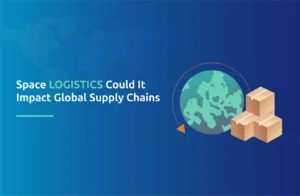
Introduction: Why Space Logistics Matters for Global Supply Chains
Managing the transport, delivery, and repair of goods and equipment in space is known as space logistics. Satellite launch, cargo shipping, aircraft repairs, and maintenance of upcoming space station and other space technology are a few examples of this. These days, logistics is more than just roads, ports, airports, and warehouses. Global supply chains currently use drones for supply chain visibility, tracking, routing, and communication. According to plans from the World Economic Forum, the global space economy may increase from about $630 billion in 2023 to $1.8 trillion by 2035, opening up new business opportunities for industries such as transport and logistics. Space may become another part of the supply chain as space shipments, satellite maintenance, space stations, and space-based technology develop. Businesses can use space technology in the future to help shipment transport and services in space in addition to tracking goods on Earth.
What Is Space Logistics?
Space logistics means the handling of equipment shipment, delivery, servicing, and dispose in space. Space cargo, satellite deployment, orbital logistics, and space transport are all involved. Similar to how businesses on this planet require logistics services, aircraft will require regular supplies, equipment, and support as space travels grow. It may also involve space manufacturing, in-space building, refueling, and satellite servicing. Large structures may be developed directly in space, and future aircraft could refuel or repair stations. Removing trash will also be important for maintain the safety of useful orbits. As part of its work on in-space servicing, setup, and production, NASA is developing technologies for these purposes. The growth of business space tasks might be helped by space logistics. Businesses will want reliable services to transport equipment, make repairs, handle older spacecraft securely, and handle supplies as more satellites, aircraft, and space stations run in orbit. As a result, space logistics services may play an important part in the growing space economy.
How Is Space Technology Already Supporting Global Supply Chains?
Businesses are already using space technology to improve the visibility and efficiency of their supply chains. Information about a cargo, transport systems, transportation paths, and infrastructure can be derived from satellite tracking, GPS, satellite communication, and the study of the earth These technologies are identified by the World Economic Forum as important tools for improving supply chain visibility and transport. Satellites can help companies in tracking goods and equipment over large or remote areas. By showing the locations of vehicles and other goods, GPS logistics helps inventory tracking, route planning, and cargo tracking. Businesses can stay connected in places with limited use of daily communication networks by using satellite communication logistics. Also, details on roads, ports, weather, and other factors that could affect transport can be received by using ground-based satellites. When paired, these technologies may allow real-time cargo tracking, satellite supply chain visibility, and improved supply chain decision-making.
Could Space Logistics Change Global Supply Chains?
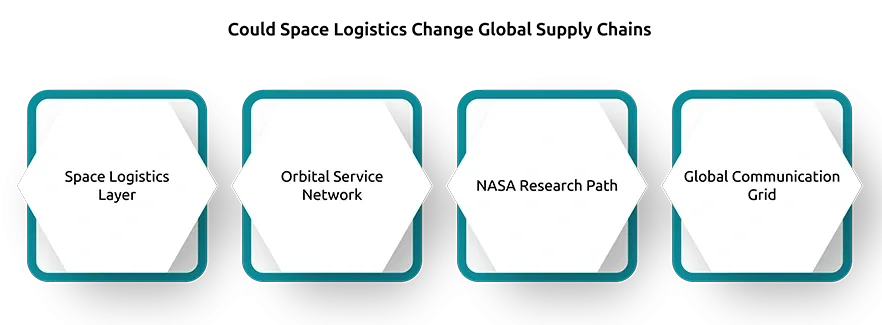
Global supply chains could possibly involve space logistics as well. Tracking, routing, communication, and supply chain visibility are already helped by drones now. Businesses must respond more quickly to delays or changes by knowing the location of goods and trucks. By helping businesses in keeping track on remote locations, routes for transport, the weather, and infrastructure, satellite communication and Earth monitoring may also improve supply chain resilience. Cargo delivery, satellite service, and other logistical tasks can possibly be supported by space transit networks and orbital services. Future methods for shipping equipment and cargo between Earth and space are already being studied by NASA. Space logistics is unlikely to replace normal transport such as trucks, ships, and aircraft. Instead, it could add a new layer to global logistics and create new space supply chain infrastructure over time.
How AI and Automation Could Power Space Logistics
Automation and AI may make space logistics safer and easier. AI can help with real-time data analysis, task planning, & route planning, allowing aircraft to react to changing situations more quickly. Certain decisions can also be made by autonomous spacecraft without relying on directions from Earth. Robots could help with autonomous shipping, cargo handling, checks, and satellite repair. AI can also help with planned repairs by identifying possible problems before they become major. Automation can help control space traffic and reduce the chance of crashes as more spacecraft run in orbit. Robotics, automated space operations, and automated spacecraft technologies are already being designed by NASA and ESA.
Will Space Logistics Replace Traditional Logistics?
No, space logistics don’t ever take the place of traditional logistics. A large amount of products on Earth will keep being moved by trucks, trains, ships, aircraft, ports, and warehouses. Further, through improved data, satellite tracking, navigation, and communication, space technology will help global supply chains. Space stations, cargo delivery, and satellite service may all be supported in the future by space logistics services. Technologies have already been created by NASA for these reasons.

Conclusion: Could Space Logistics Impact Global Supply Chains?
Space logistics will not replace traditional logistics soon. But satellites, tracking, navigation, and communication are already helping supply chains work better. As the space economy grows, space logistics services could become another useful part of global supply chains.
Did you know
The global space logistics market size was valued at USD 1.69 billion in 2025. The market is projected to grow from USD 2.01 billion in 2026 to USD 7.87 billion by 2034, exhibiting a CAGR of 18.62% during the forecast period.
FAQ
How can space logistics affect global supply chains?
It can improve tracking, communication, navigation, and supply chain visibility. It may also create new ways to move goods and equipment in space.
What are the challenges of space logistics?
The main challenges include high costs, space debris, safety, & complex technology. Space also has limited infrastructure.
How can space technology help remote areas?
In areas where regular networks are limited or insufficient, satellites can offer tracking, communication, and helpful information.
Can space logistics make supply chains more resilient?
Yes. Satellite communication and Earth observation can help businesses stay connected and monitor problems, especially in remote areas.
Could space logistics create new business opportunities?
Yes. Growing space activities could create demand for cargo delivery, satellite servicing, maintenance, tracking, and other space logistics services.