Evolution of Air Cargo Scheduling
In 2025, there will be important changes in Air cargo scheduling. The air cargo market has become the target of the growing demand for quick and more trusted deliveries. Logistics optimization and modern technology are more significant than ever in satisfying these needs. Air freight planning has moved from manual planning to data-based planning. These advancements assist in efficiently transporting valuable IT equipment, aviation parts, automobile parts, and healthcare equipment worldwide. Airports and freight forwarder are concerned with speed and accuracy to prevent delays and additional time to comply with strict delivery schedules.
The Importance of Predictive Analytics in the 21st Century of Air Cargo
Predictive analytics relies on data knowledge to predict forthcoming occurrences and tendencies in logistics. The AI & machine learning models used in the air cargo process historic and real-time data. This assists in forecasting demand peaks and blockages and recommending the optimal routes to use in deliveries. Predictive models enhance scheduling since they can predict changes before they occur. Cargo forwarder and importer of record use such tools to make smart decisions within a short time. The method decreases the amount of guesswork and increases visibility of the supply chain, rendering operations resilient.

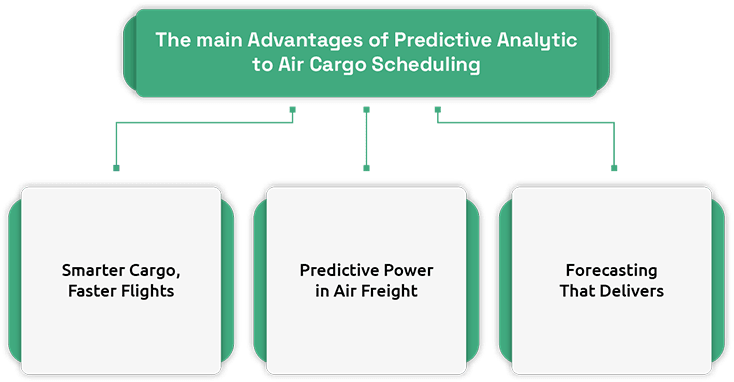
The main Advantages of Predictive Analytics to Air Cargo Scheduling
Forecasting analytics significantly enhances cargo tracking in numerous aspects. It accelerates the processes because it predicts the shipment volume and changes plans. The operational costs are reduced since routes become optimized and empty flights or trucks are prevented. There would be better efficiency in handling the cargo, and the management of the warehouse systems would be able to allocate the space accordingly. Quick delivery occurs because the system directs shipments across the customs and transit stations. An enhanced decision-making process generally reduces errors and optimizes the resources for high-value cargo, such as medical and automobile equipment.
Challenges and Solutions During adoptions in the year 2025
Predictive analytics adoption had many challenges for air cargo companies. The introduction of new software and the integration with old legacy systems was to be planned and executed by a technically skilled individual. Data privacy was also a factor, especially on sensitive health and IT equipment shipments. It also led to a lack of employees specializing in analytics and AI, which implied firms had to educate teams to a high degree. In an effort to conquer these hurdles, companies employed incremental deployment, where pilot projects were done first. Step-by-step scaling and investment in the education of employees assisted in facilitating transitions and safeguarding data security.
Case Studies and Industry Strategies
Predictive analytics has been applied in several global airports to improve air cargo delivery. These hubs monitor real-time shipments by implementing intelligent sensors and digital customs clearance. The technology is used to transport sensitive aviation or healthcare equipment that requires special attention and rapid transportation. The benefits of the forwarder and the customs broker in association with such airports are less time spent in delays and enhanced coordination. These plans enhance the cargo movement and customer satisfaction. Advanced analytics in smaller airports have enabled them to compete well by providing speed and reliability in delivering time-sensitive deliveries.
Future Direction | Beyond 2025 Innovations
Innovations are also on the list of future air cargo logistics. The next generations of AI will become smarter and be used to automate additional supply chain functions, such as paperwork and cargo handover. The blockchain technology could be more important in compliance and transparent shipment tracking. Ground autonomous vehicles may accelerate the movement of loads at the airport. Green energy-powered equipment and environmentally friendly packaging will also enhance sustainability. The innovations will keep increasing efficiency and cost reduction, and facilitate the transportation of fine machinery in other sectors, such as the aviation and health sectors.
Conclusion
One Union Solutions provides high-quality services that will direct companies to integrate predictive air cargo analytics. Our resolutions aim to harmonize the existing systems and educate the staff on new tools. We deal with IT, aviation, automobile, and medical equipment shipments. Our collaboration allows companies to access quicker decision-making, cost-saving, and regulatory adherence. This enables the air cargo scheduling to be smarter, safer, and more reliable for complex shipping requirements.
Did You Know,
The air cargo demand in the world was up by 5.5% in the year 2025, and more companies are moving to predictive analytics to enhance their logistics.
FAQ’s
What is predictive analytics in air cargo scheduling?
The technology uses information and AI to predict shipment requirements and optimize routes. This facilitates the process of planning air freight.
What is the impact of predictive analytics on the delivery times?
It prepares to overcome delays and schedule changes to ensure that shipments proceed quickly through customs and transit.
What are the difficulties of applying predictive analytics?
System integration, securing shipment information, and educating employees in new technology are problems facing many companies.
What industries are the most profitable through predictive air cargo logistics?
The largest benefits are in industries that export IT equipment, aviation, automobile, and healthcare devices.
What is One Union Solutions’ role in logistics modernization?
We assist in technology integration, employee training, and compliance to make shipment processes more efficient and less expensive.