Introduction
In 2026, global aircraft supply chain challenges continue to be an important issue. There are shortages of engine parts, raw materials, and other important parts for aircraft makers. It is more difficult to provide aviation parts on time due to limited production capacity, work limits, and processing delays.
Importers of aircraft parts are affected by these issues because they longer wait times, increase buying costs, and cause delivery delays. Plans for aircraft servicing and repairs might be affected by shortage of even one important part. By planning for supplier supply, planning orders before time, and complete the required shipping and customs documents, importers can reduce these risks. Improved planning keeps aircraft parts going across global borders and reduces into needless delays.
What Is Causing Global Aerospace Supply Chain Bottlenecks?
Bottlenecks in the global aviation supply chain happen when supplies and aircraft parts are not easy to find in proper amounts or on time. The limited supply of raw materials used to build aircraft engines and other parts, such as castings, forges, and specific metals, is one of the main reasons. The production of aircraft equipment and systems may be affected by the difficulty of getting semiconductors and electronic parts.
Production are delay by a lack of skilled staff and limited factory capacity. Because they require specific materials, careful testing, and strict quality checks, certain aircraft parts take some time to make. Relying on a specific number of suppliers for specific parts is another difficulty. The delivery of parts to many suppliers and importers can be delayed if one supplier faces production problems. These problems with the aviation supply chain can make it more difficult for importers to plan for delivery, increase delivery times, and increase costs.
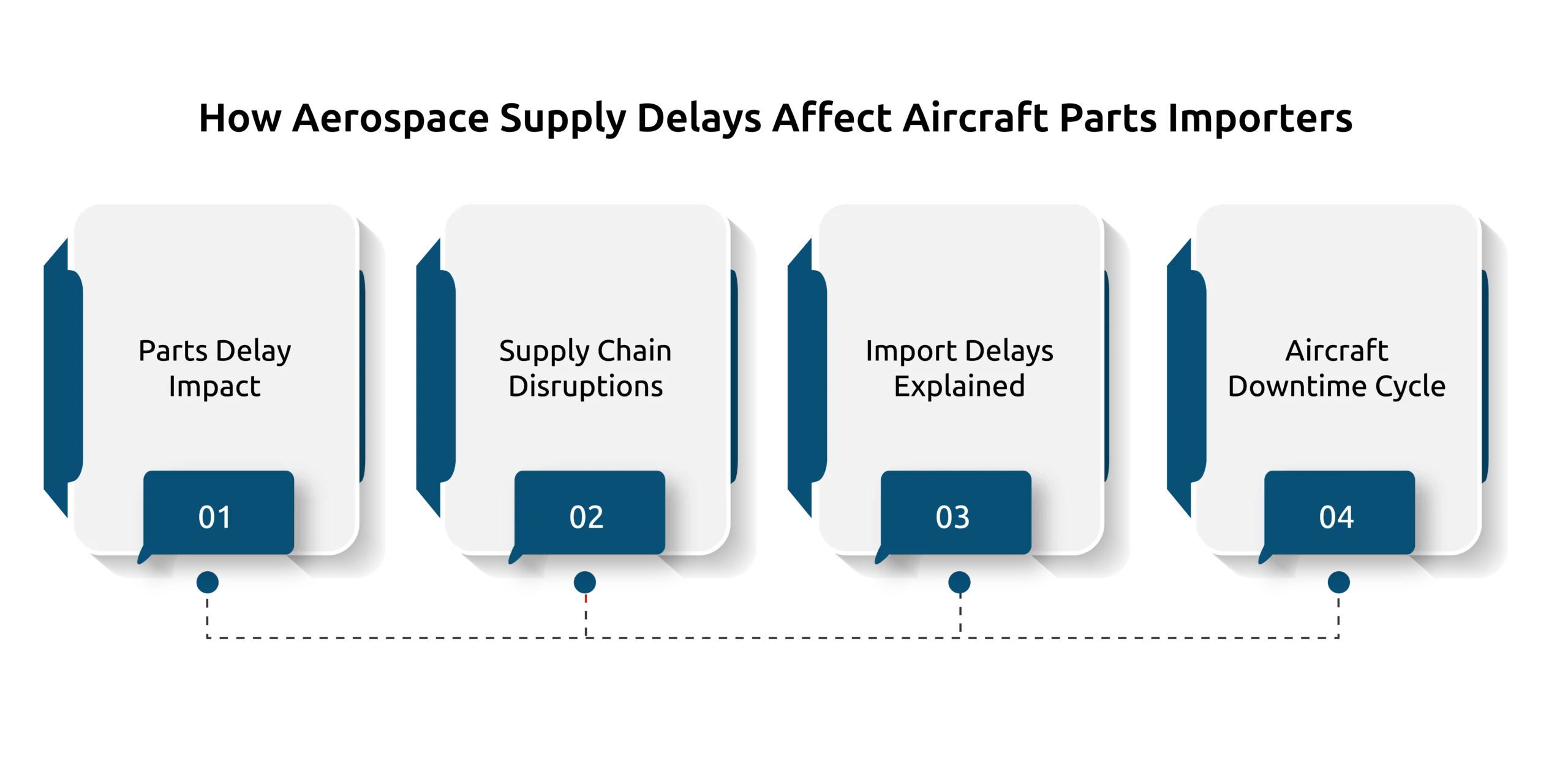
How Aerospace Supply Delays Affect Aircraft Parts Importers
Importers find it difficult to get aviation parts when they are require because of delays in the aviation supply chain. The supply of aircraft spare parts can be affected by long delays for aviation parts, even when such parts are required for faster repairs or planned repairs. It may be more difficult for importers to keep proper inventory if they have to wait long for engine parts, electronic devices, & other specific goods.
Also, these delays can increase the cost of buy and storage. To follow their needs, companies may need to place before goods, keep extra stock, & use quicker shipping methods. Maintenance, repair, and overhaul (MRO) tasks. may take longer than planned if required parts are delayed. Aviation services can be affected and aircraft may be out of service for longer. Importers can handle delays in the aviation supply chain and get prepare for possible shortages by making careful buying planning & keeping in contact with suppliers on a daily basis.
How Geopolitical Risks and Trade Restrictions Disrupt Aerospace Imports
Global aviation imports may be affected by political tension and changes to trade rules. Aircraft parts may become more costly as a result of new tariffs, and export rules may restrict the locations to which specific parts may be exported. Based on the product, location, and final customer, some parts can also require export licenses before shipping.
Shipments may have to take longer paths due to port delays, aviation rules, and issues. Delivery are delayed and shipping costs can increase as a result. To deal with these risks in the aircraft supply chain, importers should check shipping routes, check with current trade rules, and make advance plans.
How Aerospace Logistics Support Can Help Importers Manage Bottlenecks
Aviation logistics services help importers with handling global delivery and plan for the supply of aircraft spare parts. Logistics companies are required to plan a final delivery, interact with customs brokers, track shipments, check shipping documents, and plan freight. This keeps shipments working smoothly and helps companies detect possible delays.
Technical approvals, legal importers, customs brokers, and logistical companies also, have different tasks. While customs brokers faces clearance tasks as required, importers are charged with making sure the proper import arrangements are in place. Before parts are used, technical teams must complete the required aviation and safety checks. Reduce delays and handling aviation import problems are made possible by efficient teamwork.
Strategies to Reduce Aerospace Import Delays and Supply Chain Risks
Importers can reduce the risks connected with the aircraft supply chain by planning the buying of aircraft parts based on service needs and previous use. Businesses need to expect delays and change delivery plans when required by regularly tracking shipments and checking supplier deadlines.
Planning for freight and customs clearance can help avoid issues based on by missing documents or incorrect part details. Efficient inventory control in aviation is also important. Companies can face shortages by keep extra stocks of important parts, but stock levels should be based on demand, cost, and storage needs. Suppliers, logistics companies, customs brokers, and service teams can improve aviation parts logistics and build a reliable supply chain by regular working.

Conclusion: Preparing for Global Aerospace Supply Chain Disruptions
Bottlenecks in the global aviation supply chain can affect the stock of aircraft parts, increase costs, & delay service. By checking supplier efficiency, checking delivery times, keeping track on trade rules, and prepare proper customs documents before shipment, importers can efficiently handle these difficulty.
Avoid delays can be reduced by early planning and effective interact with suppliers, logistics companies, and customs brokers. Companies can keep shipments controlled while making sure all required safety and import regulations are followed to by improving the logistics of aviation parts and identifying any supply problems.
Did You know
The global aerospace market size is calculated at USD 402.75 billion in 2025 and is predicted to increase from USD 434.17 billion in 2026 to approximately USD 846.30 billion by 2035, expanding at a CAGR of 7.71% from 2026 to 2035.
FAQ
How do aerospace supply chain bottlenecks affect aircraft importers?
Importers may face higher purchasing costs, longer delivery times, and difficulty finding certain parts. These problems can also affect maintenance schedules when essential parts do not arrive as planned.
Which aircraft parts are most affected by supply chain delays?
Engine parts, electronic systems, semiconductors, castings, and forgings can face long lead times. Availability depends on the part, manufacturer, demand, and production capacity.
Why is backup stock important for aerospace importers?
Keeping essential spare parts in stock can help businesses manage sudden shortages and urgent maintenance needs. Stock levels should depend on part availability, usage, cost, and how quickly spare parts can be sourced.
What role do logistics providers play in aerospace supply chain management?
Logistics providers can plan freight, track shipments, check transport documents, and work with authorised customs brokers. This helps importers manage deliveries effectively, legal import and aircraft safety responsibilities with the relevant parties.
How do customs rules affect aircraft parts imports?
Incorrect HS codes, missing documents, or required permits can delay customs clearance. Importers should check the destination country’s rules and prepare accurate invoices, packing lists, and any required technical documents before shipping.