
Introduction
As airlines try to reduce service delays and keep aircraft in service, the need for quicker aviation spare parts delivery is increasing in 2026. The global aviation supply chain is faceing difficulty due to shortages of aircraft parts, delays in engine delivery, and higher servicing demands. Air freight for aircraft spare parts makes it simple for aviation and maintenance, repair, and overhaul (MRO) companies to quickly transport important parts between countries. Faster delivery helps companies handle fast repairs and support airplane service plans for all from avionics equipment to engine parts.
Why Is Demand for Aircraft Spare Parts Air Freight Increasing?
As airlines require more spare parts to keep their aircraft in service, the demand for delivering aviation spare parts is growing. The demand for spare parts can increase due to regular checks, sudden repairs, and delays in buying new aircraft. In these cases, air freight helps the quicker international shipping of important parts by planes and MRO companies.
The need for reliable aviation logistics is increasing in step with the growth of the global aircraft MRO industry. To avoid costly repair delays, parts like landing gear, avionics, and engine parts could be required fast. Companies can deliver these parts more quickly and allow more efficient aircraft repairs by using air freight.
Aircraft and Engine Shortages Are Creating Urgent Shipping Needs
Airlines may find it more difficult to get the required parts on time due to shortages of aircraft and engines. Due to supplier delays or restricted production, it could take some time for some replacement parts to arrive. Repair plans may be affected by these delays in the aviation supply chain, and service teams may have to wait for the correct parts.
Aircraft may have to buy parts from suppliers in other countries when local inventory is not available. Available aircraft parts can be delivered to maintenance, repair, and overhaul (MRO) centers more quickly due to air freight. If specific part is required to complete a repair, this is very useful.
Travel plans may be affected and aircraft costs can increase if spare parts are delay. Companies can choose for air freight for quick goods to avoid long delays. Aviation can also control on the aircraft parts stocks to keep regular repairs on time with careful planning, regular stock inspection, & supplier handling.
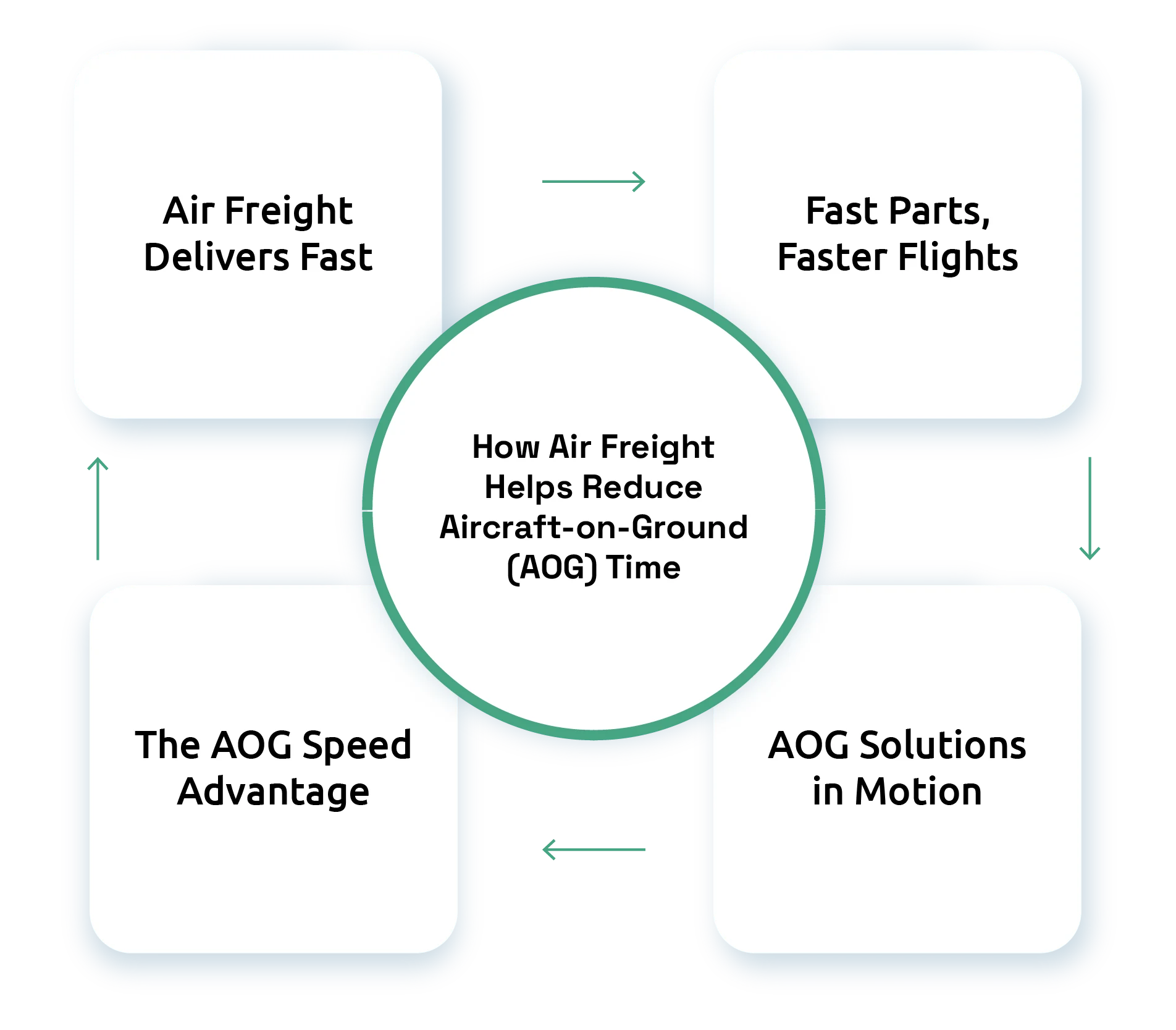
How Air Freight Helps Reduce Aircraft-on-Ground (AOG) Time
Aircraft-on-ground (AOG) is a situation in which an aircraft cannot travel due to a repair or check. Finding the required parts as soon as possible becomes important when this happens. In order to get aviation parts to the service team as quickly as possible, AOG logistics helps in planning their urgent delivery.
Because air freight can transfer important parts between countries more quickly than many other shipping methods, it is helpful for the delivery of important aviation parts. For example, air freight can help in deliver a spare engine part from a country to the aircraft’s repair location.
Delivery time, also, is based on the part availability, the aviation route, customs clearance, and handling demands. Correct documents and careful planning can help avoid needless delays. Airlines can help regular upkeep work and reduce the time an aircraft is grounded by handling time-sensitive aviation cargo.
How Technology Is Improving Aircraft Spare Parts Logistics
Airlines and suppliers can more easily plan the supply of aircraft spare parts due to technology. Aircraft data is used by predictive maintenance logistics to help teams to identify when a part needs repair or replacement. This allows companies more time to set the required parts before an issue causes unexpected delays.
Businesses can use digital inventory control to check which parts are available and where they are stocked. Teams can contact to other suppliers and plan for the deliver parts it they not supply locally.
Companies can use real-time air freight tracking services to track the location and status of a shipment. Improved demand analysis allows suppliers to keep proper supply and identify possibly future parts needs. When paired, these methods help companies in better handling spare parts, planning shipments, and reducing needless delays in aviation repairs.

Challenges in International Aircraft Spare Parts Shipping
Every country has its own customs rules, shipping aircraft spare parts between countries can be difficult. Aviation customs clearance may be delayed by missing documents, incorrect tariff codes, & incorrect part details. Important shipping documents for aircraft parts, like packing lists and invoices, include correct data.
Depends on the country and part type, some parts can also require specific licenses or export permits. Correct serial numbers and part numbers help in identify parts, and proper packaging secure parts from damage during transport.
Logistics companies help with document handling, delivery tracking, and shipping planning. However, the correct aviation experts must complete the required technical approval and safety checks. Delays and shipping problems can be reduced with careful planning.
Conclusion: The Growing Role of Air Freight in Aircraft Spare Parts Delivery
The need for aviation spare parts air freight is increasing due to quick repairs, shortages of parts, and growing service needs. Airlines can handle to find important parts and handle servicing more quickly because to faster shipment.
For approved aviation parts, One Union Solutions helps cross-border logistics, international shipping planning, and customs documents, making it simple for companies to handle aircraft spare parts supply.
Did you know
Spare Parts Logistics market to surpass $52 billion in 2030. In comparison, the Business Support Services market, which is considered as its parent market, is expected to be approximately $989 billion by 2030.
FAQ
Why do airlines use air freight to ship aircraft spare parts?
Airlines use air freight when they need parts quickly for repairs or maintenance. Faster delivery can help reduce waiting time and avoid long aircraft downtime.
How does air freight help during an Aircraft-on-Ground (AOG) situation?
AOG situations happen when an aircraft cannot fly because of a technical issue. Air freight helps move the required replacement parts quickly to the maintenance location.
Is air freight better than sea freight for aircraft spare parts?
Air freight is often better for urgent repairs because it is faster. Sea freight may be suitable for planned shipments when delivery time is less important and the parts can wait longer.
How can logistics providers support international aircraft parts delivery?
Logistics providers can coordinate transportation, customs documents, shipment tracking, and delivery arrangements. Required technical approvals and airworthiness checks remain the responsibility of the appropriate aviation professionals and organizations.
How can businesses track aircraft spare parts shipments?
Businesses can use shipment tracking tools to check the cargo’s progress and estimated arrival. Regular updates from logistics providers also help maintenance teams plan their work.