
Overview
Malaysia has introduced new export incentives looking at boosting the growth of its manufacturing sector and improving its role in global trade. As global competition increases and supply chains become more difficult, countries are implementing policies that increase export manufacturing growth. Malaysia’s latest initiative focuses on providing financial support, tax incentives, and major programs that allow manufacturers to increase production and reach global trade. Manufacturers working in export markets must also guide difficult global trade requirements. Businesses are required to manage regulatory systems, follow proper documentation procedures, and understand systems such as the Generalized System of Preferences (GSP) when exporting products to some countries. Also, organizations must be familiar with global trade terms such as Incoterms and delivery arrangements like DAP, which define the responsibilities of buyers and sellers in global shipments.
Key Export Incentives in Malaysia to Boost Manufacturing Growth
Malaysia’s export incentive program focuses on reducing the working costs for manufacturers while increasing innovation and export expansion. One of the main incentives includes tax exemptions and investment allowances for companies that start export-oriented production facilities. In addition to tax incentives, the government provides grants and financial support programs for organizations investing in modern manufacturing technologies. These programs support automation systems, digital production tools, and smart factory technologies that improve the productivity of the country. Exporting manufactured goods also requires organizations to understand trade documentation and regulatory requirements. Businesses must identify the correct HS code categorization for their products and follow international tariff structures such as the HTS harmonized tariff Schedule used in many global trades.
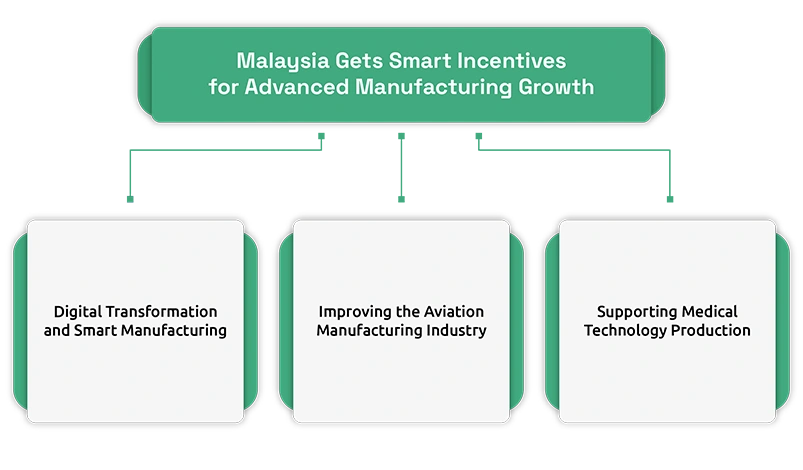
Malaysia Gets Smart Incentives for Advanced Manufacturing Growth
Digital Transformation and Smart Manufacturing
Malaysia’s export incentive systems strongly increase digital transformation and advanced manufacturing technologies. Manufacturers are expected to adopt automation, artificial intelligence, and digital tracking systems that improve working efficiency.
Improving the Aviation Manufacturing Industry
Malaysia’s aviation industry is also positioned to benefit hugely from the export incentives. Aerospace manufacturing changes the production of aircraft components, maintenance technologies, and specialized aviation equipment that must meet strict global standards.
Supporting Medical Technology Production
Malaysia has developed a strong manufacturing industry in medical devices. Medical device manufacturers must follow strict regulatory requirements and global trade processes. Organizations exporting medical equipment must confirm correct goods categorization, correct documentation, and effective customs clearance processes.
Increasing Automotive Manufacturing
The automobile industry is another major beneficiary of Malaysia’s export incentive programs. Automotive organizations require substantial investments in modern machinery, advanced robotics, and accurate production systems.
In global trade, organizations frequently work with logistics providers and customs experts to confirm regulatory agreement. Organizations frequently ask operational questions, such as whether a freight forwarder can be an exporter of record or whether a customs broker can handle both import and export documentation when managing difficult international shipments.
Impact on Manufacturing Sectors after Malaysia Introduces Export Incentives
The introduction of export incentives is expected to create many positive impacts across Malaysia’s manufacturing sector. First, the incentives will attract both domestic and foreign investment in high-value industries. Investors looking for dependable manufacturing locations may view Malaysia as a major destination for export-focused production.
Second, the incentives will increase the usage of advanced technologies and innovation-driven manufacturing methods. Organizations investing in digital manufacturing systems and research programs will be better positioned to compete in global trade.
Third, the incentives will increase Malaysia’s integration into global supply chains. Effective supply chain optimization, dependable logistics chain, and advanced production systems will allow manufacturers to deliver products more effectively to global trade.
Manufacturers are also mainly accepting the best trade compliance software for import export rules to manage difficult documentation requirements, regulatory standards, and international trade approval processes.

Conclusion
Malaysia’s decision to introduce export incentives represents an important step toward improving the country’s manufacturing ecosystem and growing its global trade. Industries such as information technology, aviation, medical technology, and the automotive manufacturing industry will benefit mainly from these initiatives. As organizations use new manufacturing systems, improve supply chain efficiency, and expand export shipments, Malaysia can increase its position as a major manufacturing hub in the global economy.
DID YOU KNOW?
According to them, Malaysia’s semiconductor industry now accounts for a 13% share of global ‘back-end’ semiconductor production; furthermore, last year, this industry contributed over US$130 billion (RM 575 billion) to the country’s electronics exports.
FAQs:
1. What are Malaysia’s export incentives for manufacturers?
Malaysia’s export incentives include tax exemptions, investment allowances, financial grants, and government support programs that encourage companies to expand export-oriented manufacturing and adopt advanced production technologies.
2. How do export incentives support manufacturing growth?
Export incentives reduce production costs, encourage innovation, and help manufacturers invest in automation, digital systems, and modern equipment, allowing them to compete more effectively in global trade.
3. Which industries benefit most from Malaysia’s export incentives?
Industries such as aerospace manufacturing, medical device production, automotive manufacturing, and advanced electronics benefit the most because these sectors require huge investment in technology and export capabilities.