Overview
The government of Canada has introduced revised export controls on advanced technology products to improve mistake on the change of sensitive innovations. These regulatory updates aim to confirm that critical technologies are not misused or changed to unauthorized locations while supporting responsible global trade. As technological ability grows in areas such as artificial intelligence, semiconductor manufacturing, and advanced computing, governments worldwide are taking steps to improve regulatory tracking. Although these rules focus mainly on national security and major technology protection, organizations working in global trade must also consider working parts such as documentation, logistics planning, and trade management systems. Exporters frequently use beneficial factors such as the generalized system of preferences (GSP), where applicable, confirm correct HS code categorizations, and the HTS harmonized tariff Schedule when checking product categorizations and regulatory problems.
Why is Canada revising export controls on advanced technology goods?
Canada is revising export controls on advanced technology goods to strengthen national security, protect sensitive innovations, and align with global allies on strategic trade measures. Technologies such as semiconductors, artificial intelligence, quantum computing, aerospace systems, and advanced electronics are increasingly viewed as critical sectors. These revisions help prevent misuse of high-value technologies while ensuring exports follow international security standards.
Key Areas of Revised Export Controls in Canada
Expansion of Controlled Technology Categories
One of the major updates to Canada’s export regulations is the growth of controlled technology categories. These controls now apply more strictly to advanced computing systems, AI applications, semiconductor manufacturing equipment, and some high-performance electronic components. Organizations in the technology industry must carefully show whether their goods work within these regulated categories before shipping goods globally.
Increased Licensing and Documentation Requirements
The new regulations have strong permit and documentation requirements for exporters. Organizations must now conduct detailed internal management before exporting controlled technologies. Businesses commonly use trade systems such as Incoterms, including delivery terms like DAP or DAPs, which define responsibilities between buyers and sellers during global trades. Organizations may also depend on expert service providers, exporter of record service, or importer of record service to confirm regulatory approval when changing sensitive technology goods globally.
Increasing Technology Transfer Monitoring
Another major element of the revised systems requires stricter tracking of technology changes, specifically when organizations share technical data, software, or research knowledge with global partners. Organizations involved in cross-border trade may work with experts providing International freight services and customs clearance to confirm that sensitive shipments follow regulatory guidelines while maintaining working efficiency.
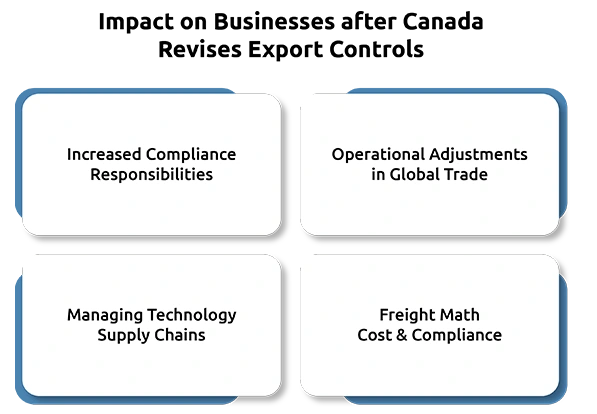
Impact on Businesses after Canada Revises Export Controls
Increased Compliance Responsibilities
The updated export control rules place greater responsibility on companies to manage regulatory compliance. Companies frequently accept systematic approval programs supported by the best trade compliance software for import export rules to track shipments, export licenses, and manage documentation effectively.
Operational Adjustments in Global Trade
Exporters must also review shipment procedures related to product categorizations, shipment documentation, and trade agreements. Managing global shipments of advanced technologies frequently requires work between manufacturers, freight partners, and regulatory authorities. Questions such as can a freight forwarder be an exporter of record or can a customs broker handle both import and export documentation may arise during planning in Canada.
Managing Technology Supply Chains
Organizations exporting advanced technology products must also have strong internal systems to track shipments and manage inventory capacity. Effective Inventory and order management help organizations track high-value technology goods and maintain tracking across the global supply chains.
Industries and Technologies Most Affected in Canada
IT and Semiconductor Sector
The IT industry is one of the most impacted sectors under Canada’s revised export controls. Advanced computing hardware, semiconductor manufacturing tools, and artificial intelligence platforms are mainly related to regulatory checks in Canada.
Aviation Industry
Canada has a strong aerospace sector, and new export control measures change the logistics of high-performance aviation components, navigation technologies, and special electronic systems.
Medical Device Industry
The medical sector is also affected, specifically organizations developing advanced diagnostic equipment and robotic surgical systems. Some of these technologies require additional scrutiny due to their difficult capabilities and possible dual-use applications.
Automotive Technology Development
Automotive production mainly depends on advanced computing systems, AI sensors, and autonomous growing technologies. Also, some automotive technologies may fall under export control regulations, specifically when they require high-performance computing or advanced electronic components.

Conclusion
Canada’s decision to change export controls on advanced technology goods shows a growing global focus on securing important changes while supporting responsible global trade. Organizations working in IT, aviation, medical, and automotive industries, these regulatory changes show the importance of proactive compliance and effective trade management. Organizations that start strong approval systems, maintain correct documentation, and implement effective working systems will be in a better situation to guide the development of export regulations while continuing to expand in global trades.
DID YOU KNOW?
Cryogenic Complementary Metal-Oxide-Semiconductor (CryoCMOS) integrated circuits operating at temperatures of 4.5 Kelvin (-268.56 °C) or lower.
FAQs:
1. Why has Canada revised export controls on advanced technology goods?
Canada revised export controls to protect sensitive technologies such as artificial intelligence, advanced computing systems, and semiconductor equipment from unauthorized change.
2. Which industries are most affected by Canada’s new export control regulations?
Industries most affected include the IT and semiconductor sector, aerospace and aviation, medical device manufacturing, and advanced automotive technology development.
3. Do companies need export licenses for advanced technology products in Canada?
Yes, many advanced technology exports now require additional export licenses and documentation. Businesses must review product classifications, follow regulatory systems, and confirm proper authorization before shipping goods internationally.
4. How do Canada’s export controls affect global technology trade?
The updated controls increase compliance responsibilities for exporter and may require stricter documentation, licensing procedures, and supply chain monitoring when transferring sensitive technologies across borders.
5. How can companies confirm approval with Canada’s export control regulations?
Organizations can confirm approval by using trade compliance software, maintaining correct HS code categorizations, managing export documentation, and working with experienced trade professionals such as exporters of record or customs brokers.