Overview
In 2026, the European Union introduced many updates to its customs and trade approval systems to improve clarity and regulatory work among member states. These reforms are part of the EU’s long-term plan to new cross-border trade processes and improve tracking systems for global shipments. Organizations working in IT hardware manufacturing, aviation components, medical device distribution, and automotive production depend heavily on an effective global supply chain. As the EU updates its trade official system, organizations must update their internal processes to confirm smooth cross-border logistics and reduce regulatory risks.
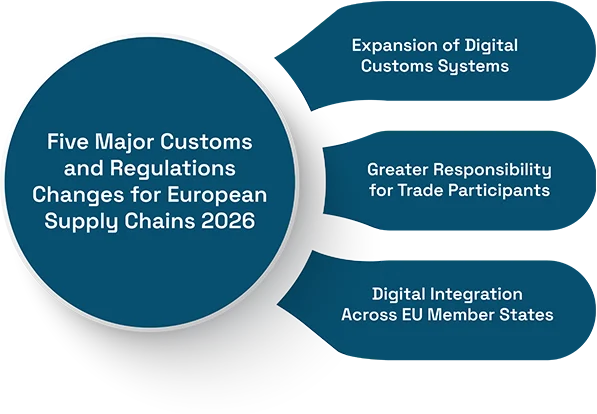
Five Major Customs and Regulations Changes for European Supply Chains 2026
1. Expansion of Digital Customs Systems
One of the most important changes in 2026 is the continued development of digital customs processes across EU member states. The EU is developing a digital trade source that allows officials to understand shipment information before goods arrive at European borders.
2. Stronger Data Transparency in Trade Documentation
Another major reform focuses on improving clarity in trade documentation. Organizations must confirm correct product categorization and reporting when shipping goods into or out of the EU market. Correct categorization systems, such as HS code systems and tariff identification systems like the HTS harmonized tariff Schedule, remain necessary for global manufacturers.
3. Increased Risk Tracking for International Shipments
EU customs authorities are expanding the use of advanced risk monitoring tools to identify irregularities in shipment documentation. Medical equipment manufacturers and technology organizations benefit from improved tracking, as it helps confirm that imported goods meet regulatory safety requirements and stop unauthorized or non-compliant goods from entering the market.
4. Greater Responsibility for Trade Participants
Businesses are expected to show responsibility for the accuracy of shipment information and regulatory documentation. Many organizations are improving internal approval teams and implementing digital tools, such as the best trade compliance software for import/export rules, to confirm proper reporting and regulatory usage in shipments.
5. Digital Integration Across EU Member States
The EU’s improvement in customs authorities across member states, with digital acceptance for shipments. Global manufacturers in the aviation and automotive industry, this brings together an approach that helps reduce border delays and supports smoother trade shipping within the EU market.
What Has Changed in 2026 and Why It Is Relevant to Global Trade
Digitalization of Trade Agreement
The modernization of EU customs systems shows the broader change toward digital trade approval in EU states. Organizations increasingly depend on combined platforms for Inventory and order management, documentation checking, and approval tracking for customs clearance. These tools help organizations manage high shipment sizes while having regulatory accuracy in the EU.
Trade Agreements and EU Market Entry Guidelines
Global exporters working with European trades frequently track global trade agreements that affect tariffs and duties. Beneficial programs, such as the Generalized System of Preferences (GSP), continue to change market access for some developing economies, making regulatory clarity an important part for exporters working within the EU trade chain.
Modern Trade terms and smart shipping in 2026
Businesses are now choosing shipping terms more carefully to control costs and avoid risks. Many companies are moving away from DDP and using terms like DAP so they can share costs like duties and taxes with buyers. Clear agreements on shipping terms helps avoid confusion, delays, and unexpected charges during delivery. Using the right Incoterms also makes trade more transparent and shipping smoother

EU Customs Reform 2026: What Forwarders Must Prepare in Logistics
Freight forwarders and global shipping providers must confirm accurate documentation to meet the EU’s new reporting standards. This includes creating shipment records for regulatory checks and supporting effective Customs clearance processes. Organizations involved in cross-border shipping frequently depend on special services such as Exporter of Record services, Importer of Record services, and International freight services to manage regulatory responsibilities during shipments. These services help businesses navigate difficult customs clearance and maintain approval with international regulations. For example, businesses frequently ask whether a freight forwarder can work as the exporter of record for international shipments. Also, documentation management remains an important working task, seeing that many organizations consider whether a customs broker can handle both import and export documentation when working on trade approval processes.
Conclusion
The European Union’s updated customs and trade compliance rules for 2026 represent a major step toward new international trade terms. By improving digital systems, regulatory clarity, and increasing risk tracking systems, the EU looks to support secure and effective trade across the global supply chain. Businesses that invest in approval technologies, digital documentation systems, and effective trade management plans will be better prepared to navigate developing global trade requirements while maintaining smooth cross-border trade in the European market.
DID YOU KNOW?
In the case of X BV, nearly three years after the original declarations, the customs inspector issued a payment notice for additional duties amounting to approximately €400,000.
FAQs:
1. What are the major EU customs changes in 2026?
The EU introduced digital customs systems, stronger documentation transparency, increased shipment risk tracking, greater responsibility for trade service providers, and better digital usage across member states.
2. How does EU customs digitalization affect global supply chains?
EU customs digitalization allows shipment details to be checked before goods arrive. This helps speed up customs clearance and reduces delays at borders. Overall, it makes global supply chains faster and more efficient.
3. Why are HS codes important in EU trade compliance?
HS codes help classify products in international trade, confirming accurate tariff calculations, proper documentation, and compliance with EU import and export regulations.
4. How are businesses preparing for EU customs reforms in 2026?
Businesses are upgrading their digital systems, improving shipment documentation, and using compliance tools to meet new EU customs rules. This helps them reduce delays, avoid penalties, and ensure smooth cross-border trade.
5. Can a customs broker handle both import and export documentation?
Yes, many customs brokers manage both import and export documentation, helping businesses confirm agreement with customs regulations and smooth cross-border trade operations.