
Insight
Recent tariff updates have brought new issues for companies that ship sensitive equipment worldwide, creating cost, delivery time, and compliance issues for businesses that ship this type of machinery, including aviation equipment, IT hardware, and medical equipment. Tariffs can affect not only the cost and delivery times but also the efficiency of operations, since knowing the classifications, such as Harmonized Tariff Schedules (HTS), will help avoid costly errors and delays. Each tariff differs according to classification, altering how shipments are sent and transported.
It is a fact that the Importer of Record & the Exporter of Record services are increasingly being operated during tariff changes, as companies are trying to keep their shipment in line despite attempts to change their tariffs. IOR and EOR services are subject to compliance with customs regulations and document quality, which will reduce the chance of demurrage fees and delays caused by hold-ups that occur during the process. Making the best shipping terms, for example, DDP or DAP, can help businesses manage expenses and prevent surprises in their shipments, which means they can plan their costs better and be more secure regarding transport time. The selection of appropriate shipping terms can also be significant in determining budgets and the reliability of transit times.
Companies that offer tariffs and expertise in cargo management can be of significant value. Tariff classification & customs brokerage ensure the shipment complies with constantly changing rules & regulations without any impact on the business flow. Flexibility and transparency have played a key role, especially in those deliveries that require a quick turn, such as AOG. The most precise equipment of great worth requires careful handling during transport. Inaccurate handling of tariffs or paperwork could result in costly delays or damages; therefore, specific logistics solutions are designed to ensure security and compliance as part of the cost management.
Understanding Tariffs and Their Impact
Tariffs are imposed on imported goods and have a certain effect on the final cost. Accurate classification with HTS codes is a must to avoid penalties or shipment blockages. Getting these codes right ensures compliance with international trade rules and helps minimize fees like demurrage that pile up during customs holds.
Specialized equipment shipments require detailed knowledge of tariff rules specific to each product. Customs brokers or dedicated services that manage import-export responsibilities are often needed to prepare the correct documentation. For exports, the exporter of record takes charge of maintaining compliance and filing accurate declarations.
Beyond compliance, proper tariff management also helps businesses plan costs more accurately and avoid unexpected expenses. When duties, taxes, and fees are calculated correctly in advance, companies can set realistic budgets and pricing strategies. This is especially important for high-value or time-sensitive shipments, where delays can disrupt operations and increase storage costs. By working with experienced trade compliance partners, businesses can ensure smoother customs clearance and maintain reliable supply chains.
Smart Solutions for Seamless Shipping
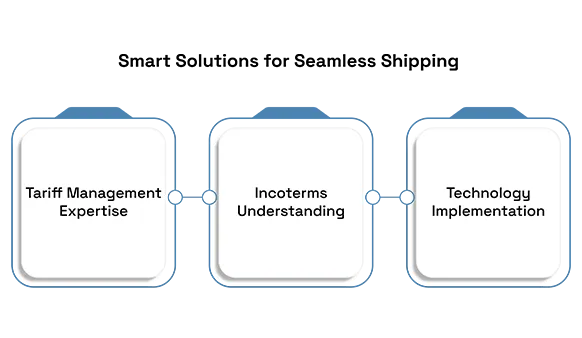
Companies increasingly use combined importer of record and exporter of record services with tariff management expertise. These services, integrated with logistics providers, often handle all duties and tariffs upfront, especially in DDP shipments, helping avoid unexpected costs and delays.
It is also essential to understand Incoterms. Freight arrangements and pricing depend on the knowledge of who pays the tariffs: the importer or exporter. The knowledge informs the process of shipping equipment, such as complex equipment that needs 3-phase power or advanced tech IT systems, in ways that move across borders effectively.
A significant role is also determined by technology. The ability to track shipments in real time and automate tariff classification allows businesses to address issues before they become bigger. This transparency increases compliance and assistance in tight delivery schedules.
Market Trends and Future Outlook
There is a growing demand for shipping delicate, high-value equipment globally, pushing continuous innovation in customs and tariff handling. Recent government reports show rising trade volumes and a stronger focus on tariff optimization strategies across shipping channels.
This shift underscores how managing compliance can create strategic advantages. Smart tariff handling combined with import-export record management cuts overhead, shortens delivery times, and reduces risks from cargo holds and extra fees. Automation and digital customs tools will play increasing roles in future logistics operations.
The recent government statistics indicate that the logistics industry is likely to grow by 5% to 7% annually, since higher exports and imports of specialized equipment exist. This trend shows the necessity of aligning the logistics system to handle the tariff change without affecting its speed or reliability.
Conclusion
Handling complex tariffs takes deep expertise and reliable logistics planning. At One Union Solutions, we combine import-export record services with tariff know-how and customized shipping approaches to keep your valuable equipment moving smoothly and compliantly. We focus on helping you control costs, avoid delays, and maintain clear visibility throughout your supply chain. Let us simplify global trade for you and support your business operations with confidence.
Did You Know,
Importer of record services can cut customs clearance times by up to 40%, helping ensure faster delivery for valuable equipment like advanced IT and aviation components.
FAQs
1. When should a business review its tariff strategy?
A business should review its tariff strategy whenever it enters a new market, changes suppliers, or ships new products, as tariff rates and regulations can vary by country and product type.
2. How does an Importer of Record help reduce customs risks?
An Importer of Record checks documentation, verifies product details, and ensures all customs requirements are met, lowering the risk of inspections, penalties, or shipment delays.
3. What is the difference between customs duty and import tax?
Customs duty is charged on imported goods based on classification and value, while import tax, such as VAT or GST, is applied according to local tax rules and may vary by country.
4. Can tariff compliance impact supply chain timelines?
Yes, incorrect tariff handling can lead to customs holds and inspections, which may delay deliveries and disrupt production or distribution schedules.
5. Why is professional tariff management important for high-value goods?
High-value goods attract closer scrutiny from customs authorities. Professional tariff management helps ensure accurate declarations, protects against financial loss, and supports faster clearance.