An In-Depth Guide
India’s logistics industry has been quite resilient despite the global trade disruption. Not only have the financial shocks, supply chain problems, and a changing regulatory environment challenged many industries, but the logistics industry here has been able to adapt before it can chew or swallow its food. The latter is necessary for handling high-value and sensitive equipment moving in the aviation, automotive, IT/data centres, and healthcare sectors. Even small delays or compliance problems in these segments can result in a major loss, which is why professionals are important in logistics.
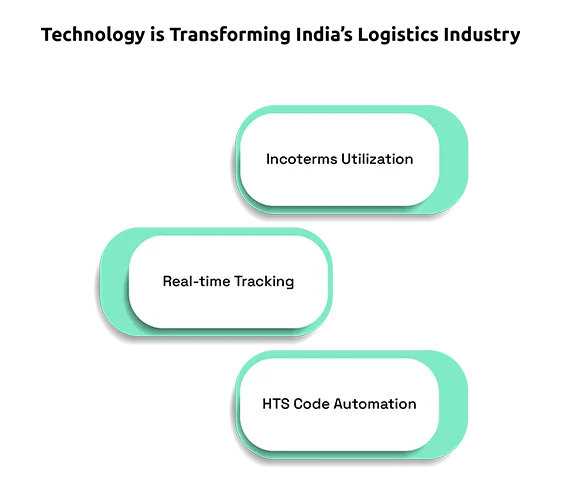
Technology is Transforming India’s Logistics Industry
Digital transformation is one of the principal forces of this resilience. The collaboration on AI and smart logistics platforms is becoming a reality in coping with complicated operations. Exporter of record skills and importer of record services are increasingly becoming a requirement as organizations increasingly turn to highly sophisticated technology to find their way around customs laws and duties. The tools are also useful in automating the classification of goods under HTS (Harmonized Tariff Schedule) codes to minimize the chances of wasting resources because of incorrectly assigned goods.
Shipping responsibilities have clear stipulations under Incoterms such as DDP (Delivered Duty Paid) and DAP (Delivered at Place), allowing business companies greater control of tariffs and duties. It is clear, which makes budgeting much easier and reduces the risk of surprises that may cause a delay in shipments at customs. Moreover, sophisticated tracking operations today provide real-time shipment visibility, enabling a business to approach problems proactively, which is essential when shipping cargo of an urgent nature, including AOG (Aircraft on Ground) parts or certain 3-phase power equipment.
Precision equipment also requires packaging and handling procedures when they are handled safely. Logistics providers are increasingly putting in value-added reseller (VAR) services and freight forwarder skills that will help them ensure that these sensitive goods are shipped. This approach of having numerous levels of work guarantees that the machinery gets delivered in good shape to be utilized immediately, which enables ongoing operations.

Recovery & Strategic Adaptation to Global Shocks
India has addressed global trade dynamics by promoting flexible and risk-averse logistics sectors. Companies focus on thorough import-export record books, keeping up-to-date export registers, and hiring experienced customs brokers. Foreign/domestic importer of record coordination, Polish compliance, and can prevent costly and disruptive practices like demurrage fees or detention of shipments.
Freight forwarding processes have changed and become flexible and cost-effective for tariff operation and regulatory compliance. With these developments, fragile equipment shipments are enabled to pass through complicated paths on a more reliable basis. The trend of a coordinated logistics chain will enable firms to mitigate the risks and deliver within a strict deadline.
Governmental Efforts That Lead To Development and Productivity
The further development of the industry is promoted by the fact that the Indian government is attempting to enhance logistics infrastructure and the policy framework. The National Logistics Policy is meant to harmonize the regulations, modernize physical infrastructure, and implement digitalization of the supply chain. Support initiatives relying on the generalized system of preferences have aided in dropping tariffs, easing the burden of costs incurred by the importer and exporter.
Contemporary customs brokers and importer of record duties have increased the speed with which clearance is processed by enhancing the customs procedures. The construction of multi-modal logistic parks and port capacity expansion has cut drayage and the total freight charges. These will enhance competitiveness, whereby the industry will be equipped with the necessary tools & infrastructure to trade high volumes without blockages and compliance ratios.
Along with infrastructure upgrades, the government’s focus on digital trade systems has improved visibility and efficiency across logistics operations. Platforms such as electronic documentation, online customs filings, and real-time shipment tracking have reduced paperwork errors and manual delays. These digital improvements help importers and exporters plan better, respond faster to disruptions, and maintain compliance more easily. Together, policy support, infrastructure investment, and digital adoption are strengthening India’s logistics ecosystem and creating a more reliable environment for global trade.
Future Growth and Emerging Trends
The logistics industry of India stands to develop further in terms of the growing complexities of equipment and the needs regarding the international trading sphere. The concept of sustainability also catches up with packaging, mode of transportation, and supply chain. The rise of e-commerce comes with new logistical challenges and opportunities, and increases the significance of facilitated shipping and customs procedures.
The continued growth of the levels of trade will spur the further need for outsourced specialized services like importer of record services and exporter of record services. Digital customs clearance and tariff optimization plans will be even more significant to support the agility of operations. Those logistics providers who provide integrated solutions with their components in freight forwarding, custom brokerage and value-added services will be at the forefront.
Conclusion
The Indian logistics environment, as a result, is a fast-changing one that is resilient in the face of hardship due to adherence to technology and the mastery of regulation. At One Union Solutions, we aim to offer the entire importer and exporter of record services, all this, complemented with customized approaches to manage the tariffs and customs more streamlined. We ensure your highly valued, delicate apparatus is transferred safely, effectively, and on time. Engage us in logistics that help you navigate complexity and transform your business.
FAQs
1. When is a third-party Importer of Record required?
A third-party Importer of Record is required when the buyer does not have a legal entity or tax registration in the destination country. The IOR takes full responsibility for customs compliance and duty payments.
2. How do customs duties and taxes affect total landed cost?
Customs duties, VAT, and other local taxes directly increase the final cost of imported goods. Proper planning and correct valuation help businesses avoid unexpected charges at customs.
3. What documents are commonly required for international shipments?
Typical documents include a commercial invoice, packing list, bill of lading or airway bill, certificates of origin, and any required import permits, depending on the product and destination.
4. How does customs valuation impact duty calculations?
Customs authorities calculate duties based on the declared value of goods. Incorrect valuation can lead to audits, penalties, or shipment delays, making accuracy essential.
5. Why is compliance management important for cross-border trade?
Strong compliance management helps businesses reduce risks, maintain supply-chain continuity, and avoid legal issues that can disrupt international operations.