Overview
The trade partnership between the United States and China is most important in global trade. The US-China trade war is changing how organizations approach trade tariffs, costs, and international trade growth, specifically across the IT, aviation, medical, and automotive industries. Tariffs and regulatory guidelines introduced by both nations pushed businesses to rethink procurement methods while improving approval and planning of trade. For import-export organizations, trade today is no longer only about buying and selling goods. It requires systematic logistics planning, strong documentation methods, and effective supply chain optimization to remain competitive in a quickly changing trade environment.
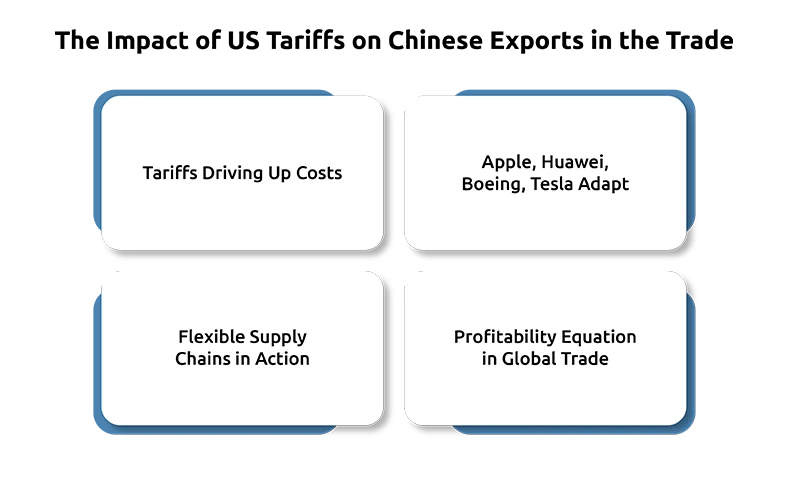
The Impact of US Tariffs on Chinese Exports in the Trade
Growing Costs and Approval Requirements
When the United States added tariffs on Chinese goods, exporters got higher entry costs into the US market. Businesses had to inspect product categorizations by properly identifying the HS codes and working with the HTS Harmonized Tariff Schedule to show applicable duties. Organizations shipping electronics, machinery, and medical devices get exports pressure, prompting them to check Incoterms such as DAP and DAPs to manage delivery responsibilities and cost management between buyers and sellers. These adjustments became necessary for the profitability of logistics.
Operational Changes Across Industries
Organizations connected to global manufacturing, including organizations working with Apple and Huawei, began changing trade plans. Many organizations improved international freight services partnerships and used advanced inventory and order management systems to avoid problems caused by tariff uncertainty between countries. Suppliers working alongside Boeing and Tesla are mainly focused on flexible production planning and an alternative supply chain.
What USA and China Import and Export From Each Other in a Trade War?
China’s Exports to the United States
China exports a broad range of manufactured products, including:
- Consumer electronics and IT hardware
- Automotive components and Aviation MRO tools
- Medical equipment and surgical tools
To manage these shipments effectively, exporters frequently depend on exporter of record services to confirm that regulatory responsibility is clearly assigned during international shipments.
US Exports to China
The United States exports high-value goods such as:
- Aircraft and aviation components
- IT devices commodities
- Semiconductor technology
- Biotech and advanced medical systems
Many businesses entering China use an importer of record service solutions to comply with local regulations and streamline customs clearance procedures.
Trade Programs and Documentation
Although tariff tensions exist, trade programs such as the Generalized System of Preferences (GSP) mainly changed duty structures for developing markets, changing how organizations look for trade alternatives. Correct paperwork, supported by the best trade compliance software for import export rules, helps businesses reduce delays and compliance risks.
How Much Do China and the US Import From Each Other?
Trade Volume and Major Dependence on Services
Annual trade between the two countries reaches around hundreds of billions of dollars, showing strong economic interdependence in import and export. Electronics control over Chinese exports to the US, while aerospace and new technologies represent major American exports to China, admit new tariffs. An effective logistics chain and structured customs clearance processes are necessary to manage such huge trade volumes. Organizations mostly invest in digital tools that improve visibility and reduce continuous documentation errors.
Key Operational Questions in Modern Trade
As trade becomes more regulated, businesses frequently ask operational questions such as:
- Can a freight forwarder be an exporter of record service Providers?
- Can a customs broker handle both import and export documentation for customs clearance?
This scrutiny shows the growing requirement for IOR service provider expertise in managing logistics and regulatory approval. Organizations also improve supply chain optimization to manage inventory storage, avoid delays, and maintain production continuity across global trades.

Conclusion
The US-China trade war has mainly changed global import-export growth. Tariffs, regulatory scrutiny, and geopolitical tension have grown between organizations to improve compliance systems, logistics, and accept smarter trade plans. For businesses working in IT, aviation, medical, and automotive industries, understanding trade shipments between the United States and China is necessary for long-term growth. Success now depends on combining effective international freight services and inventory control. As global trade continues to grow, organizations that invest in approval experts, documentation processes, and flexible supply chains will be better positioned to guide uncertainty while getting new trade opportunities.
DID YOU KNOW?
According to data from the Office of the United States Trade Representative, total goods trade between the United States and China was estimated at $582.4 billion in 2024.
FAQs:
1. What caused the US–China trade war?
The trade war began in 2018 when the administration of the US imposed tariffs on Chinese goods to address trade imbalances, intellectual property concerns, and forced technology transfer methods. China responded with retaliatory tariffs on US exports, growing tensions between the two nations.
2. What does the US import from China?
The United States imports consumer electronics, IT hardware, machinery, automotive components, medical devices, and household goods from China. Electronics represent one of the largest categories of imports.
3. What does China import from the US?
China imports aircraft and aviation components, semiconductors, automobile products, biotechnology systems, and advanced manufacturing equipment from the United States.
4. How have tariffs affected global supply chains?
Tariffs increased production and import costs, pushing companies to varied sourcing and manufacturing to alternative countries, invest in approval systems, and improve supply chain visibility to reduce risk exposure.
5. How much trade happens between the US and China annually?
Annual trade between the United States and China reaches hundreds of billions of dollars, making it one of the world’s largest bilateral trade relationships despite ongoing tariff tensions.