Introduction
Global trade is becoming more difficult as many countries add new tariffs and stricter trade rules. Higher import duties, changing rules, and more trade problems are increasing the cost of international shipping. Because of this, many businesses use tariff front-loading methods to reduce costs and avoid paying higher tariffs in the future. Major method is front-loading, where businesses import products before new tariffs start. This helps businesses to save money, handle stock levels, and increase capacity efficiency in trade by using better planning. Front-loading can also help businesses to avoid supply chain problems during changing trade rules.
However, reducing tariff costs is not only about importing early. Companies also need customs duty optimization, correct product details, and the use of available import tariff exemptions to lower overall import costs. Also, following trade issues compliance and global trade compliance rules is important to avoid customs delays, fines, and shipment issues.
What Is Front-Loading in International Trade?
Front-loading in global trade means businesses import products faster than usual before new tariffs, taxes, or trade rules take place. Business can avoid higher import prices and reduce the impact of new trade rules by importing goods into a country before they get affect. This strategy is often used by businesses involved in international trade compliance, global trade compliance, and large import operations. Front-loading helps companies keep enough inventory, avoid supply chain problems, and control costs during uncertain trade conditions. For successful front-loading, businesses need to handle customs clearance properly, use the correct harmonized system code, and follow customs rules. Many companies also depend on a freight forwarder, freight forwarding services, or importer of record services to help move goods smoothly across international borders.
Why Businesses Use Tariff Front-Loading Strategies: Understanding Tariffs, Quotas, and Trade Difficulties
Businesses use tariff front-loading methods to avoid pay import costs. When government set new taxes or trade rules, businesses import goods before the new rules take place. This helps them to save money, have more goods in the market, and continue providing customers without major delays.
Tariffs and other trade issues have the capacity to impact global trade. Tariffs are taxes on imported goods, whereas quotas have limits on how much of a product can be imported. Both can increase costs and make importing more difficult. That is why businesses pay close attention to trade problems compliance to make sure they follow trade rules. Many businesses also focus on customs duty efficiency, which means using the correct product classification and customs processes to reduce extra costs. Some businesses can help to lower import tariff, which can help reduce the amount of duty they have to pay.
For small businesses, SME trade finance can help provide the funds needed to buy goods earlier and support front-loading planning. Also, proper planning can improve financial management in trade, helping businesses in handle finances while planning for future tariff increases.
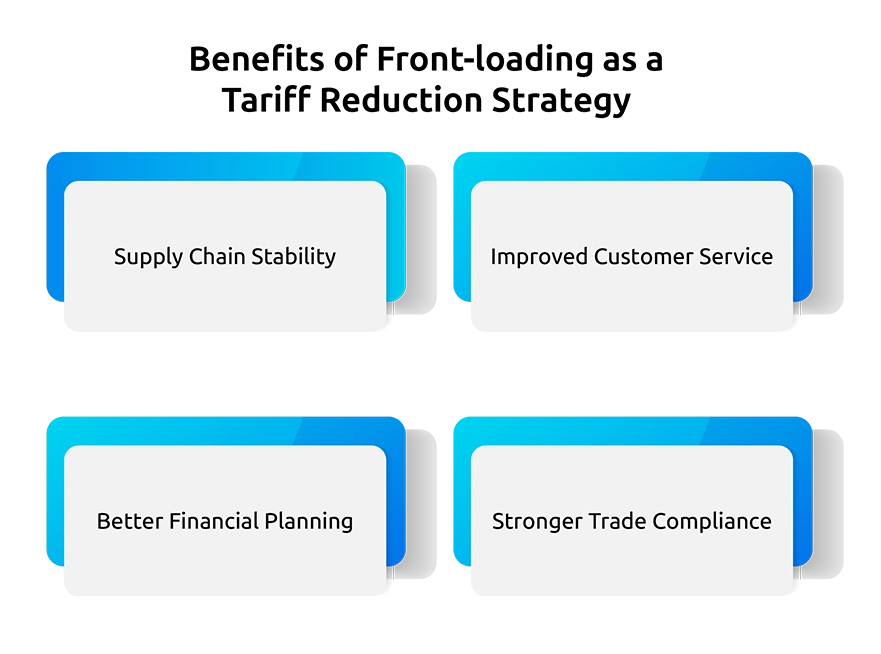
Benefits of Front-loading as a Tariff Reduction Strategy
Supply Chain Stability
Front-loading allows businesses to keep goods on hand before new trade rules take effect. This reduces the risk of delays and allows for better supply chain planning in changing markets. Companies can continue activities without major issues.
Improved Customer Service
When products are present in stock, businesses can complete orders faster and avoid delays. This helps maintain customer fulfilment and supports reliable freight forwarding services and delivery performance.
Better Financial Planning
Front-loading can improve financial efficiencies in trade by helping companies to plan their orders before time. Companies may better handle stock and avoid extra cost increases due to new tariffs or trade issues.
Stronger Trade Compliance
Businesses that plan imports quickly have time to handle customs clearance, check documents, and maintain global trade compliance. This reduces the chances of customs issues, charges, or shipment delays.
Financial benefits
Companies that prepare before of time can keep product costs fixed even as import costs grow. Businesses can stay competitive by making sure of proper trade law compliance and careful planning, while others may face higher costs and supply chain delays.
Future Trends in Tariff Mitigation and Global Trade
The future of global trade will focus on stronger supply chains, better planning, and advance technology. Many businesses are using AI, automation, and data tools to improve global trade compliance and improve supply chain efficiently. As trade rules continue to change, global trade compliance and proper customs clearance are more important. Businesses that focus on customs duties and use available import tariff exemptions will be better prepared for future trade difficulties and growth chances.

Conclusion
Tariff increases and new trade rules can make global trade more costly and difficult. Businesses may reduce these issues by using tariff front-loading methods, reducing customs duties, and using import tariff exemptions when available. To avoid delays and extra costs, it is also important to deal with trade rules and global trade rules.
Better planning helps businesses to keep their supply chain smoothly. One Union Solutions supports businesses with simple and reliable trade, customs, and logistics services, making global shipping easier and more efficient.
Did you know
global trade moves more than $20 trillion worth of goods every year, and even small tariff changes can impact total import costs
FAQ
Why do companies use tariff front-loading strategies?
Companies use them to avoid increasing import duties, reduce total shipping costs, secure stocks in advance, and reduce risks caused by sudden changes in trade rules.
What is working capital optimization in trade?
It means handling costs and stocks in a smart way so businesses can buy goods early, control cash flow, and reduce financial pressure during tariff changes.
Who can help manage global trade and customs?
Businesses like One Union Solutions help businesses with global shipping, customs clearance, import planning, and trade compliance in a simple and efficient way.
What is the link between tariffs and trade barriers?
Tariffs are taxes on imports, while trade rules include tariffs, quotas, and other rules that control or limit global trade and increase cost.
What role does customs duty optimization play?
It helps businesses reduce import costs legally by using correct HS codes, proper valuation, and taking advantage of duty-saving rules.