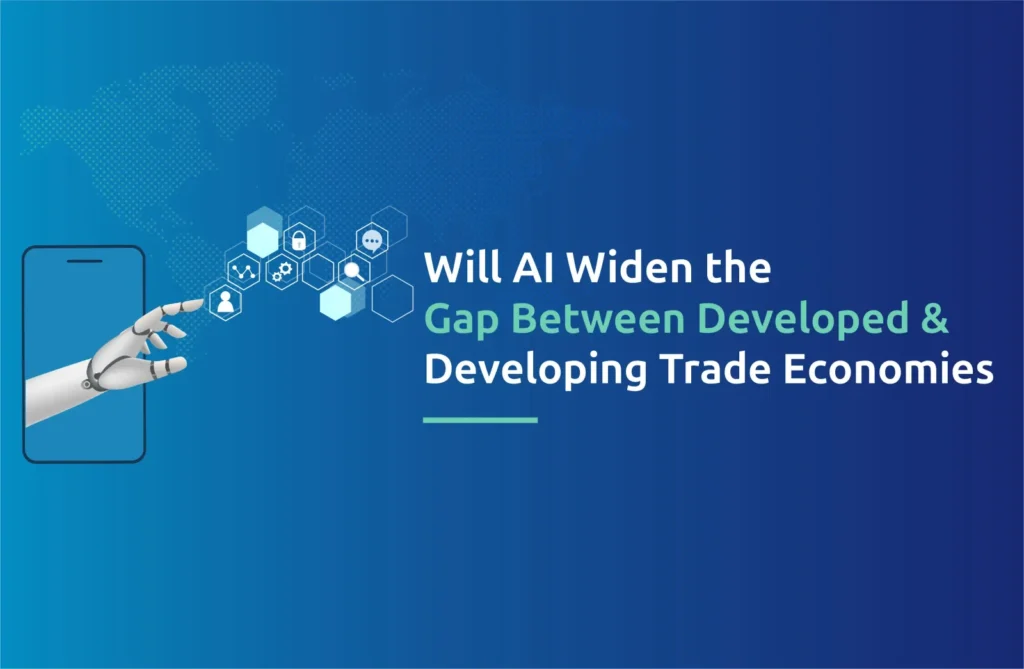
Artificial intelligence & other strategic technologies are changing international investment, focusing capital in fewer sectors & fewer countries while developing the risk that many developing economies are left behind.
Fast growth in AI & digital network investment is now connected with industrial policy & national security priorities, developing where companies invest & how global production is organized.
Understanding the AI-Driven Trade Landscape
The AI-driven trade sector makes a fundamental shift in how global commerce & financial markets operate. It uses machine learning & predictive algorithms to use supply chains, automate trade finance, & makes high-speed market trades, growingly changing traditional economic development.
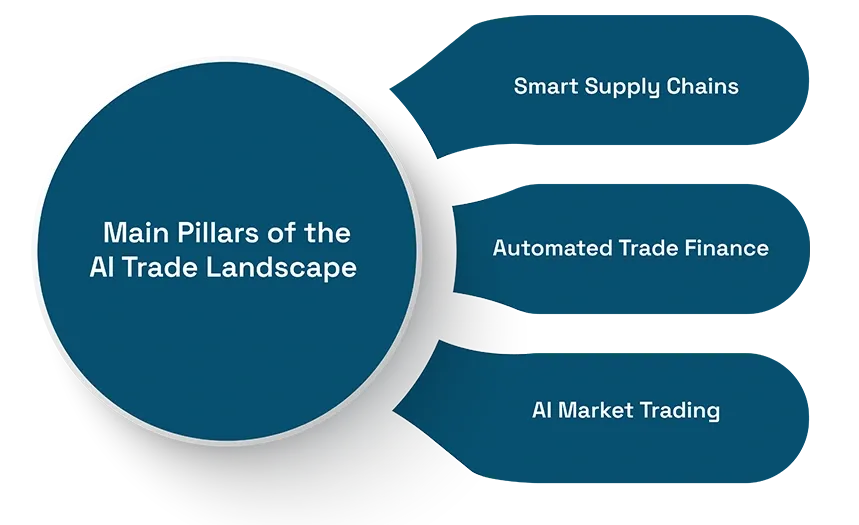
Main Pillars of the AI Trade Landscape
Supply Chain Development: AI changes logistics by verifying huge datasets to use demand, trace goods globally, & reroute transportation to avoid delays. Tools predict risk before they happen, reducing losses & reducing carbon use through efficiency.
Automated Trade Finance: AI is developing manual document processing, risk assessments, & compliance. It mainly reduces the chance of human error while speeding up global transactions & market entry strategies.
Financial & Algorithmic Trading: AI in financial markets uses difficult machine learning models & sentiment analysis to process millions of data points. Algorithms can predict market trends, perform risk assessments, & execute trades at the optimal price to maximize returns.
Digital Services & Market Access: AI-driven analytics process customers behavior to overcome speech issues & offer personalized marketing, mainly developing global trade in digitally delivered services.
Potential Benefits & Opportunities
AI also presents a main opportunity for growing economies to overcome past development issues, provided the right network, policies, & investments are in place. The fast growth of digitally delivered services has created new export opportunities for developing nations, allowing businesses to handle global markets without depending heavily on traditional industrial networks. AI-driven tools can also help small & medium-sized businesses enhance market intelligence, use supply chains, improve customer communication, & increase operational usability, enabling them to compete more easily in global trade. Organizations such as the World Trade Organization project that, with supportive measures like affordable computing resources, digital infrastructure, & workforce training programs,
Rising Challenges & The Policy Divide
While the economic growth of AI is substantial, with projections indicating that it could mainly increase global GDP & develop global trade volumes, the benefits remain mainly focused among a small group of advanced economies that dominate AI research, patents, computing network, & technological investment. This concentration raises concerns about widening digital inequality, as many developing economies continue to face limitations in digital networks, access to advanced computing resources, localized AI expertise, and supportive regulatory frameworks. Restrictive cross-border data regulations & uneven access to digital ecosystems may further limit their participation in the global AI economy. Policymakers & organizations such as the World Trade Organization continue to face the difficult challenge of balancing customer privacy protections, data control requirements, & open data flows while still fostering development, international connection, & the responsible development of AI technologies.

Policy Interventions Required
To ensure AI acts as a connection rather than an issue in global trade, international organizations such as the United Nations Conference on Trade & Development focus on the need for developing economies to develop targeted policy frameworks. A main priority is investing in digital networks by developing access to high-speed internet, cloud computing resources, & updated connectivity systems that support AI use. Mainly important is connecting the skills gap through updated education & workforce training programs that develop local AI expertise & help workers complement, rather than compete with, intelligent technologies. Experts stress the importance of stronger global governance, where developing nations play a more important role in changing global AI regulations, updated property rights, & data governance standards to ensure a more inclusive & balanced digital economy.
Conclusion
Artificial intelligence has the strength to become either a powerful connector or a force that deepens existing economic divides between developed & developing trade economies. With updated nations mainly managing an important advantage through stronger digital networks, greater investment capacity, & leadership in AI development, developing economies also have opportunities to use AI-driven trade systems to work growth, enhance digital exports, & improve global market connection. The long term outcome will depend largely on how usefully governments, global organizations, & private organizations address network gaps, workforce development, regulatory cooperation, & balanced access to technology. With inclusive policies, strategic investment, & stronger global relation, AI can support a more connected & balanced global trade ecosystem rather than increasing global gap.
Did you know?
Artificial intelligence (AI) unmanaged could increase inequality between countries by widening divides in economic performance, people’s capabilities, and governance systems, as the starting point is so vastly different, according to a new report from the United Nations Development Programme (UNDP).
FAQ
1. How is AI transforming global trade economies?
AI is transforming global trade by improving supply chain efficiency, automating trade compliance and finance processes, enhancing predictive analytics, and enabling faster decision-making across international markets.
2. Why are developed economies benefiting more from AI adoption?
Developed economies generally have stronger digital infrastructure, larger investments in AI research, better access to computing power, and highly skilled workforces, allowing them to adopt and scale AI technologies more rapidly.
3. What challenges do developing economies face in AI adoption?
Developing economies often face barriers such as limited internet connectivity, insufficient cloud infrastructure, lack of AI expertise, high implementation costs, and regulatory limitations that slow digital transformation.
4. Can AI help developing countries improve their trade competitiveness?
Yes. AI can help developing economies enhance logistics, improve market intelligence, automate operations, and expand digitally delivered services, enabling businesses to compete more effectively in global markets.
5. What policies are needed to reduce the AI trade gap?
Key policy measures include investing in digital infrastructure, improving AI education and workforce training, expanding affordable access to computing resources, and ensuring developing nations participate in global AI governance and data policy discussions.