Insight
Air travel operates as a multidimensional sector within the worldwide economy by depending on suppliers and manufacturers alongside distributors to assemble parts needed for safe aircraft functions. Supply chains suffered immediate exposure following recent international disruptions including the COVID-19 pandemic as well as geopolitical tensions, natural disasters, and trade interruptions. Recent global disruptions function as motivating factors to develop flexible supply chain networks for essential aviation components. Aviation is, by nature, a tight schedule and a tight safety means of transport, so even a minor supply chain disruption presents a material threat to operations. If critical components are delayed, in short supply, or fail quality control, the consequences can range from operational setbacks and financial losses to safety risks. Aviation companies also need to build supply chains that are flexible and resilient enough to withstand shocks, as well as cost-efficient
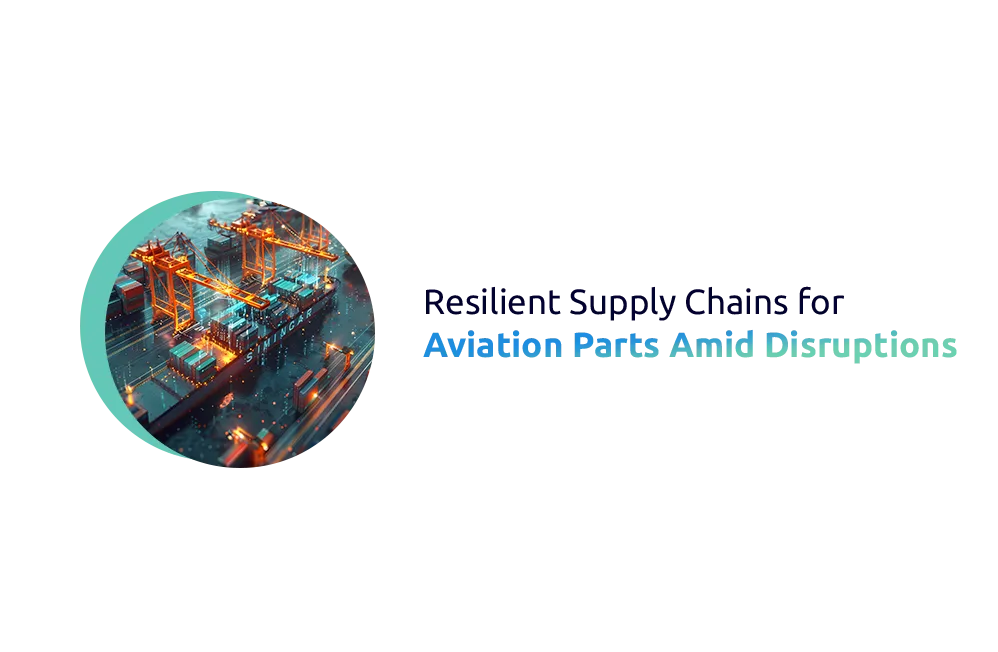
The Importance of Resilient Supply Chains in Aviation
All aircraft components including both tiny screws and advanced avionics and engine parts remain fundamental elements for aircraft performance and safety. A worldwide network of suppliers delivers these parts though they operate at different locations across multiple continents. Complex aircraft manufacture depends heavily on uninterrupted critical part supply to prevent production delays and aircraft maintenance and repair interruptions in the entire industry.
Suppliers that make their supply chain resilient can maintain uninterrupted material movement throughout unexpected operational disruptions. Critical components need resilience because they are necessary for aircraft operations.
Aircraft engines along with Power Systems represent aircraft core operating components so their delayed delivery or functionality failure will result in an aircraft standstill which halts operations.
Aircraft safety and aircraft navigation depend entirely on sophisticated avionics systems and communication systems. Flight safety is at risk when the supply of crucial components faces any interruption.
The aircraft’s body consists of large, heavy, expensive airframe and structural parts that create obstacles to manufacturing operations when distribution delays occur.
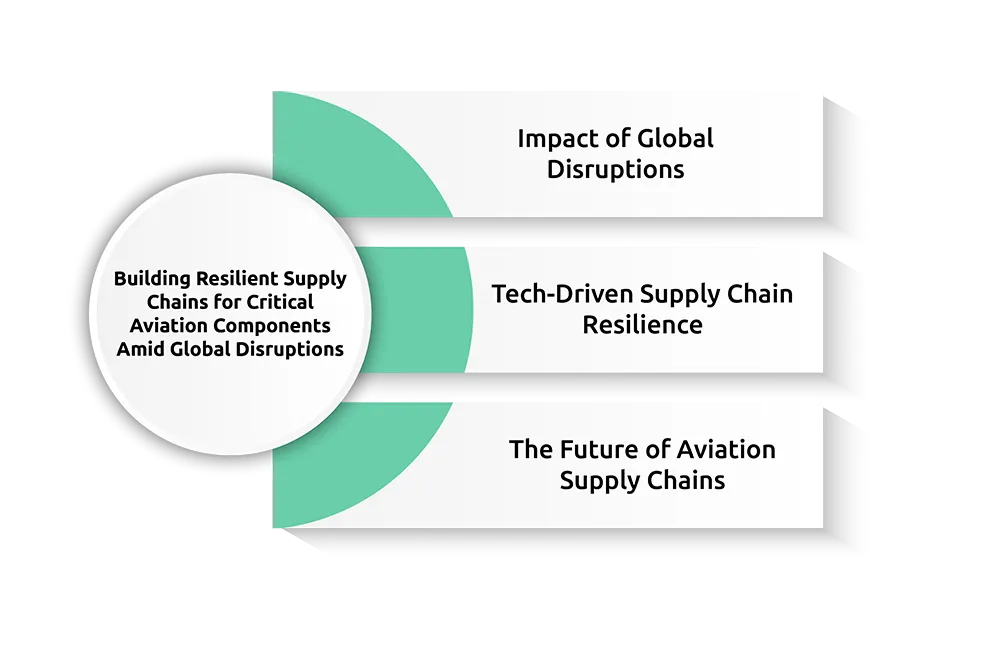
The development of resilient supply chains for essential components needs a three-part strategy that combines supplier variety selection with risk reduction measures and modern technological solutions to achieve stability.
Strengthening Aviation Supply Chains with Diversification and Technology
A resilient aviation supply chain development needs both supplier relationship strengthening and diversification of suppliers while integrating advanced technology systems and comprehensive risk management. Companies should expand supplier networks across different regions to reduce supply chain threats from both pandemic events and political or geographical instabilities. The implementation of strong supplier collaboration enables companies to foresee challenges and immediately respond efficiently during emergencies.
Technology functions at a critical level to build resilience. Real-time inventory and supplier performance tracking through data analytics systems combined with IoT devices lets companies find and manage potential disruptions right when they occur. The implementation of strategic inventory management which consists of keeping safety stocks of essential components helps maintain business operations during delays.
Effective risk management strategies built with risk assessment procedures and contingency measures enable businesses to face unexpected occurrences while component refurbishment practices promote sustainability by cutting waste production and enhancing flexibility. The integration of these strategies allows aviation companies to develop adaptable supply chains which operate effectively through worldwide challenges.
Conclusion
Supply chains must develop indestructible procedures for vital aviation components because global disruptions continue to increase their importance. The use of supplier diversification along with enhanced communication and technological alternatives enables aviation companies to develop stronger supply chains which decreases future disruption impacts. Strong resilience depends on organizations that include sustainability programs along with robust risk management practices. The aviation stakeholders depend on One Union Solutions to deliver effective solutions that guide them through complex processes and the uninterrupted flow of essential parts and technologies.
To avoid disruptions in the aviation industry, companies are focusing on building flexible supply chains that can handle challenges like pandemics, geopolitical tensions, and climate change. A strong supply chain is essential for delivering critical aviation parts such as engines, avionics, and structural components, as delays can stop operations and affect safety. By using strategies like supplier diversification, real-time monitoring technologies, and better inventory management, aviation companies can protect their operations and ensure continuity even during uncertain times.
Did You Know that
That impact played out across supply chain activities, with 39 percent of respondents seeing increases in supplier and material costs, and 30 percent reporting reductions in customer demand.
FAQs
What impact do geopolitical events have on aviation supply chains?
Ans: Geopolitical tensions, trade restrictions, and sanctions can disrupt material availability, increase lead times, and raise costs, making contingency planning essential.
How does demand forecasting support aviation supply chain resilience?
Ans: Accurate demand forecasting helps airlines and MROs plan inventory, avoid overstocking or shortages, and respond quickly to market changes.
Why is visibility important in aviation supply chains?
Ans: End-to-end visibility allows stakeholders to track parts, monitor supplier performance, and identify delays early before they affect operations.
What role do logistics partners play in aviation supply chain stability?
Ans: Reliable logistics partners ensure compliant customs clearance, secure transportation, and timely delivery of critical aircraft components.
How do regulatory requirements influence aviation supply chain planning?
Ans: Strict aviation regulations require certified suppliers, proper documentation, and compliance checks, which directly affect sourcing strategies and lead times.