Introduction
Shipping valuable electronics across global borders requires careful planning, secure management, or strong compliance controls. Products such as servers, GPUs, networking equipment, medical electronics, telecom devices, industrial control systems, or other advanced technologies can carry significant financial value. They may also be subject to strong import requirements. A small documentation error, incorrect HS code, incomplete packaging, or customs issue can result in delays, extra costs, damage, or shipment holds.
Organizations therefore need to manage more than transport when moving valuable electronics globally. They must assess customs documentation, product details, duties & taxes, import rules, packaging, insurance, security, & final delivery requirements. Working with an expert logistics & Importer of Record supplier can help organizations handle these requirements while reducing unnecessary risks or supporting a smoother import process.
How to Minimize Risk When Shipping High-Value Electronics
The first step in minimizing risk is to understand the shipment before it leaves the country of origin. Businesses should identify the exact equipment being shipped, its technical details, commercial value, destination requirements, & applicable import rules.
Product details should also be completed carefully. The correct HS code helps determine the relevant customs duties, taxes, or regulatory requirements. Using an incorrect classification can lead to extra costs, clearance delays, or compliance concerns.
Documentation should be prepared before shipment . A commercial invoice, packing list, airway bill or bill of lading, certificates, licenses, & other product-based documents should contain uniform information. Correct documentation allows customs officials to understand what is being imported & helps minimize extra questions during clearance.
Secure Packaging for High-Value Electronics
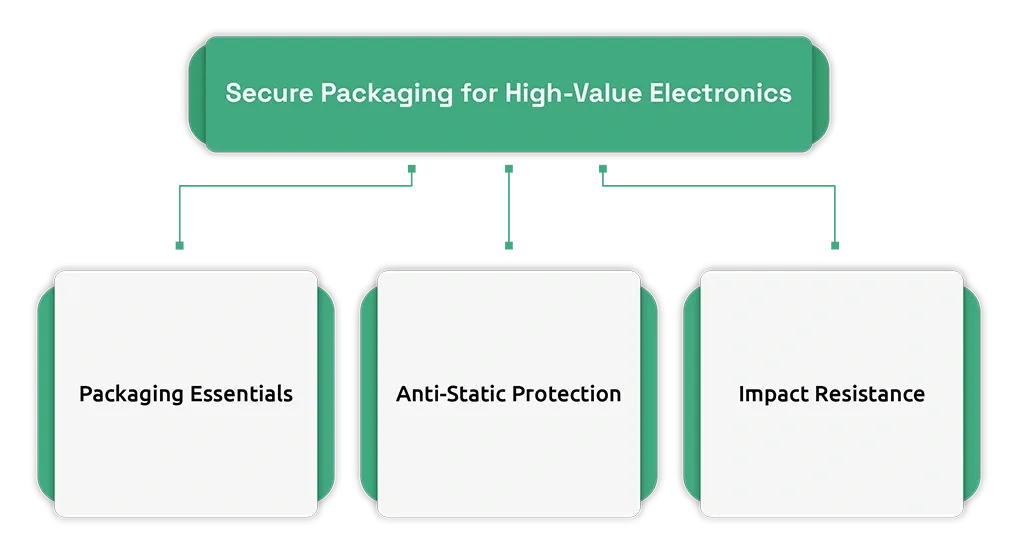
Proper packaging plays an essential role in securing sensitive electronics during global shipping. High-value equipment should be packed according to its size, weight, sensative, or technical requirements.
Sensitive electronic components may require anti-static materials to reduce the risk of electrostatic discharge. Impact resistance material can help protect equipment from vibration or impact, while strong boxes can provide additional physical protection for large or heavy equipment.
Moisture or humidity can also affect sensitive electronic components. Relies on the product and shipping conditions, businesses may use moisture-proof packaging, protective wrapping, agent, or other suitable measures. Packaging should also prevent movement inside the shipment because loose equipment can be damaged during handling.
Managing Customs Compliance
Customs compliance is one of the most essential parts of global electronics transport. Organizations must provide correct product information or make sure that all required import documentation is available before the shipment reaches the destination country.
The Importer of Record is responsible for makes sure that the shipment complies with applicable customs or trade rules. This includes supporting correct customs declarations, product documentation, duty or tax payments, or required permits or approvals.
For companies without a local legal entity or existing import capacity, an expert IOR offering can act as the responsible importing party where permitted. This can simplify the import process & help businesses avoid not required compliance risks.
Protecting High-Value Electronics During Transit
Security should be considered across the complete shipping process. High-value electronics can be attractive targets for loss or unauthorized handling, spacific when shipment values are high or equipment is easy to resell.
Businesses should work with reliable logistics providers or select shipping methods that provide suitable shipment visibility. Tracking systems can help companies monitor the movement of valuable equipment or identify unexpected delays or route changes.
For sensitive shipments, businesses may also consider tamper-proof packaging, controlled managing processes, secure storage, or limited access to the cargo. Clear management between suppliers, freight forwarders, customs formal, & final delivery teams can further reduce working risks.

The Role of Insurance in High-Value Electronics Shipping
Insurance can offer extra financial protection when shipping sensative electronics globally. Even with careful packaging or secure shipping, shipments may face sudden events such as accidental damage, loss, or managing incidents.
Businesses should review the value of the equipment or understand what risks are covered under their shipping insurance. The insurance terms should also be accurate with the shipment value or shipping method.
Proper documentation can support the claims process if an incident occurs. Commercial invoices, packing lists, photographs, shipment records, & delivery documentation can help create the condition & value of the goods.
How IOR Services Help Reduce Import Risks
An Importer of Record can offer valuable support when businesses ship valuable electronics into markets where they do not have a local importing entity. The IOR handle key duties associated with customs clearance or import compliance.
This can involves reviewing shipment documentation, supporting HS code classification, handling customs declarations, management duties or taxes, and checking applicable licenses or regulatory requirements. By managing these duties before or during importation, an IOR can help minimize avoidable delays & compliance issues.
For high-value electronics, the benefit goes beyond customs clearance. Management the import process with freight forwarding, documentation, secure managing, & final delivery requirements creates a more organized shipping process from origin to destination.
Conclusion
Shipping high-value electronics globally does not have to create not required risk when businesses plan the process carefully. Correct customs documentation, correct product details, secure packaging, shipment visibility, insurance, or regulatory compliance all help to safer & more reliable shipping.
High-value equipment such as AI servers, GPUs, medical electronics, telecom systems, or industrial technology requires a management approach because both physical protection & customs compliance are important. Contacting with an expert IOR provider can help businesses handle import duties, reduce clearance issues, or support timely delivery.
Did You Know?
In 2025, trade in AI-enabling goods increased by 21.9%, reaching US$4.18 trillion. These goods, including chips, semiconductors, and data transmission equipment, accounted for 42% of global trade growth, highlighting the growing importance of secure and compliant electronics shipping.
Frequently Asked Questions
What is the safest way to ship high-value electronics globally?
The safest methods unites secure packaging, correct customs documentation, shipment insurance, real-time tracking, or compliance with destination-country import rules. Businesses often use dedicated logistics providers & Importer of Record services to reduce customs & shipping risks.
Why do high-value electronics shipments get delayed at customs?
Delays frequently happen because of incorrect HS code classification, incomplete documentation, wrong product details, missing approvals, or regulatory compliance issues. Proper pre-shipment planning can greatly minimize the likelihood of customs holds.
Do AI servers & GPUs require special handling during international shipping?
Yes. AI servers, GPUs, and other data center equipment are sensitive to shock, vibration, moisture, & electrostatic discharge. They typically require anti-static packaging, heavy dutie crating, environmental protection, & secure shipping processes.
How does an Importer of Record IOR help when shipping electronics globally?
An IOR handle import compliance duties, including customs documentation, product classification, duty & tax management, & regulatory requirements. This allows companies to import electronics into countries where they may not have a local legal entity.
What are the biggest risks when transporting expensive electronic equipment?
The most common risks involves physical damage, customs delays, incorrect product details, loss, regulatory non-compliance, & incomplete packaging. Businesses can reduce these risks across proper logistics planning, compliance management, & secure shipping practices.