In this digital world when an organization buys costly equipment, most of the importance goes to the initial delivery. Teams coordinate the shipment, custom clearance, site preparation & safe delivery of the equipment. Once the machine or system is set up, it can feel like the difficult part is over.
The real test begins when the device is already in use. A defective component, worn-out part, or unexpected failure can bring an whole operation to a stop. Having the accurate spare part available can matter more than how easily the original equipment was delivered.
This is why spare parts logistics has become an important part of updated supply chain planning.
What Is Spare Parts Logistics?
Spare parts logistics is the process of storing, handling, transporting, & delivering replacement components when equipment needs maintenance or repair.
These parts can range from small electronic components & cables to motors, circuit boards, power supplies, pumps, sensors, & other important equipment components.
Unlike regular shipments, spare parts often have a strong time needs. A company may be able to plan the delivery of new equipment weeks or months in advance. A replacement part may be needed within hours or a few days.
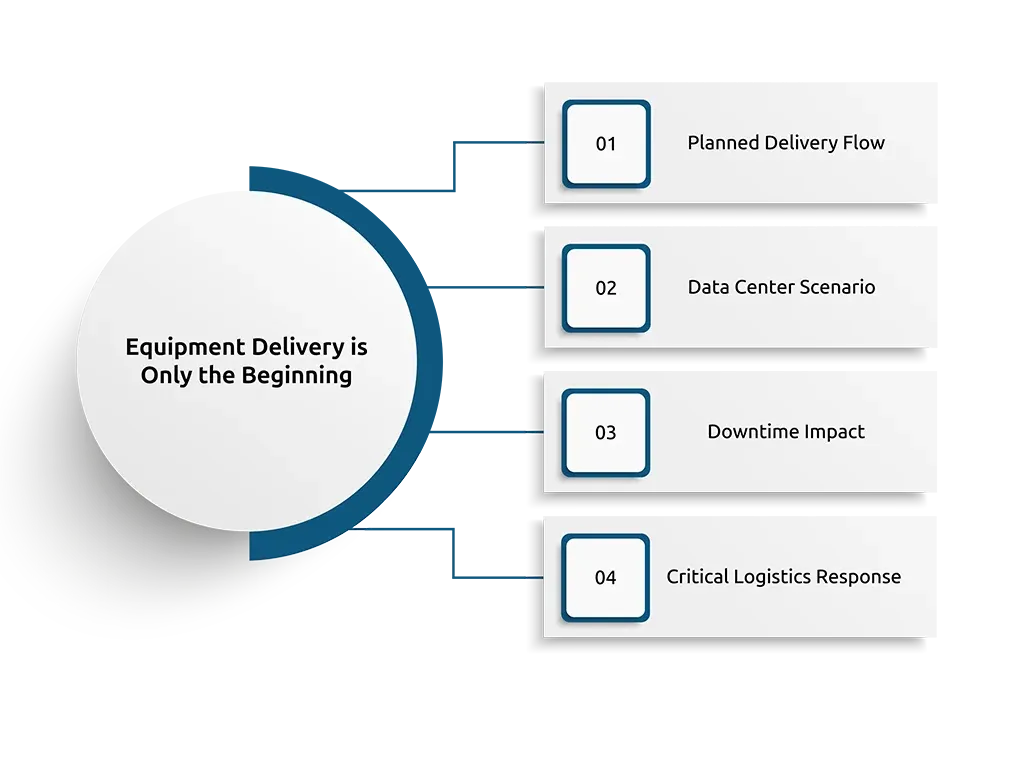
Equipment Delivery Is Only the Beginning
The first equipment shipment usually follows a planned schedule. The manufacturer knows when the product will be ready, the logistics provider can manage transportation, & the receiving company has time to prepare for delivery.
A component can fail without warning. When it does, the customer may not have time to wait for normal shipping schedules or long customs procedures. imagine a data center where an important cooling component fails. The value of the replacement part may be mainly small compared with the cost of keeping servers offline. Every hour of downtime can affect customers, employees, service availability, & revenue.
Downtime Can Cost More Than the Spare Part
One of the biggest reasons spare parts logistics matters is downtime. Businesses often focus on the purchase price of a replacement component. The larger cost may come from the equipment being unavailable while the part is being sourced & delivered.
A production line may stop. A telecommunications system may experience an outage. A medical facility may have limited access to essential equipment. A data center may need to operate with minimize capacity. The longer the equipment are out of service, the greater impact on opration.
A well-planned spare parts strategy helps companies minimize this risk by making critical components available when they are needed.
International Spare Parts Shipments Add More Complexity
Sending a spare part across borders is not simply a matter of putting it in a box and choosing an express carrier.
The shipment may need the accurate HS classification, commercial invoice, country-of-origin information, customs documentation, & other regulatory details. Depending on the product, additional import need may also apply.
Batteries, wireless components, electronic equipment, medical devices, & other specialized products can have additional transportation or regulatory considerations. If paperwork is incomplete or the shipment is incorrectly classified, a replacement part can become stuck at customs.

Keeping Critical Parts in the Right Location
Another important part of spare parts logistics is inventory planning. Companies do not necessarily need to store every replacement part everywhere. They need to identify which components are most critical and where they are most likely to be needed.
For high-value or business-critical equipment, companies may keep selected spare parts in regional warehouses. This can minimize the distance between the part & the customer.
For urgent requirements, strategically positioned inventory can make an important difference. The goal is not simply to hold more stock. The goal is to hold the correct parts in the correct locations.
Speed Matters, But Accuracy Matters Too
Fast delivery is useful, but speed alone is not enough. Sending the wrong replacement component can create another delay. Spare parts logistics therefore depends on correct product identification, inventory records, serial numbers, model information, & clear communication between the manufacturer, logistics provider, & customer.
Before shipping, teams should confirm the exact equipment model & part number. They should also determine whether the replacement need special packaging, handling, temperature control, or transportation conditions. Checking these details now takes a few minutes and can save many longer delays down the line.
Customs Planning Should Be Part of the Strategy
Customs should not be treated as an afterthought when planning spare parts shipments. For global operations, businesses should understand the import needs of each destination country before an urgent shipment is need. Having the accurate importer information, documentation, & customs process in place can help avoid unnecessary delays. This is mainly important when a company operates in many countries. A centralized spare parts logistics strategy can help businesses manage consistent documentation & processes while still adapting to local import needs.
Technology Can enhance Spare Parts Management
Technology is also changing the way companies handle replacement parts.
Inventory management systems can help businesses track stock levels, part numbers, locations, & usage. Shipment tracking can provide visibility once a replacement part is on the move. Predictive maintenance can go a step further. By managing equipment performance, businesses may be able to identify signs of component failure before a breakdown occurs.
This gives logistics teams more time to source & position the required part. Instead of reacting to every equipment failure, companies can gradually move toward a more proactive spare parts strategy.
Conclusion
The first equipment delivery gets a lot of attention because it represents a main investment. But once that equipment is installed, its continued performance becomes the bigger priority.
A reliable spare parts logistics strategy helps businesses respond when something goes wrong. It can minimize downtime, support maintenance teams, simplify global shipments, & protect business continuity. For companies operating expensive or mission-critical equipment, spare parts should not be treated as an occasional logistics requirement. They should be considered part of the equipment lifecycle from the beginning.
Did you know?
According to official data from the China Passenger Car Association (CPCA), the UAE was the third-largest automotive export destination for Chinese automakers, with deliveries reaching almost 570,000 finished vehicles, representing a 70% increase compared with the previous year.
FAQs
1. Why is spare parts logistics important for businesses?
Spare parts logistics helps businesses get replacement components quickly when equipment breaks down or needs maintenance. A reliable process can reduce downtime, support faster repairs, and help keep critical operations running.
2. What factors should companies consider when planning spare parts logistics?
Companies should consider part criticality, demand, storage locations, delivery times, inventory levels, transportation requirements, customs procedures, and the specific handling needs of each component.
3. How can international customs affect spare parts delivery?
Incorrect HS classification, incomplete invoices, missing documents, or unclear importer information can delay spare parts at customs. Preparing the required documentation before an urgent shipment can help reduce clearance delays.
4. Should companies keep spare parts in regional warehouses?
For critical equipment, keeping selected spare parts in regional warehouses can shorten delivery times and reduce the impact of equipment failures. The decision should be based on factors such as failure risk, replacement cost, demand, and distance from customers.
5. How can technology improve spare parts logistics?
Inventory management and tracking systems can help companies monitor part availability, locations, usage, and shipments. Predictive maintenance tools can also identify possible equipment problems early, giving logistics teams more time to arrange replacement parts.