Introduction
Global trade has always rely on people and businesses taking duties for goods crossing borders. Importers offer documents, assign products, pay duties, arrange customs clearance and make sure shipments meet local requirements. But technology is changing the way many products operate after they arrive.
Self operating machines can now move across warehouses, operate production lines, inspect facilities, transport materials and perform tasks with limited human role. Some systems can make decisions based on sensors, software and connected equipment. As these machines become more capable, companies must also think carefully about who remains assigned for importing them into a country.
A machine may operate on its own once it reaches its destination, but it does not become the legal importer simply because it can perform tasks without human control. Import duties still rests with an fitting legal entity or appointed party. This distinction is becoming increasingly important for companies importing robotics, autonomous vehicles, warehouse systems, industrial equipment & connected machinery.
What Does Import Duty Mean for Autonomous Equipment?
Import duty covers much more than shipping a machine across a border. The in charge importer may need to offer correct product information, determine the correct HS classification, submit customs documentation, pay applicable duties & taxes, or meet local customs requirements.
Self managed equipment can make this process more complex because a single machine may contain mechanical components, electronic systems, communication modules, sensors, software or specialised control units. Each element can affects the applicable customs treatment or regulatory requirements.
For example, an self-managed warehouse vehicle may contain guidance equipment, wireless communication hardware, batteries & specialised control systems. Importers may therefore need to consider customs classification as well as product safety, radio-frequency requirements, electrical standards and other local rules.
The machine itself may perform its assigned task independently, but the duty for importing it remains with the business or authorised party behind the shipment.
Why Autonomous Machines Create New Import Challenges
Traditional equipment imports are often easier to describe because the physical function of the product is clear. Autonomous equipment can be different. Its capabilities may depend heavily on software, sensors and connected systems.
This creates questions around how the product should be described to customs authorities. Is the shipment primarily industrial machinery, an electronic device, a vehicle or a combination of different components? The answer can affect classification, duties and regulatory obligations.
Software can create another layer of complexity. Some machines rely on software updates, cloud-based platforms or remote monitoring services. While software itself may not always be treated as a physical imported product, the hardware carrying these functions still needs to comply with applicable import rules.
Businesses also need to consider whether the equipment is being imported long term, temporarily for testing, or as part of a larger installation. The correct customs procedure can differ depending on the intended use.
The Role of the Importer of Record
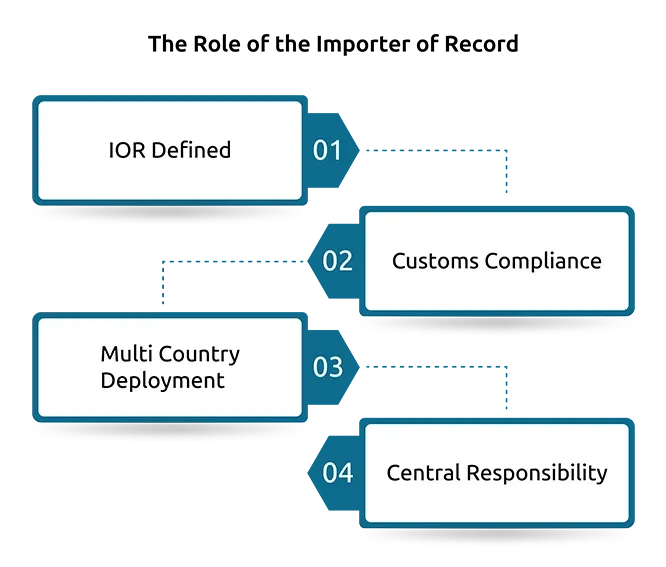
The Importer of Record plays an important role in bringing autonomous equipment into international markets. It helps ensure that eligible shipments meet local customs, tax and documentation requirements.
For businesses without a local entity, an IOR service can help manage import procedures and coordinate compliance requirements. This is particularly useful when equipment is being deployed across multiple countries with different regulations.
The key is to have a clearly identified party responsible for the import transaction, as autonomous machines cannot assume legal import responsibilities.
Autonomous Equipment and Product Compliance
Customs clearance is only one part of importing self-managed equipment. Businesses may also need to meet technical, safety & environmental requirements before the machinery can be used.
Rely on the product and destination, requirements may cover electrical safety, electromagnetic compatibility, wireless communication, machinery standards or batteries. Companies should review these requirements before shipping and confirm the correct HS classification, certificates & technical documents to avoid customs delays.
Who Is Responsible When Machines Operate Independently?
Self-managed operation does not remove human or corporate responsibility. The company importing the equipment must still ensure that the shipment complies with the laws of the destination country.
Responsibility can involve several parties. The manufacturer may provide technical specifications and conformity documents. The logistics provider may coordinate transportation. The customs broker may handle declarations. The IOR may take responsibility for the import transaction. The final user may be responsible for operating the equipment according to local requirements.
How Businesses Can Prepare for the Next Generation of Equipment Imports
Businesses should review the machine’s specifications, components, intended use and required compliance documents before shipping. They should also identify the responsible importer and check destination-country customs & regulatory requirements.
Accurate invoices, packing lists, product descriptions and technical documents can help avoid clearance delays. Early compliance planning allows businesses to deploy autonomous equipment more smoothly across international markets.
Conclusion
Autonomous equipment is changing how businesses think about international technology deployment. Machines may now perform complex tasks with limited human intervention, but customs responsibility still requires a clearly identified legal party.
For companies importing robotics, connected machinery, autonomous vehicles and advanced industrial systems, successful deployment depends on more than transportation. Accurate classification, documentation, regulatory compliance and clear importer responsibility all play an important role.
As autonomous technology continues to grow across global markets, businesses that plan the import process alongside their technology expansion can reduce unnecessary delays and create a smoother path for bringing advanced equipment into new countries.
Did You Know?
In 2025, 542,076 industrial robots were installed worldwide, bringing the global operational stock to 4.66 million robots.
Frequently Asked Questions
Can an Self-managed machine legally act as the importer?
No. Autonomous operation does not give a machine legal importer status. Import duties generally rests with an eligible legal entity or authorised party that can meet customs & regulatory duties.
Why can autonomous equipment be difficult to classify?
Autonomous equipment may combine machinery, electronics, sensors, communication technology, batteries and software-enabled functions. These characteristics can make product classification more complex than for conventional equipment.
Does an IOR help with autonomous equipment imports?
An IOR can help eligible businesses manage import duties such as customs declarations, documentation, duties and taxes, and management with local requirements. The exact scope depends on the destination country and product.
Do autonomous machines require special approvals?
Some may. Requirements depend on the equipment, its technology, intended use and destination country. Wireless, electrical, industrial, medical and vehicle-related equipment can face additional regulatory requirements.
What should businesses do before shipping self-managed equipment?
Organizations should review the machine’s specifications, HS classification, customs requirements, applicable taxes, technical certifications & destination-country approvals before shipment. Creating the responsible importer early can also help stop clearance delays.