Introduction – Data Is Becoming a Logistics Asset
An important factor of logistics has always been freight costs. To reduce costs, companies usually search for cheaper freight rates. However, the total cost of logistics is not always reduced by a cheap freight rate. The total cost can increase due to delays, incorrect routes, billing mistakes, poor carrier performance, & other charges. Logistics data quality has become increasingly important. Companies may better understand shipment prices, delivery times, carrier efficiency, and route problems with reliable and detailed data. Also, it helps companies make choices more quickly and improves supply chain visibility. By 2026, logistics will use freight data analysis for improved planning and cost control, rather than just tracking shipments. Excellent data can identify places where money is being wasted, and possibilities for improvement. One shipment’s cost can be reduced with cheap freight. Good data can make the entire logistics process better.
Why Freight Cost Alone Is No Longer Enough
While freight costs are major, they do not completely represent the cost of logistics. Even with a low freight rate, delays, urgent shipments, extra costs, poor carrier performance, unused shipments, failed deliveries, or urgent route changes can result in increased costs. These problems may also have an effect on delivery times and inventory. Good supply chain visibility and accurate logistics data help companies find these problems early.
A Low Rate Can Still Create Higher Costs
A low transport rate does not always mean lower total cost. Delays can lead to urgent shipping, while detention, extra service charges, and poor delivery performance can increase spending. Freight data analytics helps companies see these hidden costs and understand where money is being lost.
Freight Cost Shows the Result, Not Always the Cause
A freight invoice tells a company what it paid, but good data helps explain why it paid that amount. With accurate shipment, carrier, route, and delivery data, companies can find the causes of higher costs and decide what needs to change. This makes data-driven logistics more useful than looking at freight prices alone.
What Makes Logistics Data “High Quality”?
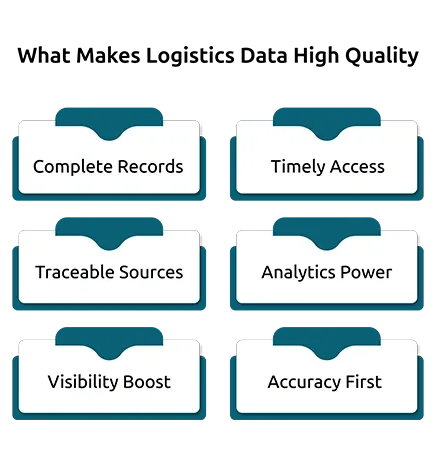
A company that uses high-quality logistics data is using correct, complete, understandable, and useful information. The correct shipment details, cost, dates, locations, and carrier details should all be shown in accurate data. Complete data should have all important details without missing fields. Consistent data means different logistics systems use the same names, formats, and definitions. Companies should have a supply of timely data when they need to make decisions, especially if a shipping problem requires quick action. Information from different carriers and systems is transformed into a single format through standardized data, which allows evaluation and analysis. Also, traceable data lets companies identify where information started and what changes were made. When combined, these factors provide stronger logistics analytics, more reliable freight data, and improved supply chain visibility.
Data Quality Is the Foundation of Logistics Analytics
Good logistics data quality is the starting point for useful logistics analytics. Descriptive analytics first displays previous events, including delivery performance, cargo volume, and freight expenses. Diagnostic analytics then helps in identifying the cause of an issue, such as why a route got costly or why shipments got delayed. Predictive analytics makes predictions about possible delays, future demand, and capacity needs based on previous and current data. Lastly, predictive analysis aids in making decisions on what to do, such changing carriers, shifting delivery times, merging shipments, or changing routes. Freight analytics can go further simply identifying issues to helping teams in improved planning and behavior when the data is reliable and organized.

How Companies Can Build a Logistics Data Quality Strategy
Companies may improve the quality of their logistics data by identifying which data has the most impact on delivery, cost, and service. The sources of their data, include TMS, ERP, WMS, carrier systems, 3PLs, and tracking systems, should then be planned up. Using standard formats for important data such as carriers, locations, shipments, prices, and delivery status is the next process. Additionally, data should be checked for incorrect information, duplicate records, missing details, and incorrect values. Supply chain data management can be made simpler and a single source of truth can be developed by combining important data into a reliable system. Data quality should then be checked regularly as new shipments and records are added. Most importantly, companies should use this data to make better decisions about freight costs, routes, carriers, capacity, and delivery performance, rather than collecting data only to create reports.
Conclusion – From Buying Freight to Managing Information
Freight cost will always be important, but it is only one part of the logistics picture. Poor or incorrect data can reduce delays, extra charges, and other avoid extra costs. Stronger decision-making, improved supply chain visibility, and clear freight analysis are all benefits of high-quality logistics data. Businesses can identify difficulties faster, control shipping costs more efficiently, and react quickly to changes when they have correct information. Logistics in the future will include not only locating the cheapest freight rate. It involves making better decisions and improving the complete supply chain by using reliable logistics data.
Did You Know
Volumes on Asia-Europe, intra-Asia and other air cargo lanes grew even while transpacific volumes stalled, partly from Chinese exports shifting to other markets. IATA projects 2.6% global volume growth in 2026 as these trends are likely to continue.
FAQ
How can poor logistics data increase freight costs?
Wrong or missing data can hide delays, extra charges, route problems, and carrier issues. This can lead to higher transportation costs.
Why is data quality important for freight analytics?
Good data helps companies see the real reasons behind changing freight costs and delivery problems. It makes freight analytics more useful.
How often should logistics data quality be checked?
It should be checked regularly because new shipment and cost data is added all the time. Regular checks can catch errors before they affect decisions.
How does real-time logistics data help?
It helps teams see shipment problems while they are happening. This gives them more time to respond before a small issue becomes a bigger cost.
Why is data quality important for freight analytics?
Good data helps companies see the real reasons behind changing freight costs and delivery problems. It makes freight analytics more useful.