Introduction
International supply chains are facing growing challenges from regional tensions, trade control, penalties, port issues, & changing tariffs across major shipping routes. These challenges can affect shipping routes, freight availability, delivery schedules, supplier availability, and customs requirements with little warning. For businesses operating across different countries, traditional logistics models based on fixed routes or planned timelines times are becoming more difficult to manage.
This changing environment is rising the need for adaptive logistics. It focuses on flexibility, better clarity, alternative routes, a wider supplier base, and faster decision-making. Instead of trying to avoid every delay, businesses are developed supply chains that can adjust quickly & keep operations moving when conditions change.
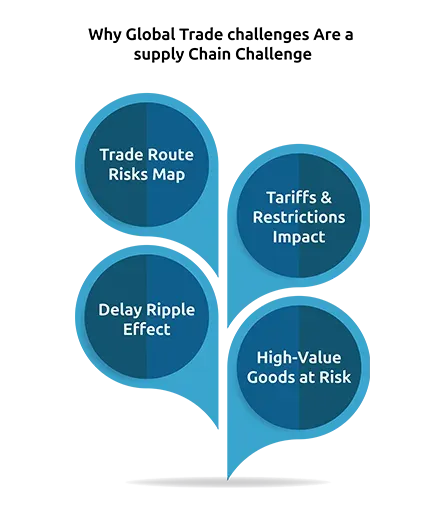
Why Global Trade challenges Are a Supply Chain Challenge
Global events can create supply chain problems far beyond the location where the delay occurs. When an important shipping trade route becomes unsafe or restricted, ships may need to use longer routes, increasing transit times,, insurance costs, or freight costs. Similar effects can occur when governments introduce new tariffs, export controls, sanctions, or trade restrictions.
For global businesses, even a short-term delays can create a wider working impact. A delayed shipment can affect production schedules, customer shipments, stock availability, & income. Companies shipping high-value technology, medical equipment, telecom products, industrial machinery, or other time-sensitive goods may face even greater effects because delays can affect projects & legal obligation.
Understanding Adaptive Logistics
Flexible logistics is the ability to adjust supply chain working when outside factors change. Rather than relying on one fixed shipping plan, businesses prepare multiple options that can be activated when required. These options may includes changing shipping routes, using alternative ports, switching suppliers, moving stock between locations, or shifting from ocean freight to air freight for critical shipments.
The main purpose of adaptive logistics is to give organizations the flexibility to make timely decisions. A company that has already found alternative routes & suppliers can respond much faster than one that begins searching for solutions only after a delay occurs. This makes flexibility an essential part of modern supply chain planning.
The Value of Live Supply Chain Visibility
Live tracking helps companies monitor shipment locations, port conditions, shipping capacity, supplier stock regulatory changes, or possible delays. This allows companies to find risks early and make timely decisions. If a major shipping route is delayed, businesses can quickly consider backup ports, importers, shipping modes, or stock options to reduce delays & manage supply chain ongoing working.

Diversifying Routes and Suppliers
Supply chain stability rely on minimizing reliance on a single supplier, country, port, importer, or shipping route. Organization can improve stability by developing alternative suppliers, logistics providers, ports, or shipping routes. By identifying complex products & key supply chain links , companies can prepare practical alternatives that improve continuity without unnecessarily increasing operating costs.
Strategic Inventory and Warehousing
Strategic stock planning helps businesses balance focused with cost efficiency. Instead of keeping excessive stock, companies can identify critical products and position stock in locations that provide better protection against delays. Regional warehouses and delivery centres can also help handle customer supply when global routes face delays. By assessing demand, lead times, product importance, or regional risks, businesses can define where additional safety stock is most valuable.
Customs Compliance During Disruptions
Global trade challenges can also affect customs and trade compliance. Changes in trade control, tariffs, export controls, import restrictions, licensing requirements, product rules, and country-based rules can impact whether goods can legally enter or leave a market.
When companies change their routes they may also face different customs processes or documentation requirements. Incorrect HS classification, incomplete documentation, incorrect valuation, or failure to meet local import requirements can create extra delays.
This is why customs compliance should be included in supply chain backup planning. Logistics teams need to understand not only whether an different route is physically available but also whether the shipment can legally & efficiently move across the new destination.
The Role of an Importer of Record
An Importer of Record can become specifically valuable when companies need to move goods into markets where they do not have an set up local importing structure. The IOR is responsible for supporting import compliance and make sure that applicable customs requirements are addressed.
When a operational issue requires goods to be redirected through another country or destination, businesses may need to review their import arrangements. An expert IOR service offer can help manage customs documentation, duties or taxes, and applicable import requirements.
For technology, telecom, medical device, industrial, and other specialised equipment, this support can help businesses maintain compliant global shipments while adapting to changing logistics conditions.
How One Union Solutions Supports Adaptive Logistics
One Union Solutions helps organization manage global shipments across Importer of Record (IOR) & Exporter of Record (EOR) services across global markets. The company supports customs documentation, import compliance, duties and taxes, and local regulatory requirements for specialised equipment. This helps businesses adapt to changing shipping routes & new destinations while reducing compliance risks. With global logistics expertise, One Union Solutions helps keep global shipments moving effectively during supply chain delays.
Conclusion
Global Trade Challenges are making global trade less predictable, increasing the risks of depending on fixed routes, single suppliers, and predictable schedules. Adaptive logistics helps businesses respond through real-time visibility, varied suppliers, alternative routes, planned stock, and strong customs compliance. By developing flexibility into supply chains, companies can respond faster to setbacks, maintain compliant working , and keep goods moving despite changing global conditions.
Did You Know?
Over 80% of international trade in goods is transported by sea, making shipping routes and port operations critical to global supply chains.
Frequently Asked Questions
What is responsive logistics?
Responsive logistics is a flexible way to supply chain management that allows businesses to adjust routes, suppliers, shipping methods, stock , or customs processes when unexpected delays occur.
How do Global Trade Challenges affect global supply chains?
Global challenges can affect transport routes, freight capacity, supplier reach, delivery schedules, tariffs, trade control, or customs requirements, creating delays and additional working costs.
Why is real-time visibility important for supply chains?
Live tracking helps organization track shipments, shipping conditions, supplier activity, & likely delays. This allows companies to identify risks earlier and take fixing action faster.
How can companies make their supply chains more flexible?
Companies can improve balance by adding suppliers and shipping routes, handling required stock, planning backup logistics options,tracking risks & enhancing customs compliance processes
What role does an Importer of Record play during supply chain delays?
An Importer of Record can help organization handle local import requirements, customs documentation, duties, taxes, & regulatory compliance when goods are moved into global markets, including when alternative destinations or routes are required.