Overview
The United Kingdom’s exit from the European Union has changed its global trade system. New border controls, developing Customs clearance procedures, and updated International shipping terms are increasing the official load for overseas businesses. For Asian exporters, these changes mean higher documentation requirements, stricter good categorizations under the HS code and HTS Harmonized Tariff Schedule systems, and growing working costs. Understanding how UK post-Brexit Customs reforms affect trade is now necessary for organizations involved in international freight services and cross-border logistics.
UK Post-Brexit Impact on Supply Chains for Asian Exporters
New border formalities and regulatory controls
Since Brexit, the UK has operated an independent Customs scheme. Asian exporters must now follow complete import declarations, product safety certifications, and origin documentation. Miscategorizations of HS code data or errors in valuation can delay Customs clearance and increase penalties.
Disruption to inventory flow and delivery schedules
Stricter inspections and port congestion have added unpredictability to lead times. This has affected Inventory and order management, making it harder to support just-in-time supply methods. Exporters using Premium delivery service options or DAP Incoterms now face greater pressure to factor in Customs delays and duty calculations.
Impact on logistics partners
Many Asian organizations depend on international freight services and freight forwarding companies near me in the UK to manage documentation and border approval. Also, the post-Brexit environment has grown up service fees as brokers invest in agreement systems and expertise for global trade.

How did the Post-Brexit uncertainty impact the exports of UK organizations?
Reduced predictability in trade operations
UK importers have also had to accept regulatory changes, which affect Asian exporters directly. Unwanted around import processes, tariff categorizations under the HTS Harmonized Tariff Schedule, and post-arrival inspections have slowed buying decisions.
Increased demand for compliance support services
To avoid shipment holds, many UK organizations now require that Asian suppliers work with an Importer of record Service or an Exporter of record service providers in the supply chain. These services confirm that the correct party is legally responsible for duty payments, VAT filings, and product declarations.
Changes in global shipping terms
UK buyers are restructuring International shipping terms, such as DAP, to be used for approval issues. As a result, exporters may find themselves responsible for more documentation, Customs clearance processes, and risk exposure at the UK border.
How Post-Brexit Increase Customs Compliance Costs for Asian Exporters
Higher documentation and classification costs
Post-Brexit reforms require more detailed good descriptions, origin proofs, and accurate HS codes. Errors lead to shipment rejections or reevaluation, increasing storage, inspection, and revision fees.
Rising professional service expenses
Asian exporters increasingly depend on freight forwarding companies near me, agreement consultants, and international freight services to guide UK import rules. These professional services increase per-shipment costs, specifically for SMEs without in-house trade expertise.
Technology and System Innovations
To remain complete, exporters are investing in digital trade tools, automated documentation, and Supply chain optimization platforms. While these improve long-term efficiency, they add short-term economic pressure.
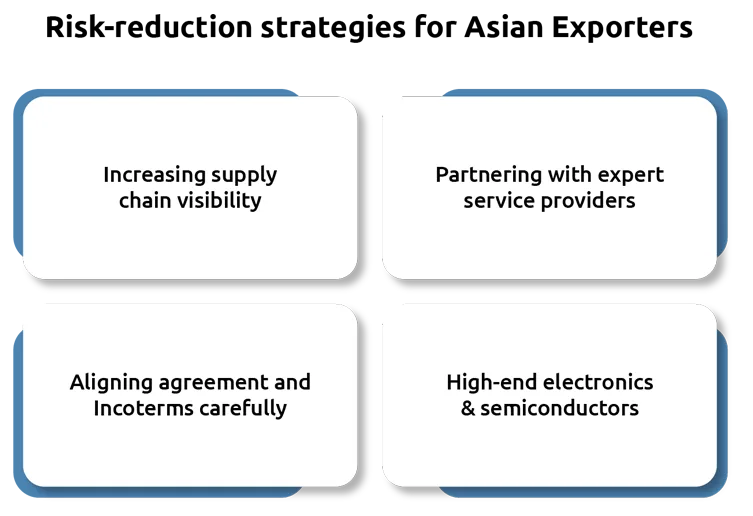
Risk-reduction strategies for Asian Exporters
Increasing supply chain visibility
Improving Supply chain optimization and Inventory and order management systems helps exporters expect border delays and manage growing stock more effectively.
Partnering with expert service providers
Working with professional Importer of record Service and exporter of record services providers reduces the risk of non-compliance, penalties, and shipment seizures.
Aligning agreement and Incoterms carefully
Exporters should reassess International shipping terms and DAP agreements to clearly define responsibility for duties, Customs clearance, and risk reduction. This protects margins and stops issues.
Conclusion
UK post-Brexit Customs reforms have mainly changed how Asian exporters access the British market. Increased documentation requirements, strong border checks, and developing International shipping terms have raised approval costs and operational risks. Also, with the right use of export support, technology investment, and Supply chain optimization, exporters can succeed. Improving Customs clearance processes, working closely with international freight services, and using strong Inventory and order management systems, Asian businesses can protect while continuing to work with UK customers in a more regulated post-Brexit trade environment.
DID YOU KNOW?
Britain is making efforts to strengthen economic ties with India after Brexit, and both countries aim to double their trade to $120 billion in the coming years.
FAQs:
1. How has Brexit changed UK Customs procedures for Asian exporters?
Brexit introduced full import declarations, stricter border checks, new documentation requirements, and independent UK Customs controls, increasing compliance obligations.
2. Why are supply chains more disrupted after Brexit?
Additional inspections, port congestion, and regulatory reviews have extended clearance times, making delivery schedules and inventory planning less predictable.
3. How do HS codes and product classification affect UK imports?
Incorrect HS code categorizations can lead to shipment delays, penalties, duty reevaluation, and even cargo seizure at the UK border.
4. What is the role of Importer of Record services after Brexit?
Importer of Record services confirm legal responsibility for duties, VAT, and Customs filings, helping exporters reduce compliance risks.
5. How can Asian exporters reduce post-Brexit trade risks?
Improving supply chain visibility, using professional compliance services, investing in trade technology, and clearly defining Incoterms and contractual responsibilities.