
Overview
The UAE is quickly growing its FTAs to improve its global trade situation for global organizations. As global trade changes, the UAE is using these agreements to reduce trade problems, improve market entry, and support export industries. Its strategy is centered on allowing smooth global shipments while maintaining agreement with global trade regulations. With a strong focus on variations, the UAE is positioning itself as a major hub connecting Asia, Europe, and Africa. This approach benefits industries such as IT, aviation, medical, and automotive by providing structured trade systems and improved access to global trades.
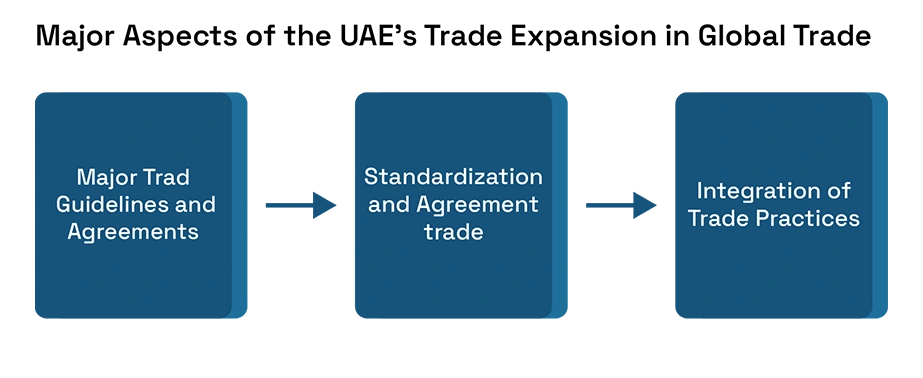
Major Aspects of the UAE’s Trade Expansion in Global Trade
Major Trade Guidelines and Agreements
The UAE’s trade development has grown through long-term agreements that simplify trade processes. These agreements work with global standards such as the Generalized System of Preferences (GSP), allowing businesses to benefit from reduced tariffs in partner countries of the UAE.
Standardization and Agreement trade
To confirm smooth trade shipments, businesses must follow globally accepted systems such as HS code categorization and the HTS Harmonized Tariff Schedule to identify goods. These standards help exporters and importers correctly classify goods under applicable duties.
Integration of Trade Practices
The UAE organizations globally accepted trade terms such as Incoterms with DAP and DDP shipping, which define delivery responsibilities and reduce misunderstandings between delivery partners in global trade. These methods confirm clarity and efficiency in cross-border shipments.
Logistics and Trade Facilitation
Effective logistics and International freight services play a critical role in the UAE’s trade expansion. With advanced ports and airports, the country confirms fast and dependable shipment of goods, supporting time-sensitive industries such as aviation and healthcare.
Why UAE Free Trade Agreements Are Built for Export Businesses
Simplified Trade Operations
UAE FTAs are used to simplify processes such as Customs clearance, reducing delays and administrative loads. This allows exporters to focus on increasing their operations globally.
Support Services for Global Trade
Businesses benefit from specialized service solutions such as exporter of record services and Importer of record services, which help manage regulatory responsibilities when entering new markets of UAE. These services are specifically useful for IT organizations and medical device exporters working with difficult approval requirements.
Supply Chain Efficiency
The UAE improves Supply chain optimization through combined trade systems and infrastructure. Organizations can also increase performance with Inventory and order management tools that confirm effective stock control and on-time deliveries. Export businesses frequently see practical concerns, such as whether a freight forwarder can be an exporter of record or whether a customs broker can handle both import and export documentation. UAE trade systems provide clarity and flexibility, allowing businesses to systematically operate effectively while remaining complete in global trade.
Technology and Agreement Tools
To have regulatory approval, organizations mainly depend on the best trade compliance software for import export rules, which helps automate documentation and shipment reporting processes. This is mostly valuable for industries with strict regulatory standards, such as the medical and automotive sectors.
UAE Current Free Trade Agreements Framework to Strengthen Global Trade
The UAE’s CEPA program goes beyond traditional FTAs by covering goods, services, and investments. These agreements are designed to create long-term economic partnerships and quick innovation across industries. FTAs allow IT organizations to expand globally by reducing digital trade problems and supporting secure data flows. Approval tools and structured export processes make it easier to manage global shipments. The aviation sector benefits from an effective logistics chain and simplified Customs clearance, confirming the timely delivery of aircraft components and maintenance equipment. Medical companies gain access to international markets with simplified regulatory pathways. Shipments with proper categorizations using HS code and approval to global approval standards confirm smooth exports of medical devices. Automotive businesses benefit from reduced tariffs and effective supply chains using strong International freight services and optimized inventory systems. Manufacturers can expand their global presence effectively in global trade.

Conclusion
The UAE’s expansion of Free Trade Agreements shows its responsibility in becoming a global trade powerhouse. By combining major partnerships with standardized trade methods such as Incoterms, HS code, and advanced approval systems, the country is creating a business-friendly environment for exporters. For industries such as IT, aviation, medical, and automotive, these agreements provide huge advantages, including improved market access, reduced costs, and simplified operations with strong support systems such as exporter of record services, Importer of record services, and advanced Supply chain optimization.
DID YOU KNOW?
The United Arab Emirates (UAE) has also become a signatory to the WTO’s ‘Information Technology Agreement’; this is a significant agreement comprising 78 countries, which collectively account for 97 percent of the global trade in information technology products.
FAQs:
1. What are the UAE Free Trade Agreements (FTAs)?
UAE Free Trade Agreements are trade deals between the UAE and other countries that reduce or eliminate tariffs, simplify customs clearance, and promote smoother international trade operations.
2. How do UAE FTAs benefit exporters?
UAE FTAs help exporters by lowering duties, improving market access, simplifying documentation, and allowing efficient logistics and supply chain optimization.
3. What is the UAE CEPA program?
The CEPA (Comprehensive Economic Partnership Agreement) is a broader trade framework that includes goods, services, and investments, helping businesses expand globally with fewer trade barriers.
4. Why are HS codes and Incoterms important in UAE trade?
HS codes help classify goods for customs duties, while Incoterms define shipping responsibilities between buyers and sellers, confirming smooth and transparent global trade transactions.
5. Can a freight forwarder act as an exporter of record?
In some cases, a freight forwarder can act as an exporter of record, but it depends on the country’s regulations. Businesses frequently use an exporter of record services to confirm full approval with trade laws.