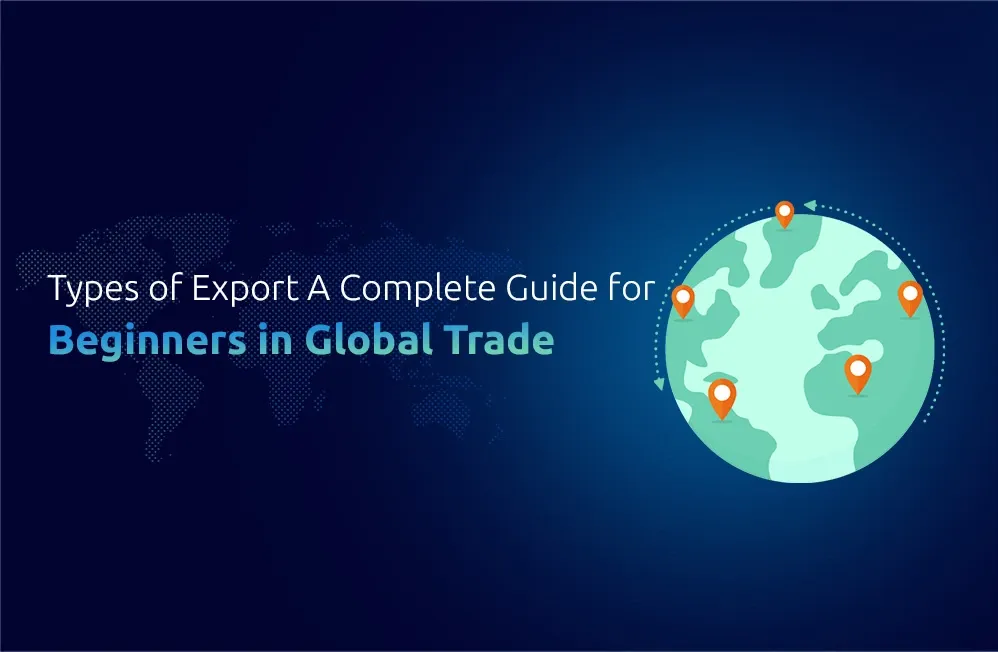
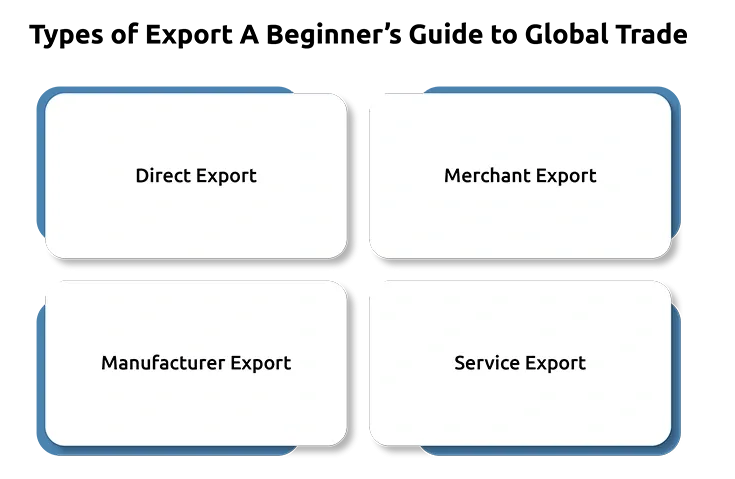
Exporting is one of the most powerful ways for businesses to expand beyond domestic markets and tap into global demand. Whether you are a manufacturer, trader, or service provider, understanding the different types of exports is essential for building a successful international business strategy. The image above highlights eight major types of export that every beginner should know before entering global trade.
Direct Export
Direct export occurs when a manufacturer or producer sells goods directly to a buyer in another country without involving any intermediary. This method gives businesses full control over pricing, branding, and customer relationships.
It is best for companies with internal logistics, international marketing and documentation skills. These companies can handle logistics well. They also do a job with international marketing.
However, it also requires a solid understanding of foreign regulations, customs clearance, and shipping procedures. Many businesses use exporter of record services to ensure compliance while managing direct exports efficiently.
Indirect Export
This way is good for people who’re new to exporting and do not know much about selling things to other countries. When you use these people to help you your business can have fewer problems with things, like paperwork getting paid and delivering goods all around the world. You can avoid some risks by letting them handle these things. These intermediaries often manage International freight services, making it easier for companies to enter new markets without heavy investment.
Merchant Export
The merchant exporter is in charge of deciding how much the goods will cost, how they will be packed and how they will be sent to the buyers. Merchant exporters need Importer of Record Service and compliance solutions to handle rules, for moving things across borders and making sure things get delivered on time. Merchant exporters use Importer of Record Service to deal with all the rules and regulations when they send things to countries.
Manufacturer Export
Manufacturer export happens when the producer itself exports goods directly to foreign buyers. Unlike merchant export, the manufacturer retains ownership and control over the entire export process.
This approach allows better profit margins and brand positioning but requires expertise in supply chain optimization, international contracts, and regulatory compliance.
Deemed Export
Deemed export refers to transactions where goods supplied within the domestic market are treated as exports under government policies. For example, supplying goods to Special Economic Zones (SEZs), Export Oriented Units (EOUs), or large infrastructure projects.
Such exports may qualify for benefits under schemes like the generalized system of preferences (GSP), depending on the country and trade agreements. Businesses must ensure proper classification using HS code and follow the HTS harmonized tariff Schedule for compliance.
Service Export
Service export involves providing services such as IT, consulting, or technical support to clients located in other countries. They are provided over the internet or by people who’re experts in their field. India, for example, is a global leader in IT and consulting service exports. Managing contracts, billing, and compliance in service exports often requires efficient inventory and order management systems and digital tools.
Project Export
Project export is a comprehensive form of export where a company delivers a complete project, including engineering, machinery, consultancy, and execution.
This kind of export is really common in things like IT, aviation, automobile sectors. It needs people to work together. It is very important to plan everything carefully and think about what could go wrong with the logistics and manage the risks.
Re-Export
Re-export occurs when goods are imported into a country and then exported again without significant processing. This is common in global trading hubs where goods are redistributed to different markets.
Re-export businesses have to be very careful, with all the paperwork, taxes that need to be paid and making sure they follow all the rules. If they know what Incoterms are and use software to help with import and export rules it can make things a lot easier and reduce problems for the re-export businesses. The re-export businesses will have risks if they understand import export rules and use the best trade compliance software.
Role of Compliance and Documentation in Export Types
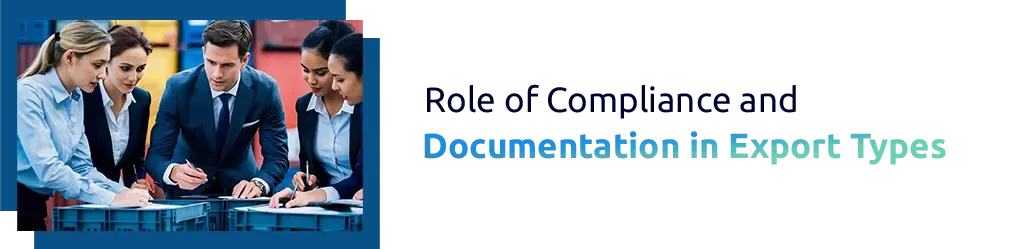
No matter which export type a business chooses, compliance remains a critical factor. Using the HS code following the HTS tariff Schedule and having accurate documentation are really important for avoiding delays and penalties when it comes to classification. Classification using the HS code is crucial because it helps with the HTS tariff Schedule. Accurate documentation for classification is also necessary to avoid problems. Classification, with the HS code and the HTS harmonized tariff Schedule can be tricky.
A common question businesses ask is: can a customs broker handle both import and export documentation?
Yes, experienced brokers and service providers can manage both processes, ensuring seamless coordination between exporting and importing countries.
Choosing the Right Export Type for Your Business
Selecting the right export model depends on several factors:
Business size and resources
Risk tolerance
Target market
Product type
Regulatory requirements
For example, beginners may prefer indirect export, while established manufacturers often choose direct or manufacturer export for better control and profitability.
Conclusion
Understanding the different types of export is the first step toward building a successful global trade strategy. There are types of export such as direct export and indirect export and also project export and service export. Each export type has its own advantages and challenges.
By combining the way to export with good logistics, a smooth supply chain and reliable compliance tools businesses can grow globally with confidence. When you are just starting out or growing your business understanding these export types will help you do better in markets and find new ways to grow. The right export approach and strong logistics help you get your products to customers worldwide.
DID YOU KNOW
“Exports play a crucial role in driving economic growth, as they significantly impact a country’s GDP, influence exchange rates, and affect key factors such as inflation and interest rates.”
FAQs
What is the difference between direct and indirect export?
Direct export involves selling goods directly to foreign buyers, giving full control to the exporter. Indirect export uses intermediaries like trading companies, making it easier for beginners but with less control over pricing and branding.
Which type of export is best for beginners?
Indirect export is usually the best choice for beginners because intermediaries handle logistics, documentation, and customs clearance, reducing risk and complexity.
What is deemed export and how does it benefit businesses?
Deemed export refers to supplying goods within the country to special zones like SEZs or EOUs, which are treated as exports under policy rules. Businesses may receive benefits under schemes like the generalized system of preferences (GSP) depending on eligibility.
Do all export types require HS code and compliance documentation?
Yes, proper classification using HS code and adherence to the HTS harmonized tariff Schedule are essential for all export types to ensure smooth cross-border trade and avoid penalties.
Can a customs broker handle both import and export documentation?
Yes, many professionals offer end-to-end support and can manage both processes. This is especially useful when using exporter of record services, Importer of record services, and international freight services for seamless global trade operations.