
Overview
The global demand for medical devices continues to grow as healthcare systems expand and modernize in countries. All medical devices, from diagnostic equipment to surgical devices, require strong approval and regulatory controls to confirm safety, quality, and the tracking of export shipments. Regulatory controls on medical device exports are designed to protect patients, meet international trade requirements, and reduce risks across the border trade. Exporters require knowledge of these controls to get smooth customs clearance, effective logistics, and complete international shipping terms for shipping.
Key Regulatory Export Controls of Medical Devices
Regulatory export controls vary by country, but they share the same objectives, such as device safety, product quality, and legal agreement of goods. Medical devices are frequently categorized under specific HS codes and HTS Harmonized Tariff Schedule categories, which show the applicable duties, limitations, and documentation.
Exporters must confirm that devices follow the country’s regulations, such as safety systems, labeling rules, and post-market scrutiny requirements. Trade systems such as the generalized system of preferences (GSP) may provide duty benefits for eligible exporters, but only when goods meet the origin and approval criteria of the goods supply chain. Regulatory oversight also extends to controlled technologies, software-allowed devices, and goods with export control considerations.
Approval Conditions for Export of Medical Devices
Regulatory Authority Approvals
Before export, medical devices mainly require approval or registration from the regional regulatory authorities. These approvals confirm that the device meets manufacturing, safety, and quality systems. Some countries also require export licenses for some categories of devices, specifically those used in critical care or public health emergencies.
Compliance with International Standards
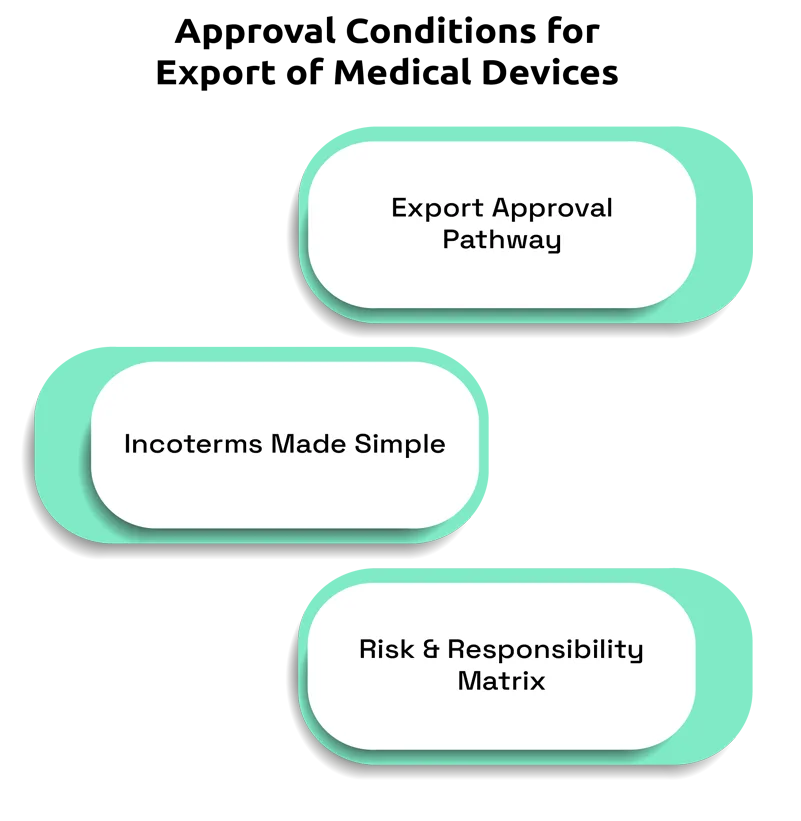
Medical device exporters must align with internationally recognized standards such as ISO certifications and Good Manufacturing Practices (GMP). Compliance supports faster approvals and reduces delays during customs clearance. Clear alignment with Incoterms like DAP helps define responsibilities related to delivery, risk transfer, and cost allocation between buyer and seller.
Documents Required for the Export of Medical Devices
Mandatory Export Documentation
Accurate documentation is necessary for regulatory approval. Mostly required documents include:
- Trade invoice and packing list
- Certificate of origin for goods exports
- Regulatory approval or export license
- Product specifications and safety data
- Shipping documents aligned with International shipping terms
Classification under the correct HS code and HTS Harmonized Tariff Schedule confirms correct duty evaluations and avoids regulatory problems.
Role of Trade and Customs Documentation
Working with a licensed Customs Broker helps confirm documentation accuracy and regulatory work. Brokers also support with tariff categorizations, duty optimization, and guideing country specific requirements, reducing the risk of shipment holds in customs offices
Process Required for the Export of Medical Devices
Pre-Export Planning and Agreements
The export process begins with product categorizations, regulatory verification, and destination-specific approval checks for the supply chain. Exporters must determine whether they will work as the exporter of record services provider or partner with a third-party service provider like One Union Solutions. This step confirms responsibilities for regulatory approval and export declarations of devices.
Logistics and Supply Chain Execution
Once approvals are received, exporters work with International freight services to manage logistics effectively during shipments of goods. Proper logistics planning confirms temperature control, secure handling, and on-time delivery. Advanced Inventory and order management systems support traceability and reduce errors during shipment execution.
Import and Delivery Coordination
For smooth delivery, exporters may work with an importer of record service providers who manage import approval, duties, and taxes at the destination. Premium options, such as Premium delivery service, can support time-critical medical shipments. Major Supply chain optimization improves tracking, cost efficiency, and regulatory dependability throughout the export stages in global trade.

Conclusion
Regulatory controls on medical device exports play a vital role in safeguarding public health while allowing global trade. Start with approval conditions and documentation for customs clearance and delivery work; each step demands accuracy and approval. Understanding regulatory requirements, applying correct HS code categorizations, and using professional logistics and customs expertise, exporters can reduce risks and confirm smooth international work. A systematic, complete export process not only supports regulatory compliance but also improves trust across the global healthcare supply chain.
DID YOU KNOW?
India’s tariffs are currently a nominal 7.5 percent, and Indian industries are demanding a reasonable increase of 10-15 percent to boost domestic production.
FAQs:
1. What are regulatory export controls for medical devices?
Regulatory export controls are rules and approval requirements set by authorities to confirm that medical devices meet safety, quality, and agreement standards before being shipped internationally.
2. Do medical devices require regulatory approval before export?
Yes, most medical devices require approval or registration from the relevant regulatory authority to confirm agreements with manufacturing, safety, and quality requirements.
3. Why is HS code classification important for exporting medical devices?
Correct HS code and HTS Harmonized Tariff Schedule categorizations help determine duties, documentation requirements, and regulatory requirements, reducing the risk of customs delays.
4. What documents are required for exporting medical devices?
Common documents include a trade invoice, packing list, certificate of origin, regulatory approvals or licenses, product specifications, and shipping documents, working with international shipping terms.
5. How do customs brokers and logistics partners support medical device exports?
Licensed customs brokers and logistics providers help manage documentation, tariff classification, regulatory approval, and supply chain work for smooth global shipments.