Importing products globally is a tricky business, but all countries are not the same. The following are the factors that determine the challenges faced by importers in various destinations. Trading across borders is not an easy thing, but certain factors make some areas more challenging than others. Research has suggested that compliance issues make the import process more complicated.
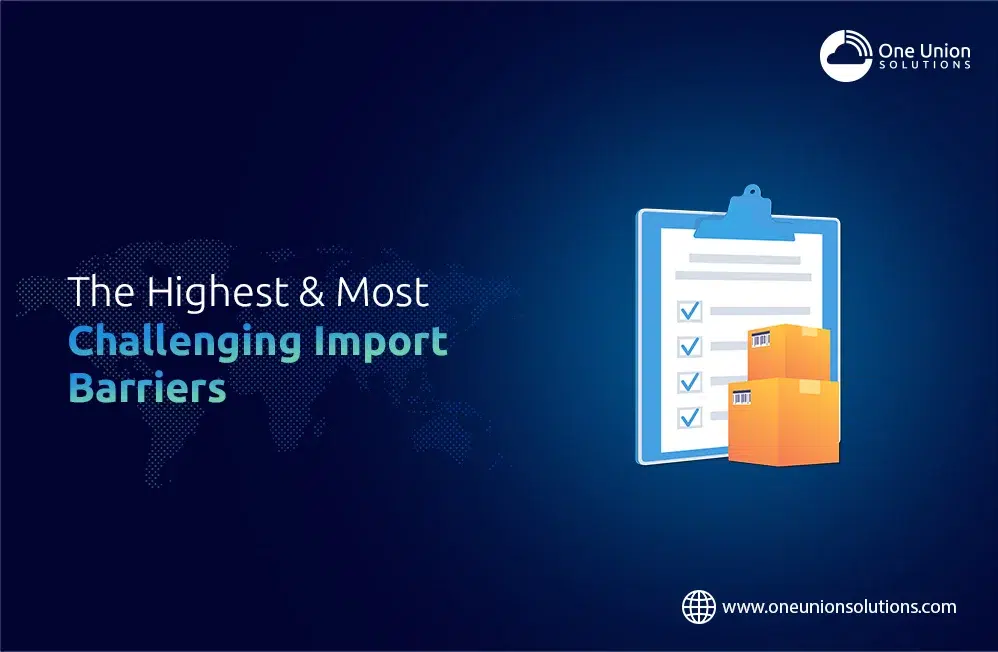
The Highest & Most Challenging Import Barriers
It is also identified that apart from the compliance issues the legislative structures that may be specific to certain regions or countries further complicate the situation. In this regard, the field of technology faces more issues as this industry is more regulated. One of the basic reasons for that is the dual use of tech products. It means that the products can be used for harmful purposes other than the intended use. Compliance is one of the major factors that determine the ease of importing products in any country. Test reports, contracts, label pictures, permits, and licenses are some of the barriers that importers face.
How can businesses overcome import restrictions?
Businesses can overcome import barriers by working with experienced freight forwarders, using Importer of Record (IOR) services, ensuring accurate documentation, and staying updated with local regulations. In addition, companies can plan their shipments to avoid delays, choose the right Incoterms to clearly define responsibilities, and use correct HS Code classification to prevent customs issues.
Russia
The compliance rules and regulations in the country are very strict and complicated. Import of electronics and commercial goods is difficult as many brands are banned by the Russian government. Several restrictions are based on trade pacts. Therefore, certain tech goods are impossible to reach this destination.
Saudi Arabia
For new businesses, Saudi Arabia is a complex destination as it requires a lot of compliance certificates. In addition, issues like religious law play a vital role. The procedures are not only complex, but the compliance certificates and licenses take a lot of time for their approval. Another unique restriction they pose is the requirement of pictures of products and their labels that make the process long and cumbersome. The original rules have become more strict due to the issues like Arab League Boycott. The banned items in the country also have a long list.
Hong Kong
It may appear shocking, but the country has become a difficult trade destination for several reasons. The country has no taxes or duties on importing. This has made it a very attractive market for a large number of products. Several businesses want to enter the market that creates a huge influx of products through a small region. It makes the deliveries slow and cumbersome. Hong Kong has a flexible tax structure environment and is linked closely to other Asian markets. It creates an opportunity for businesses to take goods to other countries from Hong Kong. In this regard, to reduce these risks, strict regulations have been adopted by the government for border control.
India
For the new business, there exists a need for lengthy administrative requirements that take a lot of time. Poor infrastructure can also cause a lot of issues. Even though the goods have arrived the clearance processes cause delays. Small errors can easily occur when it comes to compliance. These errors can cause huge disasters causing confiscation of goods. Compliance issues are the biggest hurdle for the import of tech goods in India. High import taxes are also another problem. Taxes are levied to protect local products. Time lapses, financial risks, and huge compliance requirements make the country third most complex import destination in the world.
Argentina
Import in Argentina is very expensive and lengthy. There are several other reasons like corrupt political practices, poor infrastructure, huge labor costs, and lack of coherence in rules and regulations. Across the whole region, the customs and taxes for technology equipment are very high and can even change quickly. Corruption also creates complexity as customs officials may not implement the laws for every business coherently.
How Our Importer Of Record Service Can Help You Import In These Countries
Brazil, the Philippines, and Vietnam are some other tricky import destinations. Partnerships with compliance specialists like One Union Solutions can make your journey across the border smooth and risk-free. We ensures swift custom clearances and trouble-free import process even in the most difficult destinations around the globe. We have a global presence in more than 190+ countries worldwide. Our import experts are well equipped with knowledge and experience to help you import your technology without any trouble.
That is why importing countries are considered to have more efficient access points and better infrastructure which can reduce some obstacles exposed in other countries with high import volumes, including China, Germany, and the USA. Although these countries might not always be constrained with the compliance issues that others are, due to their large volumes of imports, they pose a logistical problem in some sectors such as technology and automobiles. Partnering with an efficient IOR such as One Union Solutions can help organizations to manage the high-demand importing locations well and thus avoid any holdups that would cause delays in operations and deliveries Besides, there will be good compliance with the regulation into the destination-country.
Conclusion
Import barriers remain one of the biggest challenges in global trade, affecting how businesses move goods across borders. From tariffs and quotas to strict regulations and complex documentation, these barriers can increase costs, cause delays, and create operational risks. Companies must be well-prepared to handle these challenges by ensuring compliance with international trade laws and maintaining accurate documentation.
Did you know?
Non-tariff barriers (NTBs) restrict imports or exports of goods and services without involving the imposition of tariffs. They could come in the form of regulations, standards, testing, certification, or pre-shipment inspection.
FAQ
1. What are the biggest import barriers in international trade?
The biggest import barriers include tariffs, quotas, strict customs regulations, licensing requirements, and complex documentation processes that make importing goods more difficult and costly.
2. How do import barriers affect businesses?
Import barriers can increase costs, cause shipment delays, and create compliance risks, making it harder for businesses to operate efficiently in global markets.
3. What are non-tariff import barriers?
Non-tariff barriers are restrictions like product standards, certifications, import licenses, and customs procedures that limit trade without involving taxes.
4. Which industries face the most import restrictions?
Industries such as electronics, automotive, and defense face the highest import barriers due to strict safety and regulatory requirements.
5. How can companies reduce the impact of import barriers?
Companies can reduce the impact by ensuring proper documentation, using correct HS codes, working with logistics experts, and staying updated with changing trade regulations.