Introduction
In today’s developing global supply chain services, businesses are changing away from traditional warehouse methods toward more adaptable solutions. The rise of on-demand warehousing is a direct response to the requirement for flexibility, speed, and scalability in the import and export business. As trade volume variations and international export regulations grow, organizations are looking for better ways to manage inventory without committing to a long-term storage agreement. This new approach combines technology, connectivity, and various storage uses to help organizations stay flexible while achieving cost efficiency.
What Is an On-Demand Warehouse?
An on-demand warehouse is a flexible storage approach that allows organizations to rent warehouse storage only when required. Instead of having permanent systems, organizations can access available capacity through digital platforms that match storage providers with clients. This system is specifically valuable for organizations engaged in import and export operations, where inventory levels can change quickly due to seasonal demand or varying Incoterms agreements. If you’re managing DDP shipping, Customs clearance support, or Importer of Record services, on-demand warehousing gives importers and exporters live tracking of the supply chain.

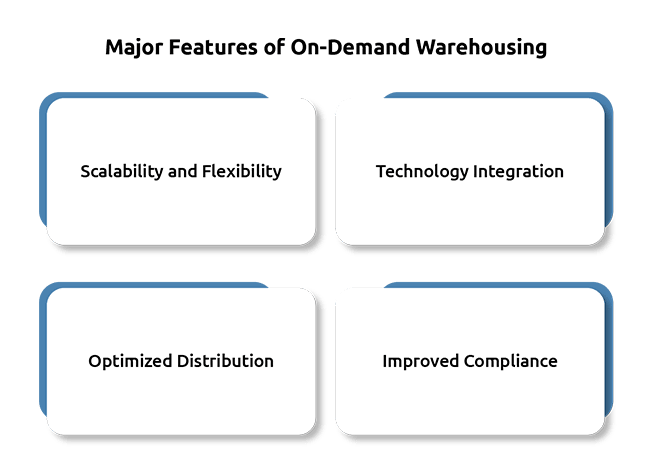
Major Features of On-Demand Warehousing
- Scalability and Flexibility: Organizations can quickly change storage up or down depending on market upcoming features, production, or unexpected changes in import-export registration requirements.
- Technology Integration: Digital platforms connect various warehouse providers, allowing live tracking, sim invoicing, and effective coordination for both importer and exporter operations and export customs brokerage activities.
- Optimized Distribution: By using geographically spread storage hubs, on-demand warehousing supports quick last-mile delivery, vital for industries dealing with valuable or urgent goods under Comprehensive import-export support systems.
- Improved Compliance: On-demand warehouses frequently include combined solutions for managing documentation such as HS codes, HTS harmonized tariff schedule, and shipment labeling that work with international export regulations.
- Smooth combination with IOR Services: For businesses using IOR services, on-demand warehousing provides the perfect complement, confirming stored goods are cleared, managed, and supplied with full regulatory approval.
The Benefits of On-Demand Warehousing
The advantages of on-demand warehousing extend across multiple industries. From SMEs entering the import and export market to global organizations improving existing networks, this method delivers:
- Cost Efficiency: No long-term agreement or fixed systems costs mean businesses only pay for the storage they use.
- Quick to Market: Working with flexible warehouses helps reduce lead times and support DDP shipping responsibilities.
- Regulatory Support: Integrated Customs clearance support confirms smooth movement of goods across borders.
- Increased Market Reach: On-demand warehousing completes the gaps in regions where traditional logistics infrastructure is minimal.
- Simplified Compliance: Centralized management of documentation, such as HS code and HTS harmonized tariff schedule, helps to work with international export regulations.
- Also, on-demand warehousing works perfectly with the developing logistics ecosystem, providing both working and approval advantages that enable businesses to expand effectively.
Future Trends in On-Demand Warehousing
As the import export business continues to grow, many trends are changing the future of on-demand warehousing:
- AI-Driven Optimization: Artificial intelligence will increase demand, projection, and storage utilization, helping companies manage import export work more intelligently.
- Integration with IOR Platforms: The combination of Importer of Record services and various storage will simplify Comprehensive import-export support, specifically for businesses handling multi-country operations.
- Sustainability and Green Warehousing: More providers are adopting energy-effective solutions and digital documentation to reduce carbon emissions while adhering to international export regulations.
- Global Collaboration: The trend toward shared digital ecosystems will connect more export customs brokerage services, warehouse networks, and transport providers under a single platform for complete Customs clearance support.
Conclusion
The shift toward on-demand warehousing marks a new era of adaptability in the global supply chain services landscape. Businesses engaged in import and export operations can leverage these dynamic solutions to optimize storage, simplify Customs clearance, and increase their DDP shipping and IOR services capabilities. By integrating regulatory agreement tools such as HS code management, HTS harmonized tariff schedule, and Incoterms documentation, on-demand warehousing delivers not just flexibility but efficiency that grows a real competitive advantage. In a world where every shipment counts, this model confirms that flexibility truly meets efficiency.
DID YOU KNOW?
According to McKinsey, cooling is one of the most energy-intensive aspects of data center operations, accounting for up to 40% of a data center’s energy consumption.
FAQs:
- What is on-demand warehousing?
On-demand warehousing is a flexible logistics solution that allows businesses to rent storage space only when needed. It connects warehouse providers and clients through digital platforms, enabling scalable storage for importers and exporters based on changing market demands.
- How does on-demand warehousing support DDP shipping and IOR services?
On-demand warehousing integrates smoothly with DDP (Delivered Duty Paid) shipping and Importer of Record (IOR) services by offering temporary storage for goods in transit, ensuring Customs clearance, compliance with international regulations, and faster delivery to end destinations.
- What are the key advantages of using on-demand warehousing?
The main benefits include cost efficiency, scalability, faster time-to-market, compliance support with HS codes and HTS harmonized tariffs, and simplified Customs clearance processes for global trade operations.
- How does technology enhance on-demand warehousing?
Advanced digital platforms, AI-driven analytics, and real-time tracking tools enable businesses to manage inventory, invoicing, and documentation efficiently, helping maintain transparency and compliance in import-export logistics.
- What industries benefit most from on-demand warehousing?
Industries like IT, medical, automotive, and aviation benefit significantly due to their dynamic inventory needs, regulatory compliance requirements, and need for flexible, scalable global supply chain support.