Introduction
India’s export sector shows considerable dependence, registering a 6.7% growth in August, even amid global trade uncertainties and tariff challenges introduced by the Trump administration. Despite tariff pressures, India has used its strong import and export business foundation, Comprehensive import-export support, and Customs clearance support systems to maintain competitiveness. By effectively managing International export regulations and improving logistics chains, Indian exporters have continued to expand their reach across various industries.
How India’s Exports Grow Despite Imposing Tariffs
When tariffs were imposed by the Trump administration, many economies experienced a slowdown in exports to the United States. However, India’s strategic adaptation through Incoterms-compliant shipping, better DDP shipping methods, and improved coordination between Importer of Record services (IOR services) and exporters allowed trade to remain steady. The importer-exporter ecosystem played a vital role by confirming that goods met the HTS harmonized tariff schedule requirements, which reduced approval delays. Also, India’s exporters efficiently utilized the generalized system of preferences (GSP) and updated HS codes to benefit from favorable trade terms with other partner nations.

Impact on Exports to the US After Trump’s Tariffs
The US remains one of India’s most important trading partners, and the Trump tariffs initially created uncertainty across the import-export business. However, Indian exporters restructured their pricing strategies and varied export destinations to offset possible losses. Sectors such as IT, medical, and automotive adapted quickly, aided by strong Global supply chain services and Export customs brokerage solutions that helped guide tariff complexities. Also, India’s export register showed consistent growth as organizations optimized import-export registration processes and used IOR services to confirm smoother market entry for goods in the US and other regions. This adaptability has been key to sustaining India’s export growth momentum.
Goods Exports Grow Despite Trump’s Tariffs
Even under tariff limitations, Indian export customs brokerage professionals and trade facilitators maintained effective Customs clearance support for exporters. This was especially significant for sectors such as electronics, machinery, and aviation goods. Increased logistics work and agreement with International export regulations allowed Indian exporters to continue meeting demand from global buyers.
The government’s focus on Comprehensive import-export support guidelines, such as trade facilitation and export financing, further strengthened exporters’ capacity to manage additional costs caused by tariffs. The coordinated approach between Importer of Record service providers and customs officials also confirmed the timely delivery of goods under complex trade environments.
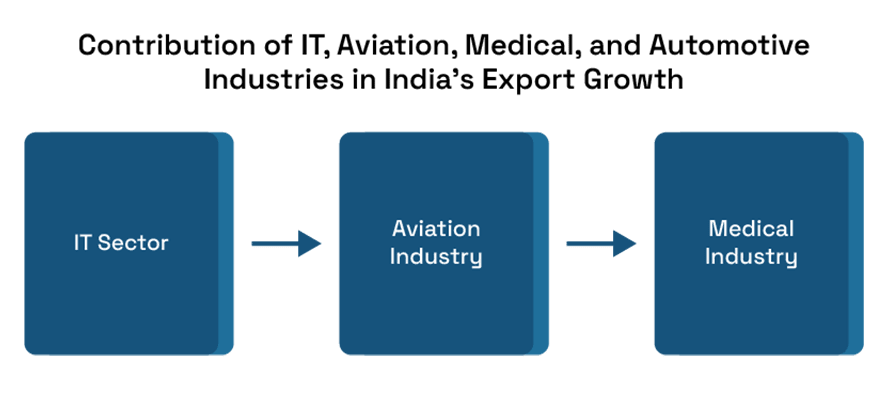
Contribution of IT, Aviation, Medical, and Automotive Industries in India’s Export Growth
Many high-value industries have played a pivotal role in supporting India’s export expansion despite global headwinds.
IT Sector: India’s IT exports continue to be one of the strongest contributors, thanks to digital transformation, cybersecurity solutions, and data analytics services being in global demand. The industry benefits from smooth DDP shipping of hardware and software goods under optimized Incoterms conditions.
Aviation Industry: Aviation parts and maintenance services have also seen strong growth due to partnerships with North American and European organizations. IOR services have allowed effective delivery of aerospace components under strong HTS harmonized tariff schedule codes.
Medical Industry: The export of medical equipment and diagnostic tools grew steadily. The government’s focus on simplifying import export registration and confirming the Export customs brokerage agreement has made India a dependable supplier to the global healthcare chain.
Automotive Industry: Automotive exports, including parts and electric vehicle components, increased as manufacturers benefited from effective logistics management and Comprehensive import-export support services. India’s approval with HS codes and other trade requirements has strengthened its reputation in global trade.
Conclusion
India’s export growth of 6.7% in August demonstrates the nation’s dependence and ability to navigate difficult trade environments, including the challenges of tariffs introduced by the Trump administration. Supported by strong Global supply chain services, IOR services, effective Customs clearance support, and adherence to International export regulations, Indian industries have continued to grow. The success story highlights not only the adaptability of Indian exporters but also the country’s growing importance in the global trade network. IT, aviation, medical, and automotive leading the charge, India’s export future looks stronger than ever.
DID YOU KNOW?
The trade deficit narrowed to $26.49 billion last month from an eight-month high of $27.35 billion in July. In August, US exports fell to $6.86 billion, while total merchandise exports fell to a nine-month low of $35.10 billion.
FAQs:
- How did India achieve export growth despite Trump’s tariffs?
India strengthened its export base through DDP shipping, effective use of Importer of Record (IOR) services, and Incoterms-compliant logistics. These helped offset tariff impacts and streamline customs clearance.
- Which industries contributed most to India’s export growth?
The IT, aviation, medical, and automotive industries were key contributors. They benefited from improved logistics management, HS code compliance, and international market access.
- What role did Importer of Record (IOR) services play in India’s export success?
IOR services ensured smooth market entry by managing documentation, HTS harmonized tariff schedule compliance, and customs clearance for exporters across the US and Europe.
- How have tariffs affected India’s trade with the United States?
While tariffs increased trade complexity, Indian exporters adapted through pricing strategies, trade diversification, and better compliance with international export regulations.
- What does India’s 6.7% export growth signify for its future trade outlook?
The growth shows India’s resilience and evolving competitiveness in global trade. With strong logistics, customs support, and diversified industries, India’s export future looks promising.