Introduction
Correct product categorization is one of the most important responsibilities in global trade. Every imported or exported good must be categorized under the correct Harmonized Tariff Schedule Code, and any mistake in this categorization can lead to shipment delays, economic penalties, unnecessary duties, and regulatory agreement issues. The risks are even higher for industries such as IT hardware, aviation parts, medical devices, and automotive equipment, where stringent customs rules apply. Understanding the most common HTS Code issues and knowing how to avoid them is crucial for preventing problems and enhancing trade efficiency.
What Are Harmonized Tariff Schedule Codes? How Do They Work?
HTS Codes are globally known as numerical codes used to categorize goods in global trade. Every code represents a good category and helps customs officials show the duty rate, regulatory requirements, and applicable trade restrictions. When a delivery arrives at a location, customs administration uses the announced HTS Code to know what the product is, whether it can be imported, and what taxes or fees apply. Accuracy is vital because even small differences in code selection can completely change approval requirements and duty calculations.

Problems Caused by Incorrect Use of Harmonized Tariff Schedule Code
The result of classification errors can be costly, damaging both timelines and economic outputs. The wrong code can lead to:
- Increased or unexpected duties
- Delayed cargo clearance
- Fines or compliance violations
- Increased inspections on future shipments
- Damaged trade credibility with customs authorities
In industries such as medical and aviation, the effect can be mainly serious. A miscategorization may result in extra document requirements, regulatory guidelines, or takeover of goods till the products are exactly spot and inspected by customs officials.
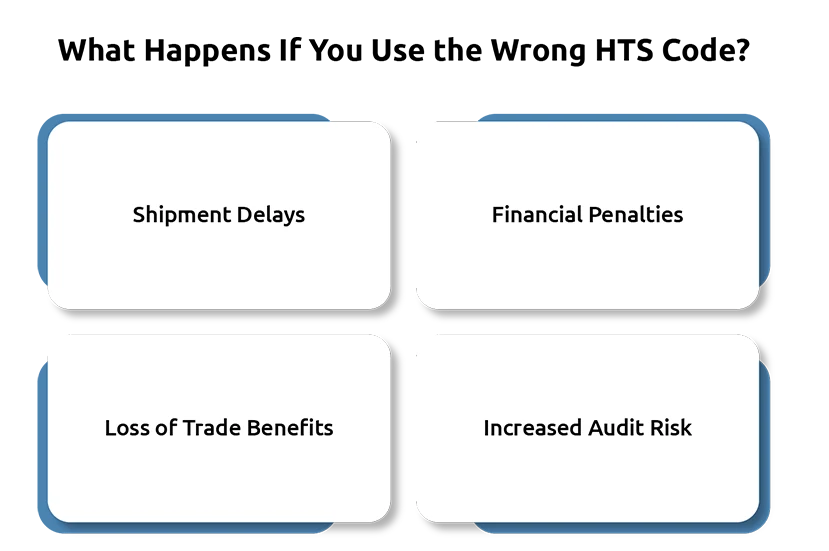
What Happens If You Use the Wrong HTS Code?
Using the incorrect code can lead to huge issues, depending on the goods. Some of the most familiar issues include:
Shipment Delays
If a given code does not match the goods, customs may hold the shipment for inspection, causing maintenance and supply chain slowdowns.
Financial Penalties
Authorities can impose old duties, fines, and extra payments if the issue is discovered after clearance. Repeated law breaches may lead to increased audit scrutiny.
Overpayment or Underpayment of Taxes
Using a higher-tariff code results in unnecessary costs. Using a lower-tariff code may trigger penalties once identified.
Loss of Trade Benefits
Incorrect classification can make companies miss out on lower-duty benefits available through certain trade rules or tariff structures.
Increased Audit Risk
If customs authorities find categorization variability, they can issue future shipments to deeper checks, slowing work long-term.
Why Are Harmonized Tariff Schedule Codes Important in Global Trade?
HTS Codes are necessary because they create a universal understanding between global customs authorities and exporters and importers. Their importance includes:
Accurate Duty Assessment: Duties and taxes rely entirely on product classification. A correct HTS code ensures that companies are paying and costing exactly what they should.
Regulatory Compliance: Many imported products are regulated by safety, quality, or certification rules. The HTS Code determines which rules apply. Medical devices or aircraft components may require additional documentation or inspection before clearance.
Effective Supply Chain Movement: Correct categorization gives customs clearance, minimizes document requests, and reduces costs across the region. In growing industries such as IT or automotive manufacturing, even small delays can stop production lines.
Protection Against Legal Dependability: Regulators can audit past shipments for many years. Proper classification protects a business from retrospective penalties, unexpected tax bills, and long customs investigations.
Conclusion
Correct use of Harmonized Tariff Schedule Codes is a critical part of cross-border trade approval. The stakes are mainly high for IT, medical, aviation, and automotive supply chains, where strong product rules apply and shipment delays can be costly. The most common issues, incorrect categorization, outdated code usage, insufficient product detail, assuming categorization, and lack of regulatory knowledge, can all be avoided through expert guidance, internal approval controls, and reviews of classifications.
DID YOU KNOW?
Ford Motor Company has agreed to pay the United States $365 million to resolve allegations that it violated the Tariff Act of 1930 by misclassifying and understating the value of millions of its Transit Connect vehicles, the Justice Department announced today.
FAQs:
What is an HTS code?
An HTS (Harmonized Tariff Schedule) code is a numerical classification used by customs authorities to determine duty rates, import eligibility, documentation needs, and regulatory requirements for a product.
What happens if the wrong HTS code is used?
Using an incorrect HTS code can result in shipment delays, higher duties, financial penalties, compliance violations, and increased customs audits in future shipments.
How can businesses ensure accurate product classification?
Businesses can improve accuracy by reviewing product specifications, consulting official tariff schedules, using expert customs support, and performing internal compliance checks.
Why are HTS codes especially important for industries like aviation, medical, or automotive?
These industries are highly regulated. Even small classification errors can trigger additional inspections, document requirements, or the temporary seizure of goods during customs review.
How often do HTS codes change?
Most countries update their tariff schedules annually, and global Harmonized System updates occur every five years. Businesses should regularly review codes to avoid using outdated classifications.