Introduction
Product returns are a certain part of modern business. Customers may return products due to defects, incorrect orders, warranty requests, upgrades, damage, or changing requirements. For companies operating across borders, however, a return is more than a customer service issue. It can include shipping, customs processes, import duties, taxes, documentation, stock management, repairs, restoration, and re-selling.
This is where reverse logistics becomes important. Return logistics is the process of transporting products, components, packaging, or materials from the customer or destination back to the seller, production facility, repair center, warehouse, or another assigned location. When handle properly, it can help businesses recover product value, reduce extra costs, improve customer experience, or support more green operations.
What Is Reverse Logistics?
Return logistics manage the movement of products returned from customers to sellers, production, repair centers, or warehouses. It covers returns, repairs, replacements, restoration, reuse & recycling. The process applies across industries, involves technology, healthcare device, automotive, or manufacturing. Returned products are inspected to determine their next suitable use or handling.
A structured approach helps recover product value while minimizing costs or waste.It also supports efficient stock management, customer service, & compliance.
Why Reverse Logistics Matters to Modern Organizations?
Reverse logistics helps businesses manage returns efficiently or control related costs & hadle returns can increase shipping, storage, customs, or stock cost
A structured process improves visibility across returned products & shipments. Organizations can determine whether equipment should be restocked, recycled, or disposed of. Effective returns management also improves customer experience & working efficiency.
The Business Value of an Effective Reverse Logistics approach
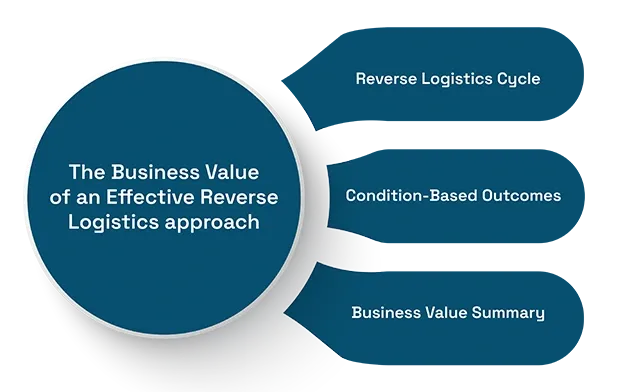
Reverse logistics helps organization recover value from returned products instead of treating them as losses.
Relies on their condition, products can be restocked, repaired, refurbished, resold, or used for parts recovery. Efficient inspection and disposition reduce inventory waste and unnecessary storage costs.
A structured return process also improves replacement and warranty management. Faster return handling can strengthen customer satisfaction and retention. Overall, reverse logistics supports cost control, value recovery, and operational efficiency.
Reverse Logistics in Cross-Border Trade
Global returns require careful customs planning because products cross borders again. Organization may need to offer details about the goods, return reason, value, & original transaction.
Rely on local rules, duties, taxes, or specific customs processes may apply. Return requirements can differ for repairs, replacements, restock, temporary movements, or permanent returns. Proper documentation & planning help prevent customs delays & extra costs.
The Role of Importer of Record Services in Reverse Logistics
The Importer of Record, or IOR, can play an essential role when returned products cross global borders. The IOR is responsible for handling applicable import requirements, customs documentation, duties & taxes, and regulatory obligations in the destination country.
This becomes particularly useful when a company does not have a local legal entity or established import structure in the country where the returned goods are being received. Without the appropriate importing arrangement, a shipment may face customs delays or difficulties during clearance.
How EOR Services Can Support the Return Journey
Reverse logistics may include export requirements when products are moved for repair, restoration, replacement, recycling, or other purposes.
An EOR can help manage export documentation, customs processes, licensing requirements, & applicable compliance duties.
This is especially useful when returned goods move through multiple countries.
Together, IOR and EOR services can support compliant import and export movements throughout the return journey.
Key Stages of a Reverse Logistics Process
A successful reverse logistics process begins with return authorization and accurate product information, including the reason for return, location, and destination.
The next step is transportation planning based on the product’s value, condition, urgency, and destination. Suitable options may includes courier, air, road, or ocean freight. After delivery, the product is checked to determine whether it should be restocked, repaired, restored , replaced, resold, recycled, or disposed of. The final stage focuses on value recovery and record management, make sure stock, shipment, & customs records are properly updated.
How One Union Solutions Can Help
Managing international returns can become complex when products move across multiple countries without a local importing or exporting structure. One Union Solutions provides global Importer of Record and Exporter of Record support to help businesses manage cross-border shipments while addressing local customs and compliance requirements.
Our services can support companies with international product movements involving returns, repairs, replacements, warranty claims, refurbishment, temporary movements, and other cross-border logistics requirements. By coordinating import and export responsibilities, documentation, customs processes, and local compliance considerations, businesses can create a more controlled return process.
Conclusion
Reverse logistics is no longer simply about moving excess products back to a warehouse. It is an important part of modern supply chain management that can impact cost control, customer experience, stock efficiency, green practices, & income recovery.
For global businesses, successful returns require more than shipping. Customs processes, documentation, product classification, import or export duties, repair requirements, & final product final handling must all be considered.
By developing a structured reverse logistics strategy and working with expert IOR/EOR partners, businesses can manage global returns more effectively & identify options to recover value from products that might otherwise become costly costs.
Did You Know?
In 2026, the U.S. EPA reported that recycling creates 1.57 jobs and generates about $76,000 in wages for every 1,000 tons of material recycled. This highlights the economic value of recovery and recycling in reverse logistics.
Frequently Asked Questions
What is reverse logistics?
Return logistics is the process of shipping products, components, packaging, or materials from customers or other destinations back to a vendor, production, warehouse, repair facility, recycling center, or another designated location for return, repair, renewal, reselling, reuse, recycling, or disposal.
Why is reverse logistics essential for Global businesses?
Global reverse logistics helps companies manage product returns across borders while addressing shipping, customs, documentation, duties, taxes, & regulatory requirements. A structured process can reduce delays or improve the recovery of product value.
Can an IOR help with international product returns?
Yes. An Importer of Record can support the import process when returned products enter a country, including applicable customs documentation, duties and taxes, and local import compliance requirements. The exact customs treatment depends on the shipment and destination country’s rules.
What is the difference between reverse logistics & traditional logistics?
Standard logistics generally moves products toward customers, while reverse logistics manage products transport back across the supply chain. Reverse logistics may includes returns, repairs, replacements, renewals, resale, recycling, or disposal.
Does return logistics apply only to e-commerce?
No. Reverse logistics is used across many industries, involving technology, healthcare devices, automotive, production, telecom, industrial equipment, & other sectors where products may require returns, repairs, replacements, or recovery.