

Introduction
In the world of global freight services, timing is everything. Every container has a specific number of free days allowed for unloading, clearance, and return. If the clock runs out, penalties start, and these penalties can hugely increase import duties and tariffs for shippers. Known demurrage and detention are therefore necessary for having smooth cargo shipment, avoiding economic losses, and improving supply chain optimization.
What is demurrage and detection in shipping for importers?
Demurrage and detection are extra charges in shipping that happen when a container is used longer than the free time given by the shipping line. Free time is the number of days you can keep a container without paying any additional cost. Demurrage is charged when the container stays at the port or terminal beyond this free period and is not cleared on time. Detection, on the other hand, is charged when the container has been picked up from the terminal but is not returned within the allowed time. The key difference is the location of the container during the delays. Demurrage applies inside a terminal, while detection applies outside the terminal. These charges are common in logistics and usually happen due to delays in customs clearance, transport, or documentation.
What are Demurrage and Detention Charges?
Both terms are related to economic penalties charged when cargo or containers exceed the allowed free period. These fees are intended to encourage quick cargo shipping, make better use of shipment storage, and reduce delays at port stations or warehouses. These fines exist to confirm that shippers do not use the container storage, equipment, or warehouses longer than necessary, which creates delays in the flow of global freight services.
What is the Difference Between Demurrage and Detention?
Also frequently used together, they apply to different parts of the shipping stage:
Demurrage: Its charges apply when cargo stays too long inside the station after the ship arrives. Also, if customs clearance is delayed or cargo remains at the port for are extended period, but fees start increasing. These fees repay the station for using its storage and resources longer than expected.
Detention: Detention charges apply after the container has left the port but is not returned within the allotted time. Also, if an importer keeps the container at their warehouse for too long while unloading goods, detention fees are charged for keeping the equipment after a given time period.
In simple terms:
- Demurrage = Extra time at the port
- Detention = Extra time outside the port
This difference is necessary for correctly analyzing fee delays and improving work planning.

What are Demurrage and Detention Charges in Shipping?
In global shipping, both the terms charges can vary widely depending on shipping guidelines, destination country, port system, and market situation. During times of high hurdles, such as seasonal demand growth or ongoing supply chain issues, free days may be shorter and rates higher.
These charges are especially critical in industries such as IT hardware, medical equipment, aviation parts, and automotive assemblies, where:
- Delayed clearance can disrupt manufacturing timelines
- Customers expect just-in-time delivery
- Cargo value is extremely high
- Delays can trigger contractual penalties or production stoppages
It is a major approach for organizations managing global supply chains, mainly those working with difficult and urgent cargo requirements.
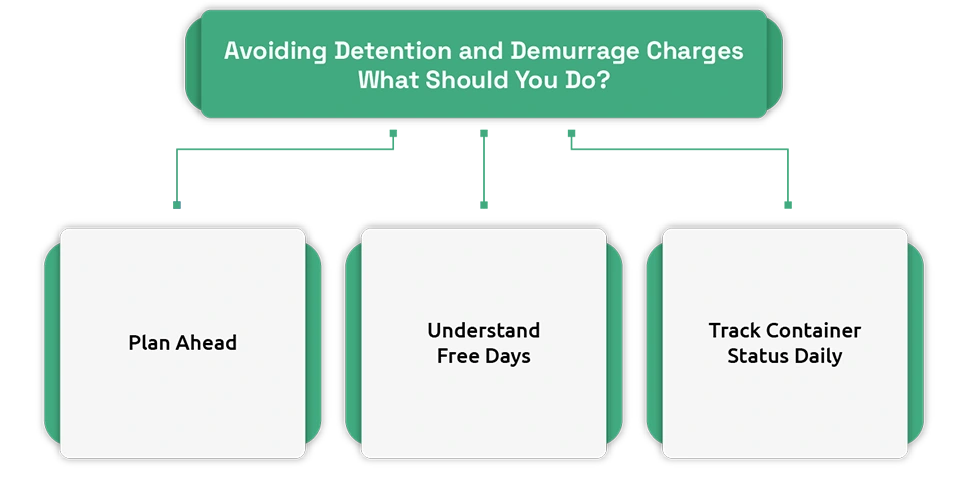
Avoiding Detention and Demurrage Charges: What Should You Do?
Avoiding these charges begins with preparation, visibility, and proactive shipment execution. The following measures can help businesses beat the clock:
- Plan Ahead
Start documentation, customs preparation, and cargo readiness early. Many delays occur simply because paperwork starts late or is incomplete.
- Understand Free Days
Not all carriers and ports offer the same free time. Importers should confirm:
- How many free days does the terminal provide
- How many free days are permitted for container use
- Whether additional free days can be negotiated in advance
- Improve Coordination Across Teams
Clear work among freight forwarders, customs brokers, warehouse teams, logistics, and carriers is necessary during shipment. Even a one-day delay in work can quickly grow fees.
- Track Container Status Daily
Monitoring container events closely helps shippers react quickly if:
- Customs inspections are required
- Documents are missing
- Vessel schedules change
- Be Ready for Unplanned Delays
Some delays weather, port congestion, strikes, and equipment shortages, are unavoidable. Building delay time into planning helps reduce risk.
Conclusion
Demurrage and detention charges are among the most common unwanted costs in global trade. For organizations managing mission-critical shipments in IT, aviation, medical, and automotive sectors, even a small delay can translate into major economic and operational consequences. By understanding the rules, improving planning, staying in close communication with supply partners, and tracking cargo shipments carefully, businesses can beat the clock and hugely reduce unnecessary spending. In global trade, timing isn’t just important; sometimes it’s everything.
DID YOU KNOW?
Demurrage and detention charges are a common part of international shipping, but they do not need to become a recurring cost center.
FAQs:
- What are demurrage charges?
Demurrage charges are fees applied when cargo remains at the port terminal beyond the allowed free days after vessel arrival. These charges compensate the terminal for extended use of storage and handling resources.
- What are detention charges in shipping?
Detention fees are charged when the container has left the port but is not returned within the assigned time. This usually occurs when unloading takes longer than expected at the importer’s warehouse.
- How are demurrage and detention different?
Demurrage applies to extra time inside the port, while detention applies to extra time outside the port after the container is removed.
- Why do demurrage and detention charges occur?
They typically occur due to delays in customs clearance, paperwork issues, port congestion, slow unloading, or a lack of planning and coordination among supply chain teams.
- How can shippers avoid demurrage and detention fees?
Shippers can minimize fees by starting documentation early, understanding free-day limits, tracking container status daily, maintaining strong communication, and preparing for unexpected disruptions.


