Insight
Oversized pieces of aircraft are shipped in a complicated and complex process that involves close planning and is characteristically accomplished by experts in the field. These parts, like engine parts, wings, fuselages, and other vital parts, are vital in aircraft assembly and maintenance. The parts are very large or heavy, which makes shipping them different regarding logistics & safety. There are also potential dangers that need to be handled to prevent delays, damage, and loss of money. This blog will take you through all the important logistics involved, risks associated with shipping oversized aircraft parts, and the government insurance policies available to protect shipments.
Due to their size and value, these components require specialized packaging, handling equipment, and transport modes. Route planning and regulatory approvals are critical to ensure safe movement across borders. Weather conditions, infrastructure limitations, and compliance requirements can further impact delivery timelines. Working with experienced logistics partners helps reduce these risks and ensures smooth coordination. Proper insurance coverage also plays a key role in protecting high-value aircraft shipments.
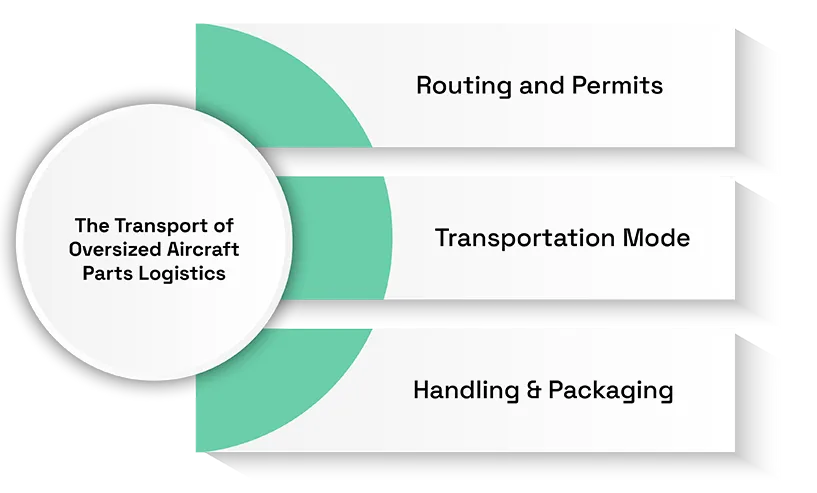
The Transport of Oversized Aircraft Parts Logistics
Transporting oversized aircraft parts is challenging and requires well-coordinated efforts & plans. The most important logistics considerations are characterized as follows:
Routing and Permits: The routing of oversized equipment should be planned to ensure that the parts can pass over the roads, bridges, & tunnels without any hindrance. Most such shipments require special permits to move, especially those parts that are too large to be transported easily. These will involve clearances on the movement of overweight and bulky loads on the roadways through public roads, and working as required by the transportation laws.
Transportation Mode: The process of transporting oversized aircraft parts requires choosing a mode of transport according to destination and size. In case of domestic shipments, flatbed trucks or custom trailers can safely transport the goods by road. In the case of transportation to international destinations, container ships are ideal, but special containers can be required if you have oversized cargo. Where the need is urgent to deliver the products, one deploys cargo aircraft to deliver the goods as fast as possible and to remote locations. The methods chosen are among the highest in their efficiency and effectiveness for shipment.
Handling & Packaging: Oversized aircraft parts require special equipment, such as cranes, forklifts, and custom-constructed crates or containers. The fact that it is well packaged is important too; it is done to avoid damage during transportation. The parts contained in such packages should be packaged to ensure that they are preserved in the face of environmental conditions, which include moisture, dust, and changes in temperature.
Communication with Authorities: Liaising with authorities also involves coordinating the shipping process of oversized parts so that the authorities can agree with the laws and give the permits in time. This will be attended by consideration of the demands, size demands, and safety precautions as decreed by transportation agencies.
Risks Involved in Shipping Oversized Aircraft Parts
Damage In Transit: The larger the product, the more it can be destroyed in transit. They are impossible to control and are complex. Accidents are only bound to happen, most likely due to improper securing of what is being loaded on and carried by someone, or the equipment to carry and balance it with.
Delays: There are inevitable delays, such as vehicle accidents, weather, or logistic issues like getting the necessary permits. Such delays may cause a lag in production or maintenance.
Cost Overrun: Big components delivery is costly, and unanticipated problems might lead to a cost increase. For example, consider the delayed shipping; one may have incurred extra costs because of storing, rerouting, or rescheduling.
Regulation Compliance: There is the issue of regulatory compliance when shipping oversized parts across borders. Lost or improper documentation often leads to fines or even goods seizure. One just needs to ensure all the documents, permissions, & approvals are in place.
Government Insurance Policies for Shipping Oversized Aircraft Parts
Since private insurance providers can select different policies for shipping oversized parts, it is important to point out that government insurance policies are also available in case they are necessary to protect shipping. Several government programs cover goods, including large or oversized goods, when exported or imported. Such policies ensure against the loss or damage that can accrue during transportation, and in most instances, they also tend to be less in terms of premiums than the unprivatized ones.
U.S. Federal Maritime Commission (FMC) Insurance: It provides shipment under the sea transportation with insurance coverage on cargo exported to a foreign country. Such insurance covers such risks as theft, damage, and loss during transportation.
Export & Import Bank of the United States (EXIM): EXIM insures the businesses of the U.S. that participate in international trade. This is done to cover goods that are under export to other countries, hence ensuring that it has been taken care of and any damages, theft, or non-payment by buyers in other countries.
National Cargo Insurance Program: The U.S. government’s National Cargo Insurance Program allows this type of insurance on large cargo with oversized parts. This program provides insurance for shipments managed by exporters in the United States to overseas markets and secures cargo during transit.
Companies that handle large or oversized parts may find these government-backed forms of insurance more important and need a secure and reliable form of insurance during transport. Government programs are also usually offered at a cheaper rate than the costly private insurance. They allow a wider range of forgetfulness than all shipments can be safeguarded against the possible risks.
Conclusion
Oversized aircraft parts need proper logistics, risk management, and insurance considerations in shipping. As much as managing such large and complicated components requires care and communication with several stakeholders, the risks related to the job should be addressed so that the delivery of large and complicated components can be safe and on time. Governmental insurances like the U.S. Federal Maritime Commission, EXIM, and the National Cargo Insurance Program are beneficial insurance policies as they extend the protection of businesses engaged in international trade. These policies assist in protecting the shipment against damages, loss, and other threats to give a sense of calmness during such shipping processes. We at One Union Solutions offer solutions to successfully manage global shipping and compliance requirements to ensure that international trade can run smoothly and efficiently.
Did You Know,
Under ITAR and EAR, the U.S. government regulates the export of approximately 30,000 goods, which ensures that sensitive technologies are guarded against misuse, yet to advancing legitimate international commerce.
FAQs
Which aircraft parts require special shipping arrangements?
Oversized aircraft parts such as engines, wings, fuselage sections, and other large or heavy components require special shipping due to their size and weight.
How are oversized aircraft parts typically shipped?
These parts are usually transported by road using flatbed trucks, by sea on container or breakbulk vessels, or by air using dedicated cargo aircraft.
Does the government provide insurance for shipping oversized aircraft parts?
Yes, certain government-backed programs, such as those from the U.S. Federal Maritime Commission (FMC) and the Export-Import Bank (EXIM), offer insurance coverage for oversized shipments.
What are the main risks when shipping oversized aircraft parts?
Common risks include damage during transport, delivery delays, cost overruns, and non-compliance with transport regulations.
How can I ensure my oversized shipment meets all legal requirements?
Compliance requires securing special permits, planning approved transport routes, coordinating with authorities, and preparing accurate documentation to avoid fines or delays.