Overview
Sanctions on server and networking equipment exports are implemented to stop sensitive technologies from reaching restricted countries or organizations. Companies working in cross-border trade must follow strict documentation processes, including proper product categorizations through an HS code or HTS harmonized tariff Schedule, and confirm that shipments follow the relevant Incoterms and destination requirements.
Exporters must also work with multiple working services such as logistics, International freight services, and Customs clearance to ship technology equipment legally across borders. In many cases, organizations depend on exporter of record services or Importer of record service providers to confirm that global shipments meet regulatory problems. Proper Inventory and order management also becomes necessary because sanctions can suddenly restrict shipments to some markets.
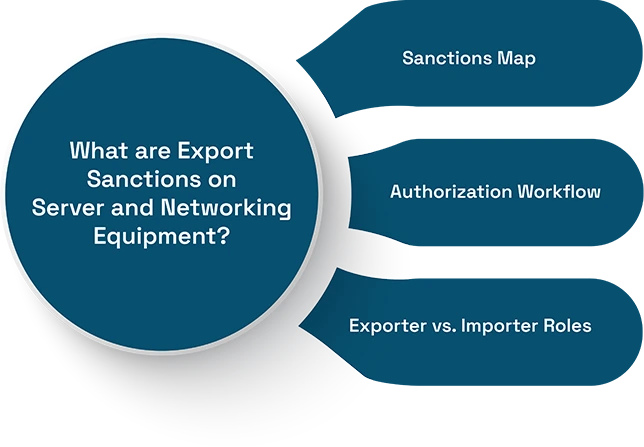
What are Export Sanctions on Server and Networking Equipment?
Export sanctions are government restrictions that control the shipments of specific technologies, goods, or services to specific countries, organizations, or individuals. When applied to server and networking equipment, these regulations limit the shipments of advanced computing systems, processors, networking switches, and data storage systems that could possibly be used for major purposes. Also, organizations use the best trade compliance software for import export rules to manage difficult documentation and checking processes.
Also, companies must know responsibility for regulatory approval. This is frequently handled by organizations providing exporter of record services, which legally support responsibility for confirming that export regulations are followed during shipment. On the receiving side, businesses may depend on Importer of record Service providers to manage regulatory documentation and import approvals.
What is the Main Purpose of a Sanction on Server and Networking Equipment Exports?
Securing National Security Shipments
A major purpose of export sanctions is to stop advanced computing technologies from improving the capabilities of organizations that may pose national security risks. Servers and networking systems can support large-scale data processing and critical communication systems. Governments impose sanctions to restrict access to these technologies and stop them from being used for major advantages in shipments.
Stopping Technology Difference in the Country
Sanctions also help to stop the unauthorized change of sensitive equipment. Even shipping servers can support high-performance computing applications. Trade programs such as the generalized system of preferences (GSP) may simplify trade for some developing economies, but sanctions grows such benefits when national security problems arise. Also, exporters must remain cautious and confirm approval with all regulatory systems before completing global shipments.
What are the Major Impacts on Server and Networking Equipment Exports?
Disruptions in Global Technology Trade
Sanctions can stop established technology markets by reducing exports to some countries. When restrictions are introduced, organizations must redirect their products to alternative markets. This adjustment frequently requires improved Supply chain optimization to confirm that technology equipment continues to reach permitted destinations effectively.
Increased Approval Requirements
Exporters must follow strict regulatory procedures before shipping technology products globally. Businesses must confirm product categorizations using an HS code or HTS harmonized tariff Schedule, determine the correct Incoterms, and verify shipping terms such as DAP or DDP shipping that define delivery responsibilities between buyers and sellers.
Organizations frequently ask operational questions, such as whether a freight forwarder should be an exporter of record, when determining who should support legal responsibility for export approval. In many cases, experts of exporter of record services are used to confirm that all regulatory requirements are met.
Working and Required Documentation Challenges
Sanctions increase the difficulty of international trade terms. Businesses must confirm correct Customs clearance documentation and maintain detailed records for approval audits. This frequently raises additional questions within organizations, such as whether a customs broker handles both import and export documentation, specifically when organizations depend on third-party service providers to manage trade procedures.

Conclusion
Sanctions on server and networking equipment exports play an important role in changing global technology trade. Governments impose these restrictions to protect national security, stop the misuse of advanced computing technologies, and change international policy. Businesses must work with multiple aspects of global trade, including logistics, International freight services, Customs clearance, and correct product categorizations through an HS code or HTS harmonized tariff Schedule. The use of exporter of record services, Importer of record Service providers, and modern best trade compliance software for import export rules helps organizations guide these difficult requirements.
DID YOU KNOW?
The Chinese government is spending heavily on AI, quantum, and biotech ($900 billion in the past decade) making rapid progress in AI model performance, quantum communications, and biotech innovation.
FAQs:
1. What are export sanctions on server and networking equipment?
Export sanctions are government restrictions that limit the shipment of advanced computing technologies such as servers, networking switches, and data storage systems to certain countries, organizations, or individuals.
2. Why are servers and networking equipment subject to export sanctions?
Servers and networking equipment support high-performance computing, data processing, and secure communications. Governments impose sanctions on these technologies to prevent their use in national security.
3. What documentation is required to export server and networking equipment?
Exporters typically must provide product classifications such as HS codes or the HTS harmonized tariff schedule, commercial invoices, export declarations, and shipping documentation based on Incoterms.
4. What is the role of an exporter of record in sanctioned exports?
The exporter of record is the entity legally responsible for ensuring that exported goods comply with all export control laws and sanctions regulations.
5. How do sanctions affect global technology supply chains?
Sanctions can disrupt technology supply chains by limiting access to certain markets and restricting shipments to specific regions.