Overview
Trade tensions between the United States and China have mostly affected the global automotive industry. USA auto import restrictions have received criticism from China, which maintains that these shows disrupt established international trade terms and create uncertainty for manufacturers and exporters. Automotive trade works within a difficult regulatory system that includes categorization, such as the HS code and the HTS harmonized tariff Schedule, which determine how vehicles and auto parts are categorized for tariff purposes. Also, trade operations depend on clearly defined shipping terms under Incoterms, which define the responsibilities of buyers and sellers during logistics. For example, delivery terms such as DAP and DAPs establish how goods are shipped and delivered to their destination, helping organizations manage risk and cost distribution in cross-border vehicle shipments.
China Slams US Auto Tariffs as Violation of Regulations
China has strongly criticized the tariffs imposed by the United States on some imported automobiles and maintenance components. Officials from the Ministry of Commerce of the People’s Republic of China argue that these tariffs change global trade terms and undermine the stability of global trade.
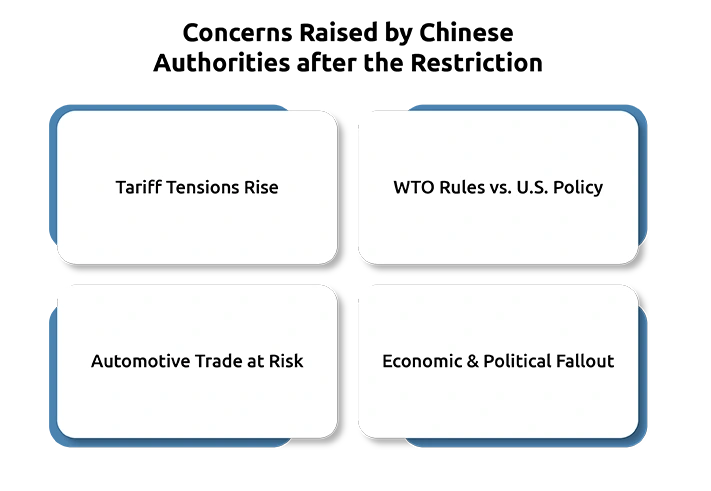
Concerns Raised by Chinese Authorities after the Restriction
Chinese officials stressed that the tariff issues with the rules validated by the World Trade Organization, which promotes clear and fair trade among its members. Trade policies can also affect broader programs such as the Generalized System of Preferences (GSP), which is designed to support trade opportunities between developed economies.
Political and economic reaction on this imports restrictions
China has responded through diplomatic channels and discussions in international trade terms. Chinese authorities have required the United States to reconsider the restrictions and work in a helpful manner to resolve disputes. Also, businesses working in cross-border automotive trade must confirm that documentation, categorizations, and approval procedures are properly managed to avoid regulatory difficulties.
Key Aspects of China’s Response to Auto Import Restrictions
Organizations exporting vehicles and automotive components must maintain correct documentation processes. This includes working with the exporter of record services and the importer of record Service providers, which confirm that shipments follow local regulations and global trade requirements. Proper management of shipping procedures also requires work with International freight services providers and specialized logistics partners. These organizations help manage logistics, documentation, and regulatory problems during cross-border trade.
Managing Trade and Regulatory Agreement
In the automotive industry, smooth global trade depends on effective Customs clearance processes and correct documentation of global trade. Businesses frequently depend on digital sources, such as the best trade compliance software for import export rules, to track regulatory requirements and avoid costly delays. Many organizations also raise practical questions about trade responsibilities, such as whether a freight forwarder should be an exporter of record. The answer depends on regulatory agreements between trading partners, which show who holds responsibility for export documentation and approval of shipments.
How Will the Impact of U.S. Tariffs on China’s Auto Sector
Supply Chain and Distribution Shipments
Manufacturers and exporters are adopting their strategies through Supply chain optimization to reduce working disruptions. Also, effective Inventory and order management help automotive organizations control costs and avoid delays caused by changing trade conditions.
Approval and Brokerage Support
Trade agreements are another important part of global automotive shipments. Businesses frequently depend on customs experts to manage documentation and regulatory processes. This frequently raises working questions, including whether a customs broker handles both import and export documentation. In many cases, expert brokers provide support for both processes, helping organizations manage approval requirements across various markets.
Why is China criticizing U.S. auto tariffs?
China is criticizing U.S. auto tariffs because it views them as unfair trade barriers that restrict market access, distort competition, and increase costs for foreign manufacturers. Chinese officials argue that higher tariffs on vehicles, electric vehicles, and auto parts disrupt normal trade flows, weaken international cooperation, and place additional pressure on already sensitive global supply chains. They also claim such measures may violate the principles of free and rules-based trade promoted through international agreements.

Conclusions
China’s reaction to the U.S. auto import restrictions shows the broader challenges of the growing global automotive trade. The dispute between China and the United States shows deeper economic and major competition between the two nations. Despite the tensions, global trade in vehicles continues to depend on systematic regulatory guidelines such as the HS code, the HTS harmonized tariff Schedule, and globally recognized shipping rules such as Incoterms. Organizations involved in cross-border automotive trade must balance regulatory approval, working efficiency, and major planning to guide the development of guidelines.
DID YOU KNOW?
The company operates production facilities in Hamburg, Manchester, and Nijmegen, with a combined capacity of more than 50 billion components per year.
FAQs:
1. Why did China criticize the U.S. auto tariffs?
China criticized the U.S. auto tariffs because it believes the restrictions disrupt established global trade regulations and create uncertainty for manufacturers and exporters involved in global automotive trade.
2. How do U.S. auto tariffs affect global automotive supply chains?
U.S. auto tariffs can increase costs for manufacturers, disrupt sourcing strategies, and force companies to reconsider supply chain structures and global trade partnerships.
3. What role do HS codes play in the automotive trade?
HS codes are used to categorize vehicles and automotive components for international trade. They determine applicable tariffs, regulatory requirements, and customs procedures for cross-border shipments.
4. What are Incoterms, and why are they important in auto exports?
Incoterms define the responsibilities of buyers and sellers during international shipments. Terms such as DAP help clarify who is responsible for transportation, risk, and delivery of automotive goods.
5. Can a customs broker manage both import and export documentation?
Yes, in many cases, customs brokers can assist with both import and export documentation. They help businesses manage customs clearance procedures and international shipping documentation.