
Overview
The global aviation industry is seeing a strong recovery with growing passenger traffic, fleet expansion, and improved global trade. At the hub of this growth is the increasing demand for aircraft Maintenance, Repair, and Overhaul (MRO) parts. As airlines work to have working efficiency and safety standards, timely access to certified aircraft parts has become increasingly important for shipments. This growth is not only changing global aviation trade but also increasing dependence on structured logistics, effective customs clearance processes, and standardized global trade methods such as Incoterms shipping guidelines.
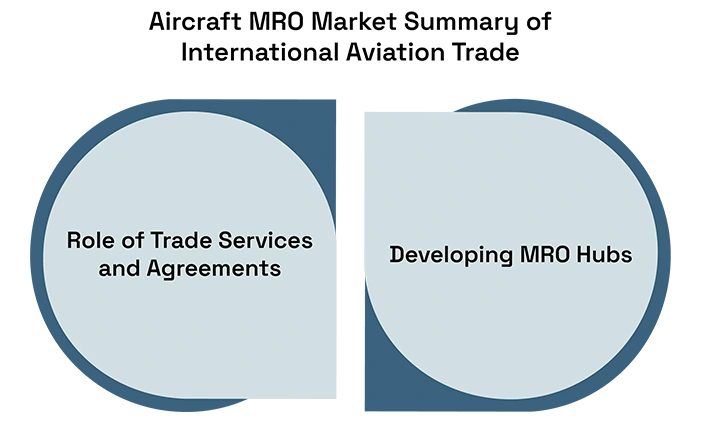
Aircraft MRO Market Summary of International Aviation Trade
Growing Dependence on Global Supply Chains
The aircraft MRO market has developed into a highly interconnected ecosystem where cross-border trading is necessary. Airlines maintenance service providers depend on correct HS code categorization and the HTS Harmonized Tariff Schedule to confirm smooth import-export processes. Aircraft trade programs such as the Generalized System of Preferences also help reduce tariffs on eligible components, thereby making buyers more cost-effective in global trade. Effective inventory and order management systems are now important to track spare parts across multiple countries. This has increased demand for advanced supply chain optimization plans to reduce maintenance and improve aircraft availability in countries.
Role of Trade Services and Agreements
With growing global trade difficulties, organizations increasingly depend on exporter of record and importer of record services to manage the approval and documentation process. Many organizations ask questions such as “Can a freight forwarder be an exporter of record?” that are becoming increasingly relevant as businesses explore flexible trade methods. Also, many organizations ask whether a customs broker can handle both import and export documentation to simplify shipments. The use of Delivered at Place (DAP) and DAPs shipping terms is also developing, allowing sellers to support greater responsibility for international freight service and delivery partnerships, thereby improving efficiency in global aviation trade.
Developing MRO Hubs
Regions such as Asia-Pacific and the Middle East are growing as major MRO hubs due to cost advantages and major locations. These regions are working heavily in infrastructure, supported by a strong logistics chain and improved trade approval systems, thereby further growing international aviation trade.
MROs Facing Inflation, Delays, and Inventory Problems in International Aviation Trade
Rising Costs of Services
Inflation has mostly increased the cost of raw materials, logistics, and maintenance services. MRO providers must now balance cost pressures while confirming approval with international trade regulations, including proper tariff categorizations and approval to global standards.
Supply Chain Disruptions Of Shipments
Global issues have impacted the availability of critical aircraft components. Delays in international freight services and port overcrowding problems have increased shipping times. Effective customs clearance processes and correct documentation have become necessary to avoid further delays.
Agreement and Documentation Complexity
Navigating global trade regulations requires strong systems. Many organizations are accepting the best trade compliance software for import export rules to manage documentation, reduce errors, and confirm approval to global standards. This is specifically important in aviation, where regulatory agreement is strong and affordable logistics of MRO parts.
What Does the Future Hold for Rising Aircraft Maintenance?
Adoption of Advanced Technologies
Digital changes will change the future of aircraft maintenance with the MRO service provider. Technologies such as AI, predictive analytics, and automation will increase supply chain optimization and improve decision-making in MRO providers. Global aviation trade will continue to depend on strong logistics systems. Organizations will increasingly depend on integrated solutions combining international freight services, customs clearance expertise, and approval management to confirm smooth operations.
Developing Role of Trade Intermediaries
Service providers providing exporter of record services and importer of record service solutions will play an important role in simplifying global trade. Businesses will continue to explore flexible methods, including evaluating whether freight forwarders or customs brokers can support growing responsibilities across import and export processes.

Conclusion
The growing demand for aircraft MRO parts is mostly growing international aviation trade, creating both opportunities and challenges. From guiding difficult trade regulations, such as HS code categorizations and HTS Harmonized Tariff Schedule, to using Incoterms such as DAP, the industry is becoming more systematic and agreeable. As organizations accept advanced technologies, invest in supply chain optimization, and use specialized services such as exporter of record and importer of record services, the aviation MRO sector will become more flexible in global trade. Effective logistics, strong approval systems, and major partnerships will be major to sustaining growth and confirming the smooth working of global aviation trade.
DID YOU KNOW?
Orders worth approximately $50 billion for orders have also been placed for engines and spare parts. I anticipate that India will require civil aviation-related products valued between $80 billion and $100 billion.
FAQs:
1. What is the aircraft MRO market, and why is it important?
The aircraft Maintenance, Repair, and Overhaul (MRO) market includes services required to keep aircraft safe and working. It is important because it confirms flight safety, regulatory agreement, and operational efficiency for airlines worldwide.
2. How does the MRO industry impact global aviation trade?
The MRO industry drives cross-border trade of aircraft parts, increasing demand for logistics, customs clearance, and trade compliance systems. It strengthens global supply chains and boosts international aviation trade.
3. What role do HS codes and the HTS Harmonized Tariff Schedule play in aviation trade?
HS codes and the HTS Harmonized Tariff Schedule are used to classify aircraft parts for import and export. Proper classification confirms smooth customs clearance, correct tariff application, and approval with global trade regulations.
4. Can a freight forwarding service act as an exporter of record?
Yes, in some cases, a freight forwarder can act as an exporter of record, depending on legal regulations and agreements. However, businesses frequently use specialized exporter of record services to confirm approval and reduce risk.
5. What are DAP Incoterms, and how are they used in aircraft parts shipping?
Delivered at Place (DAP) Incoterms mean the seller is responsible for delivering goods to a specified destination. In aircraft parts shipping, DAP helps simplify logistics and international freight services for buyers.